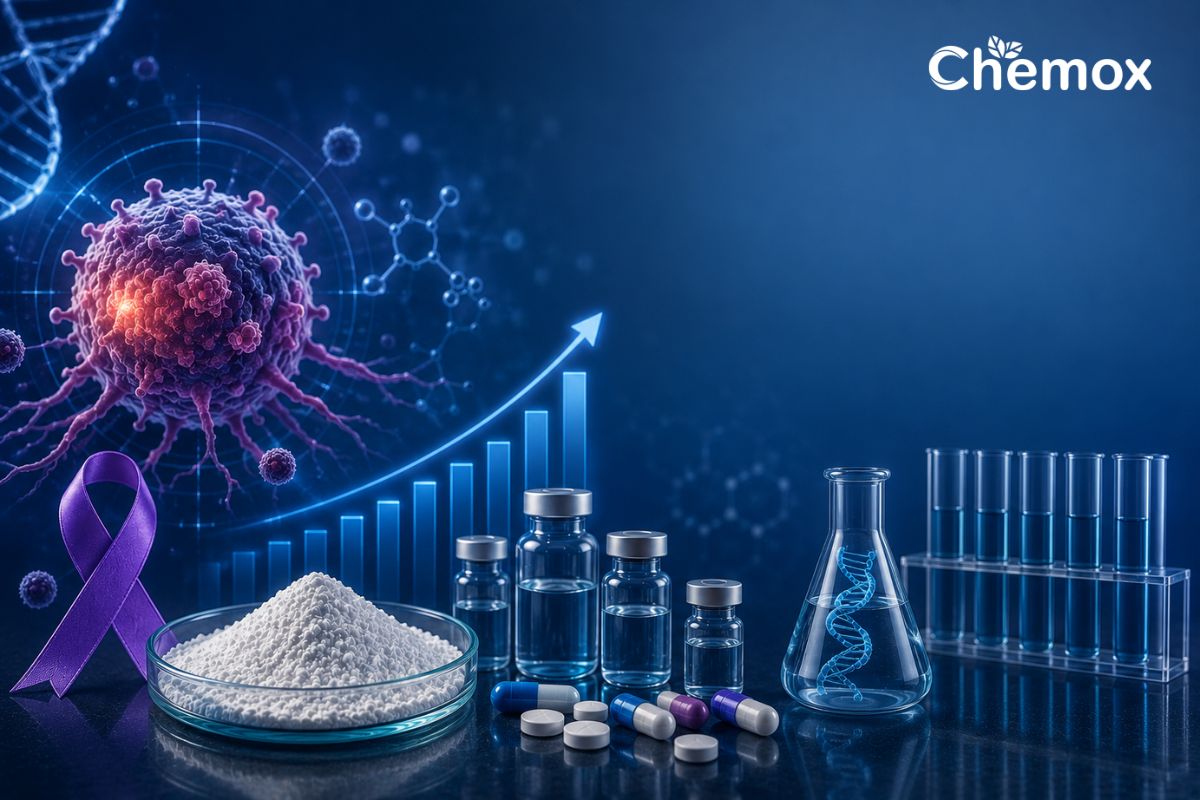
Oncology API Demand Is Growing Faster Than Any Other Category in 2026
Of every therapeutic category tracked in the global API manufacturing market, one is consistently singled out by market analysts as the standout oncology API market growth 2026 : oncology.
While cardiovascular APIs remain the single largest category by revenue share and generic small-molecule APIs continue to represent the bulk of manufacturing volume worldwide, oncology is where growth is accelerating fastest outpacing cardiovascular, anti-diabetic, antibiotic, and CNS categories on a percentage basis, driven not by a single blockbuster but by a structural, multi-decade shift in how cancer is diagnosed and treated.
This piece looks at what’s actually driving that growth, what the real numbers say (market research estimates vary meaningfully, and we’ll be transparent about that range rather than cherry-picking the most dramatic figure), and what this growth trajectory means for the Indian API manufacturing industry more broadly including where Chemox Pharma currently stands relative to this opportunity.
The Numbers: What “Fastest-Growing Category” Actually Means
Oncology API market sizing varies considerably across research firms depending on methodology and scope some studies size the broader oncology API market in the tens of billions of dollars, others focus more narrowly on specific sub-segments and report figures in the low billions. What’s more consistent across sources is the growth trajectory:
- Multiple market analyses place oncology API CAGR in the 7–11% range through the early 2030s meaningfully ahead of the broader pharmaceutical API market’s overall growth rate of roughly 6.5–7.5%
- Targeted therapy APIs are consistently identified as the fastest-growing sub-segment within oncology, expected to represent an increasingly dominant share of new oncology drug volume
- Asia-Pacific with China and India specifically named is repeatedly identified as the fastest-growing regional market for oncology API manufacturing, driven by expanding manufacturing infrastructure and lower production costs
- The FDA approved 60 oncology drugs in 2024 alone, including 11 first-in-class therapeutics an approval pace that translates directly into API manufacturing demand, both for the innovator molecules themselves and for the generic versions that follow years later as patents expire
The range in market sizing figures across different research firms is worth being upfront about it reflects genuine differences in how “oncology API market” is defined (some include only small-molecule synthetic APIs, others include biologics, monoclonal antibodies, and antibody-drug conjugate payloads within the scope). What is not in dispute across any credible source is the direction: oncology API demand is growing faster than the broader pharmaceutical API market, and that gap is widening, not narrowing.
What’s Actually Driving Oncology API market growth 2026
1. Rising global cancer incidence
The underlying disease burden continues to grow. The American Cancer Society estimated over 2 million new cancer cases and roughly 600,000 cancer-related deaths in the US in 2025 alone. Canadian researchers project new cancer cases will reach nearly 249,000 in 2026, up from 244,000 just four years earlier. This is a global pattern, not a regional one — aging populations, lifestyle-related risk factors, and improved diagnostic detection are together driving a steady, structural increase in the number of patients requiring treatment, independent of any single country’s healthcare policy.
2. The shift toward targeted therapy and precision medicine
This is the single most important structural driver of oncology API growth, and it’s fundamentally different from the volume-driven growth patterns in categories like cardiovascular or antibiotic APIs. Traditional chemotherapy agents work broadly, attacking rapidly dividing cells regardless of type. Targeted therapies are designed to interact with specific molecular markers — genetic mutations, protein expressions, cell-surface receptors unique to a patient’s particular cancer subtype.
This precision comes at a manufacturing complexity cost: targeted therapy APIs are frequently more structurally complex, require more sophisticated synthesis routes, and demand tighter analytical control than traditional cytotoxic chemotherapy agents. Some industry analysis suggests roughly 60% of targeted cancer treatments now incorporate genuinely novel API molecules — a sign of how much active innovation is happening in this specific therapeutic category compared to more mature, established ones.
3. Patent expiries opening the generic oncology API opportunity
A meaningful share of oncology API growth is coming from an increasingly familiar pattern: innovator oncology drugs reaching patent expiry and opening the door to generic competition. This is precisely the dynamic that built India’s broader generic pharmaceutical industry over the past three decades and it is now playing out in oncology at scale. As blockbuster targeted therapies and biologics from the 2010s and early 2020s reach the end of their exclusivity periods, the generic oncology API opportunity is expanding meaningfully, creating a growth pathway that doesn’t require originator-level R&D investment to participate in.
4. Growing outsourced and contract manufacturing demand
Industry analysis consistently points to contract development and manufacturing (CDMO/CMO) as one of the fastest-growing distribution channels specifically within oncology API manufacturing growing faster than captive, in-house manufacturing. Originator pharmaceutical companies are increasingly choosing to outsource oncology API production rather than build and maintain the highly specialised, containment-equipped manufacturing infrastructure oncology drugs often require in-house. This trend directly benefits CDMOs with the right technical and containment capability a structural tailwind for manufacturers positioned to serve this segment.
5. High-Potency API (HPAPI) capability as a competitive differentiator
Many oncology APIs — particularly cytotoxic chemotherapy agents, hormonal therapies, and antibody-drug conjugate (ADC) payloads — are classified as High-Potency APIs, requiring dedicated containment facilities (typically OEB4/5/6 classification), specialised handling protocols, and significant capital investment in engineering controls to protect both manufacturing staff and prevent cross-contamination. This creates a genuine, high barrier-to-entry sub-market within oncology API manufacturing one where established Indian and global CDMOs with the right containment infrastructure hold a meaningful competitive advantage over generalist API manufacturers.
What This Means for India’s API Manufacturing Industry
India’s position in this growth story is significant, but it’s worth being precise about where that position currently stands rather than overstating it.
India is a genuine and growing participant in oncology API and finished drug manufacturing. Indian companies including Dr. Reddy’s Laboratories, Sun Pharmaceutical, Cipla, Hetero Drugs, Biocon, and Glenmark Life Sciences are named repeatedly across market research as established players in oncology API supply — particularly in alkylating agents, antimetabolites, and increasingly in targeted therapy generics. India’s broader manufacturing cost advantage, regulatory infrastructure (WHO-GMP, USFDA-approved facility density), and three decades of generic drug manufacturing experience all translate meaningfully into oncology as patents continue to expire.
However, oncology API manufacturing carries a materially higher barrier to entry than most other generic therapeutic categories. HPAPI containment infrastructure requires significant, dedicated capital investment. Analytical and process validation requirements for oncology APIs — particularly around genotoxic impurity control and cross-contamination prevention — are considerably more stringent than for the cardiovascular, antihistamine, or anti-infective categories that make up the bulk of India’s traditional generic API strength. This is a meaningful reason why oncology API manufacturing in India, while growing, remains more concentrated among larger, more capitalised players than the broader generic API landscape.
The opportunity for mid-sized Indian API manufacturers is real, but it requires a deliberate strategic decision, not an incremental one. Entering oncology API manufacturing is not simply “adding another molecule” to an existing product catalogue the way expanding within cardiovascular or antihistamine categories might be — it typically requires new containment infrastructure, specialised regulatory expertise, and a genuinely different risk and quality management framework.
Chemox Pharma’s Position: Tracking the Opportunity, Building the Fundamentals
To be transparent with our readers: oncology is not currently part of Chemox Pharma’s manufacturing portfolio. Our current API manufacturing focus — cardiovascular, urology, antihistamine, anti-infective, antibiotic, and respiratory categories reflects the synthesis expertise and infrastructure we’ve built at our WHO-GMP certified facility in Dahej, Gujarat.
We think it’s more useful to global buyers and industry observers for us to be direct about that than to stretch our positioning to chase a trending keyword. What we can say is this: the fundamentals we’ve built WHO-GMP certification, ICH Q8–Q11-aligned quality systems, IH-DMF filing experience, a genuine process chemistry R&D capability through our CDMO services are the same foundational fundamentals any credible move into a category like oncology would need to be built on. As India’s broader API industry continues to grow into higher-value, higher-complexity categories, we’re tracking this space closely as part of our own long-term capability roadmap, and we’ll communicate transparently with our partners and buyers if and when that changes.
For buyers currently sourcing oncology APIs, we’d encourage looking specifically at manufacturers with demonstrated HPAPI containment infrastructure and oncology-specific regulatory track records this is a category where “check the specific credentials” matters more than in almost any other therapeutic area.
Frequently Asked Questions
Q: How fast is the oncology API market actually growing? Growth estimates vary by research firm and market definition, but most credible sources place oncology API market CAGR in the range of 7–11% through the early 2030s consistently ahead of the broader pharmaceutical API market’s overall growth rate of roughly 6.5–7.5%. Targeted therapy APIs specifically are frequently cited as the fastest-growing sub-segment within this category.
Q: Why is oncology API manufacturing more complex than other therapeutic categories? Many oncology APIs particularly cytotoxic chemotherapy agents and antibody-drug conjugate payloads are classified as High-Potency APIs (HPAPIs), requiring dedicated containment facilities, specialised handling protocols, and stringent genotoxic impurity control. This creates meaningfully higher capital and regulatory barriers to entry compared to categories like cardiovascular or antihistamine APIs.
Q: Is India a major player in oncology API manufacturing? Yes, though concentrated among larger, more capitalised Indian pharmaceutical companies. Firms including Dr. Reddy’s Laboratories, Sun Pharmaceutical, Cipla, Hetero Drugs, Biocon, and Glenmark Life Sciences are established participants in oncology API and finished drug manufacturing, particularly in generic chemotherapy agents and increasingly in targeted therapy generics as patents expire.
Q: Does Chemox Pharma manufacture oncology APIs? Not currently. Chemox Pharma’s manufacturing portfolio is focused on cardiovascular, urology, antihistamine, anti-infective, antibiotic, and respiratory API categories. We are tracking the oncology API growth opportunity as part of our long-term capability planning, but we believe in being transparent about our current scope rather than overstating our positioning.
Q: What should buyers look for when sourcing oncology APIs specifically? Given the higher complexity and regulatory stakes involved, buyers should verify a manufacturer’s specific HPAPI containment classification (OEB4/5/6), request oncology-specific genotoxic impurity data, and confirm a demonstrated regulatory track record specifically within oncology — general GMP certification alone is a less reliable indicator of oncology manufacturing readiness than it is for most other therapeutic categories.
Explore Chemox Pharma’s Current API Portfolio and CDMO Capability
While oncology isn’t part of our current manufacturing scope, we’re glad to discuss our existing product portfolio, our CDMO development capabilities, and how our quality infrastructure could support future category expansion conversations.
To start the conversation:
📧 Email: sales@chemoxpharma.com
📞 Call / WhatsApp: +91 9033440409 | +91 9033440407
🔗 View API Portfolio → chemoxpharma.com/api/
🔗 CDMO Services → chemoxpharma.com/cdmo-services/