Biosimilars vs Biologics API: What Every Global Pharma Buyer Must Know in 2026
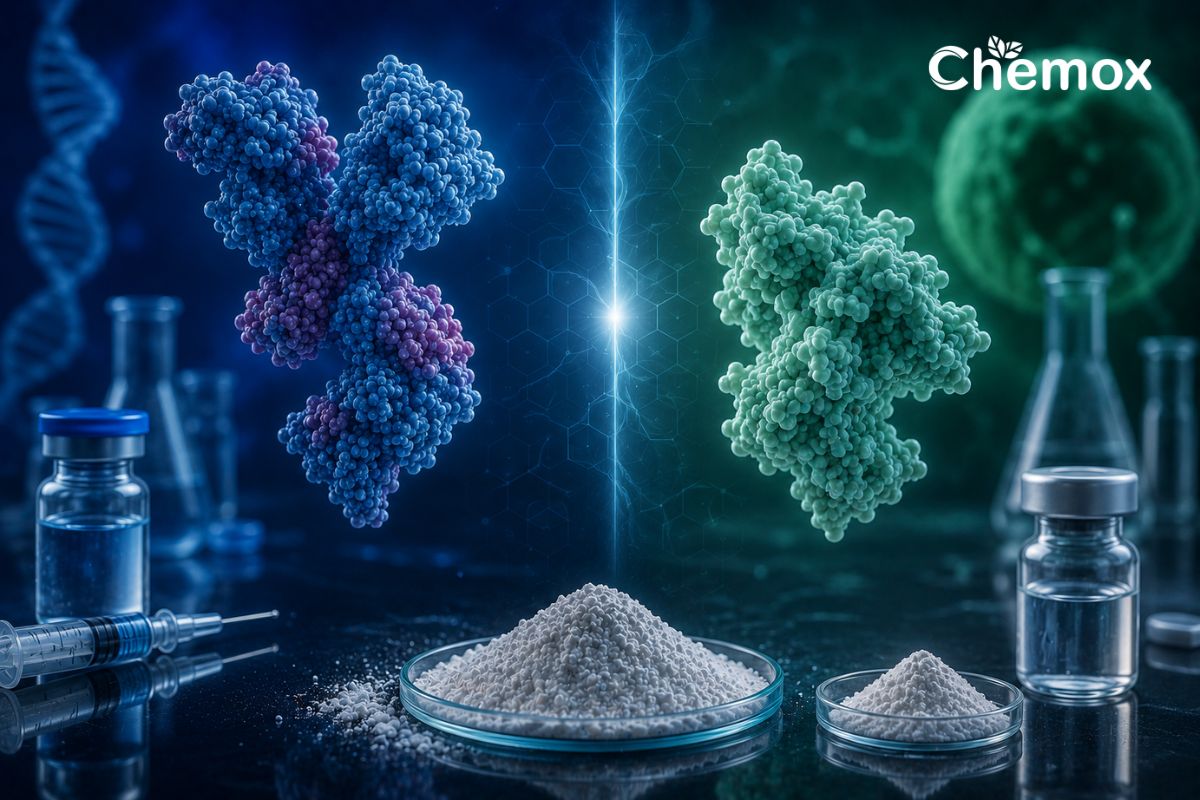
If you are a pharmaceutical procurement professional, regulatory affairs manager, or formulation scientist navigating the global API sourcing landscape in 2026, there is one fundamental distinction you must understand clearly: biosimilars vs biologics API what makes them different, why those differences matter enormously for manufacturing, regulatory strategy, and sourcing decisions, and why the explosive growth of the biosimilars market is creating one of the most significant API sourcing opportunities of the decade.
The numbers make the urgency clear. The global biologics API market is valued at USD 78.4 billion in 2026, growing at 8% CAGR to reach USD 153.8 billion by 2035. The biosimilars market specifically is valued at USD 50.31 billion in 2026, projected to reach USD 163.14 billion by 2033 at an 18.3% CAGR the fastest growth rate of any segment in the entire pharmaceutical API market. Understanding the biosimilars vs biologics API distinction is no longer an academic exercise for pharmaceutical buyers — it is a strategic business imperative.
What Are Biologics? The Foundation of Modern Medicine’s Most Powerful Therapies
Biologics also called biological medicines or biopharmaceuticals are medicines derived from living sources: bacteria, yeast, mammalian cells, plant cells, or other biological systems. Unlike traditional small-molecule drugs, which are chemically synthesized from defined molecular building blocks, biologics are produced through complex biotechnological processes involving living cells and are inherently large, intricate molecular structures.
The category encompasses a wide and diverse range of therapeutic molecules:
- Monoclonal antibodies (mAbs) — including adalimumab (Humira), trastuzumab (Herceptin), pembrolizumab (Keytruda), and bevacizumab (Avastin) the largest and highest-revenue category
- Recombinant proteins — including erythropoietin, insulin analogues, and clotting factors
- Vaccines — both traditional attenuated and recombinant
- Peptides and fusion proteins — GLP-1 receptor agonists, etanercept
- Antibody-Drug Conjugates (ADCs) — the fastest-growing oncology biologic modality
- Cell and gene therapies — the most complex and highest-value emerging modality
- Viral vectors — used in gene therapy delivery systems
Biologics have transformed the treatment of cancer, autoimmune diseases, diabetes, and rare genetic disorders. During the past five years, approximately 28% of all novel FDA approvals were for biologics a proportion that reflects their central and growing role in pharmaceutical innovation. Annual biologic spending in the United States alone reached USD 260 billion representing over 46% of total national medicine expenditure, despite comprising only about 2% of total prescriptions.
What Are Biosimilars? The Generic Revolution Comes to Biologics
A biosimilar is a biologic medicine that is highly similar to an already-approved reference biologic called the originator or reference product and has been demonstrated to have no clinically meaningful differences in terms of safety, purity, and efficacy. The regulatory concept of a biosimilar is the biological equivalent of a generic drug: a follow-on product that can be developed after the originator’s patent expires, approved through an abbreviated pathway, and sold at a lower price.
The critical distinction and the source of enormous complexity for API manufacturers and buyers is that biosimilars are highly similar to, but not identical with, their reference biologics. Unlike small-molecule generics, which are chemically identical to the branded drug and can be proven equivalent through straightforward analytical testing, biologics are produced by living cells. No two cell lines, bioreactors, or fermentation processes are exactly the same meaning that even the originator manufacturer cannot produce perfectly identical batches. Biosimilars are developed to be as similar as possible, but their inherent biological origin means some natural micro-variation is unavoidable and accepted within regulatory frameworks.
The FDA requires biosimilar applicants to demonstrate high similarity to the reference biologic through extensive analytical characterization, pharmacokinetic comparability, and clinical evidence where required. The European Medicines Agency has an even longer track record of biosimilar approval Europe was the first region globally to establish a regulatory pathway for biosimilars in 2003, giving European manufacturers significant first-mover experience in this complex regulatory space.
Biosimilars vs Biologics API: The 6 Critical Differences That Matter for Sourcing
Understanding the specific ways in which biosimilars vs biologics API differ is essential for procurement and regulatory teams making API sourcing decisions:
1. Manufacturing Complexity and Process Sensitivity
This is the most fundamental difference — and the one with the greatest implications for sourcing strategy. Biologic APIs, including biosimilars, are manufactured through cell culture or fermentation processes using living organisms. The manufacturing process is itself part of the product: changes to cell lines, culture media, bioreactor design, purification steps, or storage conditions can alter the molecular characteristics of the API in ways that have no equivalent in small-molecule chemistry.
This means that for biosimilar API sourcing, the manufacturing process of the specific supplier matters enormously not just the final analytical specification. Two biosimilar manufacturers using different cell lines or bioprocessing approaches may produce APIs that are both “highly similar” to the reference biologic but meaningfully different from each other. Buyers must evaluate not just whether a biosimilar API meets specification, but whether the specific manufacturing process has been validated, the cell line is characterized, and the purification and formulation process has been demonstrated to be consistent.
2. Molecular Size and Structural Complexity
Small-molecule APIs statins, antibiotics, antihistamines are typically molecules with a molecular weight below 1,000 Daltons. They can be fully characterized by standard analytical chemistry tools and reproduced exactly by any skilled synthetic chemist given the correct procedure.
Biologic APIs are vastly larger and more complex. Monoclonal antibodies the dominant biologic/biosimilar modality have molecular weights of approximately 150,000 Daltons. They are three-dimensional proteins with primary, secondary, tertiary, and quaternary structures. They carry post-translational modifications including glycosylation patterns that influence both efficacy and immunogenicity and cannot be controlled through chemistry only through careful management of cell culture conditions. This structural complexity is why biologic APIs cannot simply be “copied” like small molecules they must be produced through painstaking process development and analytical characterization.
3. Analytical Characterization Requirements
For a small-molecule API like Rosuvastatin or Azithromycin, a Certificate of Analysis with HPLC assay, impurity profile, residual solvents, and pharmacopoeial identity testing is sufficient to demonstrate batch quality. For a biologic or biosimilar API, the analytical characterization package is orders of magnitude more complex:
- Primary structure analysis — peptide mapping and mass spectrometry to confirm amino acid sequence
- Higher-order structure analysis — circular dichroism, dynamic light scattering, size exclusion chromatography
- Glycosylation profiling — N-linked and O-linked glycan analysis, which directly affects half-life and immunogenicity
- Charge variant analysis — assessing deamidation, oxidation, and other degradation products
- Biological activity assays — cell-based potency assays confirming the molecule’s mechanism-of-action activity
- Immunogenicity risk assessment — characterizing potential for anti-drug antibody development
This analytical depth is why biosimilar development programs cost USD 100–250 million — compared to USD 1–5 million for a typical small-molecule generic program — and why specialized, expert manufacturing partners are essential.
4. Regulatory Approval Pathway
For small-molecule generics, the regulatory pathway is relatively straightforward: file an Abbreviated New Drug Application (ANDA) demonstrating bioequivalence, reference an approved Drug Master File, and await approval. The process takes 2–3 years and costs a fraction of an NDA.
For biosimilars, the abbreviated approval pathway the 351(k) pathway in the US, the EMA biosimilar guideline in Europe — requires a full analytical comparability exercise, pharmacokinetic and pharmacodynamic studies, and in most cases clinical safety and efficacy data. The total development timeline is typically 7–10 years and the cost USD 100–250 million. The regulatory dossier for a biosimilar is vastly more complex than an ANDA, requiring extensive physicochemical and functional characterization, multiple clinical studies, and a comprehensive risk management strategy.
5. Supply Chain and Storage Requirements
Small-molecule APIs are typically stable solids or crystalline powders that can be stored at ambient or refrigerated temperatures with standard packaging. Biologic APIs — including biosimilar APIs — are typically protein solutions or lyophilized powders that require cold chain storage (2–8°C for most mAbs) or ultra-cold conditions (-80°C for some) throughout the supply chain. This cold chain requirement adds significant complexity and cost to the sourcing and logistics of biosimilar APIs compared to synthetic small molecules.
6. Price Point and Development Economics
Small-molecule APIs for generic drugs can often be sourced for USD 10–1,000 per kilogram. Biologic APIs — including biosimilar APIs — typically range from USD 50,000 to USD 1,000,000+ per kilogram, reflecting the extraordinary manufacturing complexity, equipment capital intensity, batch sizes measured in liters rather than kilograms, and extensive quality testing required. However, biosimilars consistently deliver significant price discounts versus their reference biologics: oncology biosimilars have achieved average discounts of 52% for trastuzumab, 49% for bevacizumab, and 66% for rituximab compared to their reference products.
The Biosimilar Market 2026: Why This Is the Fastest-Growing API Opportunity
The biosimilars vs biologics API distinction matters most for sourcing teams because of what is happening in the biosimilar market right now. A massive wave of biologic patent expiries is creating unprecedented biosimilar development and manufacturing demand:
- The biosimilars segment is the fastest-growing end-use sector for APIs — as patents for major biologic drugs including adalimumab, infliximab, and trastuzumab expire, biosimilar developers require high-quality biologic APIs highly similar to the originator molecule
- The global biosimilars market was estimated at USD 39.59 billion in 2025 and is projected to reach USD 151.58 billion by 2033 at a CAGR of 18.44%
- In 2023 alone, biosimilars contributed to USD 12.4 billion in savings, with total savings reaching USD 36 billion since market introduction in 2015
- FDA biosimilar approvals reached a record 19 in 2024, and Q1 2025 saw 10 biosimilar approvals — a pace that reflects the rapidly maturing regulatory framework
- The oncology segment dominates biosimilar therapy type with 26.12% market share in 2026, driven by biosimilar versions of trastuzumab, bevacizumab, rituximab, and cetuximab
The looming 2027–28 patent cliff adds further momentum — a surge in generic launches is expected to boost demand for both commodity and complex APIs just as originators funnel capital into next-generation, high-value pipelines.
What Does Biosimilars vs Biologics API Mean for Your Sourcing Strategy?
For pharmaceutical companies making sourcing decisions in 2026, the biosimilars vs biologics API distinction translates into three concrete strategic implications:
If you are sourcing small-molecule APIs: Prioritize GMP compliance, pharmacopoeial specification adherence, impurity profile control, and cost competitiveness. India is the world’s leading source of small-molecule APIs across cardiovascular, anti-infective, urology, antihistamine, and antifungal categories — offering WHO-GMP, USFDA, and EU-GMP compliant supply at globally competitive prices.
If you are entering biosimilar development: Partner with CDMOs that have demonstrated biologic manufacturing capabilities — specifically mammalian cell culture expression systems, which account for over 75% of biologic API production in 2026, validated purification platforms, and biosimilar-specific analytical characterization expertise. The barrier to entry is high, but so are the margins and the market growth rates.
If you are building a long-term API portfolio: The transition from small-molecule API dominance toward a mixed landscape including biosimilars, ADCs, peptides, and oligonucleotides is accelerating. Building supplier relationships now — with CDMOs who have credible biologics capabilities alongside synthetic API portfolios — positions your pipeline for the decade ahead.
Chemox Pharma: Your Trusted Small-Molecule API Partner for Global Pharma
While the biosimilar market’s extraordinary growth represents the future direction of pharmaceutical innovation, the vast majority of global prescription volume — and API demand — remains concentrated in small-molecule APIs for cardiovascular, anti-infective, metabolic, urological, and other chronic disease therapeutic categories.
Chemox Pharma is a WHO-GMP certified Indian API manufacturer with 18+ export-ready small-molecule APIs across cardiovascular (Rosuvastatin, Atorvastatin), urology (Mirabegron), antibiotic (Azithromycin), antifungal, anti-asthmatic, and antihistamine (Cetirizine, Fexofenadine) categories the therapeutic backbone of generic drug programs worldwide.