US Pharma Tariffs 2026: What API Buyers Need to Know (Updated October 16, 2026)
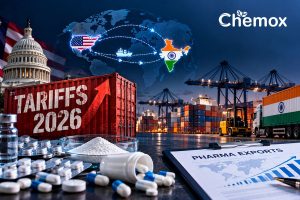
If you buy or sell active pharmaceutical ingredients, the US pharma tariffs 2026 India discussion has changed twice since spring. First came a 100% tariff on patented medicines. Then, in July, the US president announced a plan that could eventually reach generics, which is where most Indian API manufacturing sits. This guide sets out what is in force today, what has only been announced, and what API buyers can do now.
The Short Version (as of October 16, 2026)
- In force: A 100% Section 232 tariff on patented pharmaceuticals and their APIs and key starting materials. It applies to all importers from September 29, 2026.
- Not in force: Generic pharmaceuticals and their associated ingredients remain excluded “at this time.”
- Announced, not implemented: A plan for tariffs on imported generics: tariff-free for two years, then 100% from August 2028 and 200% from August 2029. In the sources we reviewed, we did not find a formal proclamation, executive order or Commerce rule implementing it.
- Still unclear: Whether APIs for generics would be covered if the plan goes ahead.
What the April 2026 Proclamation Did
On April 2, 2026, Proclamation 11020 imposed a 100% tariff under Section 232 on patented pharmaceutical products and their ingredients. The covered articles include finished products, APIs and key starting materials for APIs. Inactive ingredients and excipients are excluded.
When it started:
- July 31, 2026: for the 17 large companies named in the proclamation’s annex.
- September 29, 2026: for all other importers.
Rates by route:
| Route | Rate |
|---|---|
| Default rate for patented products | 100% |
| EU, Japan, South Korea, Switzerland and Liechtenstein | 15% |
| United Kingdom | 0% (subject to conditions) |
| Company with a Commerce-approved onshoring plan | 20%, rising to 100% on April 2, 2030 |
| Company with onshoring plus an MFN pricing agreement | 0% until January 20, 2029 |
| India | No preferential tier on the patented-drug tariff |
Generic medicines, biosimilars and their associated ingredients are excluded from these tariffs for now. The proclamation also directed Commerce to report within a year on whether that should change, which points to a decision around April 2027.
What Changed in July: The Generic Drug Tariff Plan
On July 21–22, 2026, the US president announced a plan on social media for imported generic drugs. As reported by Fierce Pharma, Bloomberg and The Pharma Letter:
- Generic imports stay tariff-free for two years from August 1, 2026.
- A 100% tariff would then apply for one year from August 2028.
- The rate would rise to 200% from August 2029.
- The stated purpose is to push generic makers to build US plants within that window.
Several important points are still open:
- Legal basis and implementation: Reporting at the time did not identify the legal authority, and a later industry summary says no proclamation or rule has implemented the plan. Treat it as an announced intention, not a law.
- API coverage: One source told Fierce Pharma the plan would cover both finished drugs and APIs under Section 232. Bloomberg reported that the plan did not address APIs separately. This is genuinely unresolved.
- Negotiation room: The Association for Accessible Medicines called it a starting point for negotiations. At least one analyst said it was unlikely to take effect. A February US–India trade framework says India would receive “negotiated outcomes” on generic pharmaceuticals and ingredients, though it is unclear how much of any new duty Indian firms would face.
- Feasibility: Analysts quoted in the reports note that building a new generic plant can take at least three years, longer than the announced runway. Experts quoted by CBS News also said a tariff alone is unlikely to bring production home and that some manufacturers could shift supply to other markets instead.
For context, India supplies more than half of the generic prescriptions filled in the US, according to a 2025 Senate Aging Committee report cited by CBS News, and Bloomberg reports that pharmaceuticals were about US$ 10.5 billion of India’s US exports in 2024–25.
What Commerce Published on September 23
On September 23, 2026, the US Federal Register published Commerce guidance on the specialty pharmaceutical zero rate. In short:
- It confirms that Section 232 pharmaceutical tariffs do not currently apply to generic products or their associated ingredients.
- It sets a 0% rate for certain specialty categories (for example, orphan-only drugs, nuclear medicines, plasma-derived therapies, fertility drugs, cell and gene therapies, antibody-drug conjugates and animal health products) from 19 eligible jurisdictions. India is on that list.
- It does not contain any India-specific provision beyond that eligibility.
This is relevant mainly to specialty drug supply chains, not to the generic APIs most Indian manufacturers export.
Other US Tariffs to Check
Two other developments affect how buyers think about US-bound goods:
- IEEPA tariffs: The US Supreme Court ruled on February 20, 2026 that the IEEPA emergency law does not authorize tariffs. A temporary Section 122 surcharge that followed expired on July 24, 2026.
- Section 301 “forced labor” duties: These took effect on July 24, 2026, with an additional 10% rate for India, according to published law-firm and tariff summaries. One summary lists pharmaceuticals and APIs among the excluded categories, while another industry summary suggests generics finished from certain ingredients may be exposed. These reports conflict, so confirm the treatment of your specific HTSUS code with a customs broker or trade counsel.
What This Means for API Buyers
If you are buying generic APIs for non-US markets: Nothing in the current tariff measures applies directly to your purchase. The relevant risk is indirect: if US-bound generic supply is eventually disrupted, capacity and pricing in other markets could shift.
If your product ends up in the US market: Your exposure depends on whether the final product is patented or generic, and on how Commerce ultimately treats the ingredients in a generic product. Model your costs under several scenarios, because the generic tariff plan is announced but not implemented.
A Practical Checklist for API Buyers
- Confirm patent status. Section 232 tariffs apply to patented products. Check whether your finished product is listed in the FDA Orange Book or Purple Book.
- Confirm HTSUS classification. Ask your customs broker to confirm the classification of your API and any key starting materials, especially for borderline products.
- Track the country of origin. Tariff relief and rates often follow the country of origin of the product or its API, not where the final dosage form is made.
- Model scenarios. Compare your landed cost under today’s rules, the one-year Commerce review outcome (around April 2027) and the announced generic tariff schedule (August 2028 and August 2029).
- Qualify a second source before you need one. A documented alternative is more valuable than a long vendor list. See our guide on API supply chain fragility.
- Keep documentation current. DMF references, CoAs, GMP certificates and origin records should be on file and ready.
- Don’t overreact. One shift in a tariff announcement is not a reason to abandon a qualified supplier, but it is a reason to keep options open.
A Timeline: What to Watch and When
| Date | What happens |
|---|---|
| April 2, 2026 | Section 232 proclamation on patented pharmaceuticals and ingredients |
| July 21–22, 2026 | Generic drug tariff plan announced |
| July 24, 2026 | Section 301 forced labor duties take effect (10% for India) |
| July 31, 2026 | 100% tariff begins for the 17 named companies |
| September 23, 2026 | Commerce publishes specialty pharmaceutical guidance |
| September 29, 2026 | 100% tariff begins for all other importers |
| Around April 2027 | Commerce report on whether generics should be adjusted |
| August 2028 | Announced start of 100% tariff on imported generics (not implemented) |
| August 2029 | Announced rise to 200% (not implemented) |
Chemox Pharma’s Position
Chemox Pharma is a WHO-GMP certified API and intermediates manufacturer in Dahej, Gujarat. Our APIs are generic products, which are excluded from the Section 232 tariffs in force today. We are monitoring the generic tariff plan closely, and we will update this page as details are confirmed. If you are planning supply for the next 12 to 24 months, our team can share current availability, documentation and lead times for the APIs and intermediates you need, so you can plan on facts rather than headlines.
Request a Quote or Supply Plan
If you want to discuss supply continuity or qualify a manufacturer-direct source, contact Chemox Pharma for a quote and documentation review.
FAQs
Q: Are generic APIs subject to US pharma tariffs in 2026?
No. Generic pharmaceuticals and their associated ingredients are excluded from the Section 232 pharmaceutical tariffs “at this time.” Commerce has repeated this in its September 2026 guidance.
Q: What is the generic drug tariff plan announced in July 2026?
It is a plan announced on social media by the US president: generics stay tariff-free for two years, then face a 100% tariff from August 2028 and 200% from August 2029. As of the sources we reviewed, it has not been implemented through a formal proclamation or rule.
Q: Would the generic tariff plan cover APIs?
That is unclear. One source told Fierce Pharma it would cover finished drugs and APIs, while Bloomberg reported the plan did not address APIs separately.
Q: Does India get a lower rate on the patented drug tariff?
No. India has no preferential tier on the patented-drug tariff. India is, however, on the list of 19 eligible jurisdictions for the specialty pharmaceutical zero rate.
Q: Do I need to change suppliers because of these tariffs?
Not on the basis of one announcement. It is sensible to model scenarios, confirm classifications and keep a qualified second source, but this is risk management, not a reason to abandon a supplier.