High-Potency APIs (HPAPIs): What Buyers Need to Know About Containment, Handling, and Sourcing
Not all active pharmaceutical ingredients carry the same risk profile and a small but rapidly growing category requires an entirely different manufacturing approach than the vast majority of small-molecule generic APIs on the market.
High Potency API Manufacturing (HPAPIs) are compounds that are pharmacologically active at extremely low doses often micrograms or even nanograms meaning that even trace-level occupational exposure during manufacturing can pose a genuine health risk to production staff. This single characteristic changes everything about how these molecules must be developed, manufactured, handled, and sourced.
The HPAPI market is growing fast: Mordor Intelligence projects the global High potency API Manufacturing market to reach USD 32.02 billion in 2026, up from USD 29.34 billion in 2025, and to expand to USD 49.59 billion by 2031 — a 9.14% CAGR, meaningfully outpacing the broader pharmaceutical market’s roughly 7% annual growth. Some industry estimates place HPAPI growth even higher, at around 12% annually, with HPAPIs already accounting for roughly 12% of the total pharmaceutical market and that share continuing to rise.
For procurement teams and formulators encountering HPAPI sourcing requirements for the first time, this guide explains exactly what makes these compounds different, how the industry classifies and contains them, and what questions to ask before qualifying an HPAPI manufacturing partner.
What Makes an API “High-Potency”?
There is no single universal legal definition of an HPAPI, but the most widely referenced regulatory benchmark from European authorities defines high-potency APIs as compounds with an Occupational Exposure Limit (OEL) of ≤10 µg/m³. In practical terms, this means a person could be meaningfully harmed by airborne exposure to quantities of the compound too small to see, smell, or otherwise detect without specialised monitoring equipment.
HPAPIs are typically found in:
- Oncology drugs — chemotherapy agents, cytotoxic compounds
- Hormone therapies — potent endocrine-active compounds
- Antibody-drug conjugates (ADCs) — where the cytotoxic “payload” component is often HPAPI-classified
- Targeted therapies — compounds engineered for precision molecular activity, often effective at very low doses by design
- Certain steroids and potent small molecules used across other therapeutic categories
Structurally, HPAPIs are also frequently more complex to manufacture than conventional APIs — often requiring multi-step synthesis processes exceeding 10 individual reaction steps, or complex semi-synthetic routes, layering manufacturing complexity on top of the containment challenge.
Understanding Occupational Exposure Bands (OEB): The Classification System That Governs Everything
The pharmaceutical industry uses Occupational Exposure Bands (OEB) to classify compounds by potency and determine the containment and handling requirements needed to manufacture them safely. While no single universal standard exists across the entire industry, SafeBridge’s four-tier OEB classification system is the most widely accepted model.
| OEB Level | Typical OEL Range | Containment Requirement | Example Compound Types |
|---|---|---|---|
| OEB 1 | Not hazardous at typical exposure | Standard GMP practices | Conventional generic APIs |
| OEB 2–3 | Moderate potency | Enhanced PPE, basic engineering controls | Certain hormones, potent small molecules |
| OEB 4 | 1–10 µg/m³ | Isolators, downflow booths, dedicated HVAC | Many targeted therapy APIs |
| OEB 5 | 0.1–1 µg/m³ | Full isolator systems, secondary containment, controlled access zones | Cytotoxic oncology APIs, potent hormones |
| OEB 6 | ≤200 ng/m³ (0.0002 µg/m³) | Maximum containment, specialised engineering controls, dedicated facilities | ADC payloads, ultra-potent cytotoxic linkers |
The lower the Occupational Exposure Limit, the higher the required OEB classification — and the more extensive (and expensive) the containment infrastructure needed to manufacture the compound safely. OEB 6, the newest and most demanding classification tier, is increasingly being adopted specifically to address the rise of ADC payload manufacturing and other ultra-potent compounds emerging from oncology drug development pipelines.
The classification process itself is rigorous. A credible HPAPI manufacturer determines OEB classification through early toxicological risk assessment — establishing the compound’s OEL, then mapping that OEL to the appropriate containment tier before any manufacturing process is designed. This sequencing matters: the containment strategy must be built around the compound’s actual risk profile, not retrofitted afterward.
What Containment Actually Looks Like in Practice
Understanding the classification system is one thing; understanding what it means on an actual production floor is more useful for buyers evaluating a potential manufacturing partner.
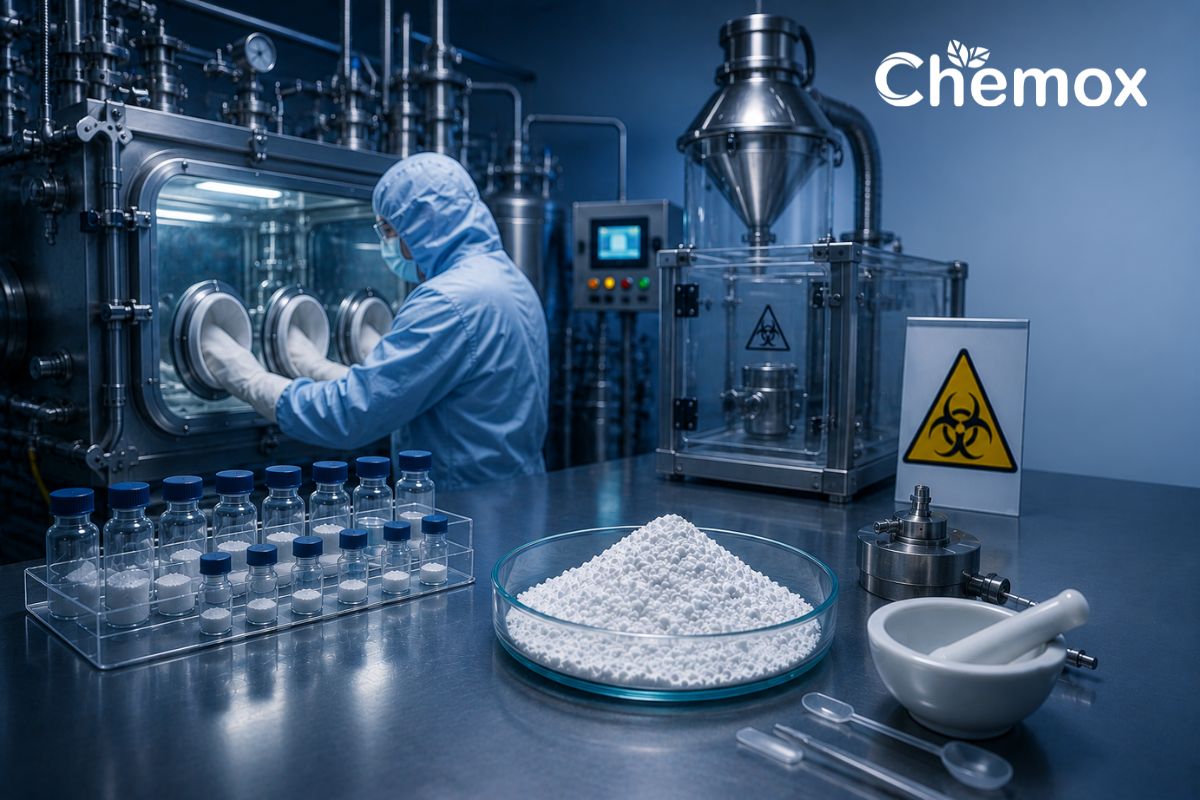
Primary containment: isolators and closed systems. The core engineering control for HPAPI manufacturing is the isolator a sealed, negative-pressure enclosure that physically separates the operator from the compound at every stage of handling. Modern isolator systems for the highest potency tiers (OEB6) can achieve containment performance below 1 nanogram per cubic meter — an extraordinary level of engineering precision.
Secondary containment: controlled access zones. Beyond the isolator itself, HPAPI facilities require controlled access zones with dedicated HVAC systems, airlocks, and pressure cascades designed to prevent any cross-contamination between HPAPI production areas and the rest of the facility and critically, to prevent any HPAPI-classified material from ever contacting a non-HPAPI production line.
Personal protective equipment as a last line of defense, not the primary control. One of the clearest red flags identified by industry HPAPI sourcing guides is “PPE-led containment” — a facility relying primarily on respiratory protection and protective clothing rather than genuine engineered containment systems for high-OEB materials. Credible HPAPI manufacturing treats PPE as a supplementary safeguard layered on top of engineering controls, not a substitute for them.
Containment performance testing. Facilities don’t simply install isolators and assume they work as specified containment performance must be regularly validated through standardised testing protocols such as Controlled Particle Testing (CPT) and SMEPAC (Standardised Measurement of Equipment Particulate Airborne Concentration), which quantify actual containment performance under simulated operating conditions.
Decontamination and cleaning validation. Because HPAPI residues are hazardous even in trace quantities, cleaning validation protocols must be significantly more rigorous than for conventional APIs demonstrating that equipment is genuinely free of cross-contamination risk before it can be used for a different product, including non-HPAPI production runs on shared equipment where applicable.
Why High Potency API Manufacturing Demand Is Accelerating ?
The growth drivers behind the HPAPI market are structurally linked to some of the biggest trends in pharmaceutical R&D right now:
Oncology remains the leading application, consistent with the broader growth of targeted cancer therapies and precision oncology drug development. As chemotherapy and targeted oncology treatment pipelines expand, HPAPI manufacturing demand grows in direct proportion.
Antibody-drug conjugates (ADCs) are a major growth engine. ADCs combine a monoclonal antibody with an extremely potent cytotoxic payload, connected by a chemical linker — and that payload component is very often OEB5 or OEB6 classified. The rapid expansion of ADC drug development pipelines industry-wide is a direct driver of demand for ultra-high containment manufacturing capacity.
CDMO capacity investment is accelerating in response. Several major CDMOs have announced significant HPAPI capacity expansions recently — including new OEB5 production lines and dedicated OEB6 facilities specifically built to support ADC payload and linker manufacturing, incorporating advanced techniques like flow chemistry, photochemistry, and biocatalysis to enable safer, more scalable HPAPI production.
Geographic diversification is underway. Supply chain adjustments — including policy developments like the US BIOSECURE Act — are accelerating reshoring initiatives in North America for certain HPAPI categories, while India and other Asia-Pacific manufacturing hubs are increasingly positioned as alternative sourcing destinations for global HPAPI demand.
Beyond oncology, adjacent therapeutic areas are contributing growth too — including ophthalmology and metabolic disorder treatments, which increasingly involve potent, low-dose compound formulations that fall within HPAPI classification thresholds.
How to Qualify an HPAPI Manufacturing Partner: What to Actually Verify
Given the elevated risk profile and technical complexity involved, supplier qualification for HPAPI sourcing needs to go considerably further than standard GMP API supplier due diligence. Here is what a well-informed buyer should verify:
Ask for OEB classification evidence, not just a claim
A manufacturer stating “we handle OEB5 materials” is not sufficient. Ask for the actual surrogate testing data or containment performance validation (CPT/SMEPAC results) that supports that specific claim for the specific compound category you need. Unverified OEB5 claims — broad potency handling assertions without supporting surrogate test data — are a specifically flagged industry red flag worth taking seriously.
Understand the specific containment infrastructure, not just the facility certification
WHO-GMP or USFDA facility approval is necessary but not sufficient for HPAPI sourcing — a facility can be fully GMP compliant for conventional APIs while having no HPAPI-specific containment infrastructure at all. Ask specifically about isolator systems, dedicated HVAC zoning, and whether HPAPI production areas are physically and procedurally separated from conventional API manufacturing.
Scrutinise change control and technical transfer track record
Manufacturing changes at an HPAPI facility can trigger regulatory variation filings on your own product — meaning the robustness of a CDMO’s change control process directly affects your regulatory risk, not just theirs. For technology transfer specifically, be cautious of unrealistically fast timelines, particularly for complex or novel synthesis pathways — HPAPI technology transfer is inherently more involved than for conventional small-molecule APIs, and a partner promising compressed timelines may be underestimating the real complexity involved.
Verify supply chain transparency for starting materials
For HPAPIs derived from controlled precursors or requiring complex multi-step synthesis, a manufacturer’s ability to source, qualify, and manage starting materials within a fully transparent supply chain directly affects both your regulatory risk and your supply continuity. Ask specifically how key starting materials are sourced and qualified.
Confirm scale-up capability matches your actual need
HPAPI manufacturing partners vary enormously in scale capability — from milligram-scale early development work through multi-kilogram or even multi-ton commercial production. Confirm that a potential partner’s demonstrated scale-up experience genuinely matches your development stage and projected commercial volume, rather than assuming general HPAPI capability translates directly to your specific scale requirement.
Ask about occupational safety certification standards
Third-party certifications such as SafeBridge validate a facility’s containment systems and risk control measures against recognised industry benchmarks. A manufacturer’s willingness to pursue and maintain this kind of independent validation is a meaningful signal of genuine containment rigor, not just internal self-assessment.
Common Red Flags in HPAPI Supplier Evaluation
Industry sourcing guidance consistently points to a small number of recurring warning signs worth watching for directly:
- PPE-led containment in place of genuine engineered containment systems for high-OEB materials
- Unverified OEB5 or OEB6 claims without supporting surrogate test data specific to the compound category
- Unrealistic technology transfer timelines, especially for complex or novel synthesis pathways
- Vague answers about starting material sourcing, particularly for controlled precursors
- No clear separation between HPAPI and conventional API manufacturing areas within the same facility
- Absence of third-party containment validation (CPT, SMEPAC, or equivalent testing) supporting stated capability claims
Chemox Pharma’s Position: Building Toward This Capability
We believe in being direct with the buyers and industry professionals who read our content: High Potency API manufacturing, requiring OEB4 and above containment infrastructure, is not currently part of Chemox Pharma’s manufacturing capability. Our current portfolio — cardiovascular, urology, antihistamine, anti-infective, antibiotic, and respiratory APIs — is manufactured within conventional GMP infrastructure at our WHO-GMP certified facility in Dahej, Gujarat, appropriate to the potency profile of those specific molecule classes.
We’re publishing this guide because we believe genuinely useful, technically accurate content serves our industry and our readers better than superficial coverage of every trending pharma topic and because understanding the HPAPI landscape informs how we think about our own long-term manufacturing capability roadmap as India’s broader API industry continues moving into higher-complexity categories.
For buyers with current HPAPI sourcing requirements, we’d strongly encourage applying the qualification framework in this guide rigorously — this is a category where verifying specific, demonstrated containment capability matters more than in almost any other area of API sourcing.
Frequently Asked Questions
Q: What is the difference between a conventional API and an HPAPI? HPAPIs are pharmacologically active at extremely low doses — often micrograms or nanograms — meaning trace-level occupational exposure during manufacturing can pose genuine health risks. European regulatory guidance defines the HPAPI threshold at an Occupational Exposure Limit (OEL) of ≤10 µg/m³. This requires fundamentally different manufacturing infrastructure — isolators, dedicated HVAC systems, and specialised containment — compared to conventional API production.
Q: What does OEB5 or OEB6 mean? OEB (Occupational Exposure Band) is a classification system used to categorise compounds by potency and determine required containment levels. OEB5 typically corresponds to an OEL range of roughly 0.1–1 µg/m³, requiring full isolator systems and secondary containment. OEB6 is the highest and newest classification tier, typically associated with an OEL at or below 200 ng/m³, requiring the most stringent containment infrastructure available — often used for ADC payloads and ultra-potent cytotoxic linkers.
Q: Why is HPAPI manufacturing growing faster than the broader pharmaceutical market? HPAPI demand is closely tied to the growth of oncology drug development, targeted therapies, and antibody-drug conjugates (ADCs) — all of which frequently involve extremely potent compounds by design. As these therapeutic categories expand, so does demand for the specialised manufacturing capacity needed to produce them safely.
Q: What should I ask an HPAPI manufacturer before qualifying them as a supplier? Request specific containment performance validation data (CPT or SMEPAC test results) rather than accepting general OEB classification claims. Confirm dedicated, physically separated HPAPI manufacturing infrastructure. Ask about starting material sourcing transparency, change control robustness, and realistic technology transfer timelines. Third-party containment certification, such as SafeBridge, is a meaningful positive signal.
Q: Does Chemox Pharma offer HPAPI manufacturing? Not currently. HPAPI manufacturing requires dedicated OEB4+ containment infrastructure that is not part of Chemox Pharma’s current facility capability. Our manufacturing focus remains on conventional GMP-appropriate API categories. We’re tracking the HPAPI opportunity as part of our long-term capability planning and will communicate transparently if that changes.
Questions About API Sourcing? Talk to Our Team
While HPAPI manufacturing isn’t part of our current capability, we’re glad to discuss our existing product portfolio, our CDMO development services, and our quality infrastructure at Dahej, Gujarat.
To start the conversation:
📧 Email: bd@chemoxpharma.com
📞 Call / WhatsApp: +91 9033440410 | +91 9033440407
🔗 View API Portfolio → chemoxpharma.com/api/
🔗 CDMO Services → chemoxpharma.com/cdmo-services/