Tadalafil API Price Per Kg in 2026: What Global Buyers Are Paying and What Drives the Cost
If you are sourcing Tadalafil API for generic tablet production and trying to understand what you should be paying in 2026 you are in the right place.
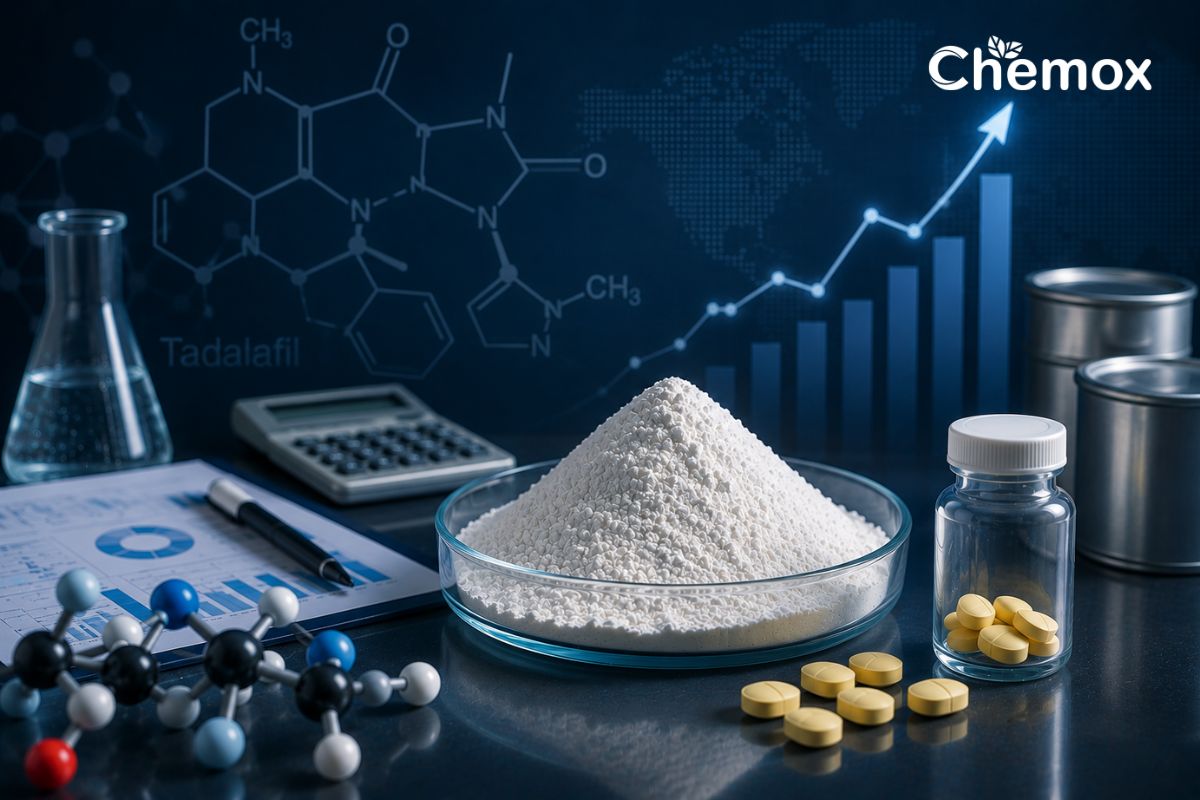
Tadalafil API price per kg is one of the most searched procurement queries in the PDE5 inhibitor space. And with good reason: the market has changed substantially since Eli Lilly’s Cialis patent expired in late 2023. The entry of dozens of new generic manufacturers globally has increased supply, intensified competition, and pushed prices into new territory — but the range remains wide depending on grade, volume, supplier type, and regulatory documentation requirements.
This guide gives you a clear, sourcing-professional-grade answer to the pricing question with real 2026 market benchmarks, a breakdown of every factor that moves the price up or down, a grade-by-grade cost comparison, and guidance on how to negotiate effectively and avoid the pricing traps that catch first-time international buyers.
Tadalafil API Price in 2026: Market Benchmarks
Before getting into the cost drivers, here is what the market looks like in 2026 based on real B2B transaction data and supplier quotations:
| Order Tier | Price Range (INR/kg) | Supplier Type |
|---|---|---|
| Sample / R&D (1–10 kg) | ₹10,000 /kg | GMP-certified manufacturer |
| Small Commercial (25–50 kg) | ₹9000 /kg | GMP-certified manufacturer |
| Mid-Volume (100–250 kg) | ₹8800 /kg | WHO-GMP manufacturer with DMF support (Chemox Pharma) |
| High-Volume (500 kg+) | ₹8,700 /kg | Large-scale Indian manufacturer |
| Trading Company / Broker | Call for Pricing | Non-GMP, limited documentation |
Key 2026 price signals from verified trade data:
Based on Pharmaoffer’s database of 4,266 verified B2B Tadalafil API transactions covering 509 exporters and 1,150 importers worldwide current pricing is on a downward trend, with a recorded decline of approximately 28% over the trailing 90 days. India dominates global supply, accounting for over 90% of Tadalafil API exports by volume. Brazil leads import activity at around 8.5% of global imports, followed by MENA and European markets.
This downward trend reflects post-patent-expiry market dynamics: more manufacturers entering the generic Tadalafil space have expanded supply faster than demand has grown in the short term. For buyers, this is a favourable environment for negotiation but it also means being more careful about supplier quality, since price pressure can incentivise corners to be cut.
Critical caveat: The pricing table above reflects GMP-certified, pharmacopoeia-grade, fully-documented Tadalafil API suitable for regulated-market pharmaceutical manufacturing. Trading company quotes in the $80–$150/kg range rarely include WHO-GMP certification, IH-DMF filings, ICH-compliant impurity profiling, or the documentation package necessary for ANDA or marketing authorisation submissions. Comparing these on price alone is not a valid comparison they are fundamentally different products for different use cases.
9 Factors That Determine Your Tadalafil API Price Per Kg
Understanding what drives Tadalafil API pricing is as important as knowing the benchmark. Every factor below has a direct, material impact on the price you will be quoted — and knowing which levers to pull gives you a genuine negotiating advantage.
1. Order Quantity (MOQ and Volume Brackets)
Tadalafil API pricing is heavily volume-sensitive. The price difference between a 1 kg sample and a 500 kg commercial order from the same GMP manufacturer can be 3–4x. This is because:
- Fixed costs of synthesis, QC testing, batch documentation, and CoA preparation are spread over more kilograms at higher volumes
- At commercial volumes, manufacturers can plan production scheduling in advance, reducing the cost of reactive batch runs
- Long-term supply agreements (annual volumes locked in advance) unlock the most competitive pricing tiers
Typical volume pricing breaks occur at: 25 kg (1 drum — minimum commercial), 100 kg, 250 kg, 500 kg, and 1,000 kg+. If your annual requirement is, for example, 300 kg per year, consider whether ordering in two 150 kg batches vs three 100 kg batches changes the price tier — it often does.
2. Pharmacopoeia Grade (IP vs BP vs EP vs USP)
The pharmacopoeia standard you specify directly affects the price — not because the chemistry is fundamentally different, but because the testing protocol, reference standards, and documentation burden differ by grade.
| Grade | Typical Price Premium vs IP | Why |
|---|---|---|
| IP (Indian Pharmacopoeia) | Base price (0%) | Domestic standard, least regulatory testing overhead |
| BP (British Pharmacopoeia) | +5–10% | Additional tests for Commonwealth/MENA markets |
| EP (European Pharmacopoeia) | +10–15% | Ph. Eur. monograph tests, CEP application overhead |
| USP (United States Pharmacopoeia) | +10–20% | ANDA filing requirements, additional impurity profiling |
Specifying USP or EP grade from a manufacturer with an active DMF or CEP carries the highest price but it is also the only appropriate specification for regulated market supply (US, EU, Canada, Australia). For South Asian and many African markets, BP or IP grade is typically sufficient.
If your target markets include both regulated and less-regulated geographies, source USP-grade API to cover both — the incremental cost is almost always lower than running two parallel supplier qualification programs.
3. Purity and Assay Specification
Standard commercial Tadalafil API is specified at ≥99.0% assay by HPLC (as per pharmacopoeia monograph). Some specialised applications or formulation development programs specify ≥99.5% or higher — this requires additional purification steps that add cost.
At the same purity level, manufacturers with better process chemistry (tighter control of stereochemistry, fewer impurities at synthesis stage) produce a more consistent product — which typically commands a slight price premium but reduces your downstream QC rejection rate, saving money in your formulation process.
4. GMP Certification Level
This is the single biggest pricing differentiator in the market:
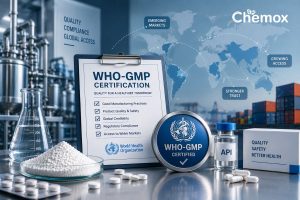
WHO-GMP certified manufacturer: The baseline standard for international API export. Required by regulatory authorities in MENA, Africa, Southeast Asia, and most emerging markets. Pricing reflects the cost of maintaining GMP compliance (documentation systems, QC equipment, environmental controls, regulatory audits).
USFDA-inspected facility: Required for US ANDA supply. Carries a premium reflecting the cost of USFDA facility inspections (complex, resource-intensive), data integrity systems, and ANDA-specific DMF maintenance. Price premium of 15–25% over WHO-GMP sources.
No GMP / unregistered trader: The cheapest quotes in the market come from trading intermediaries who aggregate API from unverified sources, Chinese brokers, or non-GMP Indian manufacturers. These suppliers cannot provide auditable facility credentials, reliable impurity data, or regulatory documentation. For any pharmaceutical manufacturing application, these are not viable sources regardless of price.
5. Drug Master File (DMF) Status
A DMF is not free to file or maintain — and not every supplier has one. For buyers supplying regulated markets (US, EU, Canada, Australia), an active IH-DMF or CEP for Tadalafil is mandatory, not optional. Manufacturers with filed DMFs charge a modest premium reflecting:
- The cost of preparing the technical package (process description, impurity fate mapping, validation data, stability program)
- Ongoing DMF maintenance fees
- Regulatory team capacity to respond to FDA/EMA queries from ANDA filers
A supplier without a DMF — even if they have GMP certification — cannot support your ANDA filing. The premium for DMF-supported API is always worth it for regulated-market buyers.
6. Packaging and Shipping Terms
Standard commercial Tadalafil API ships in 25 kg HDPE drums with double polyethylene liner — the industry standard for bulk API. The drum itself (high-grade HDPE, pharmaceutical-spec liner, sealed closure) adds a fixed cost per unit regardless of fill volume, which is one reason small orders cost more per kg.
Incoterms significantly affect the landed cost you are comparing between suppliers:
- EXW (Ex Works): Cheapest quoted price — you bear all freight, insurance, customs, and local delivery costs. Requires local freight forwarding expertise.
- FOB (Free on Board): Supplier delivers to origin port. Standard for most Indian pharmaceutical API exports. Most buyers use this for cost comparison.
- CIF (Cost, Insurance, Freight): Supplier quotes to destination port. Easiest to compare, but least transparent about individual cost components.
- DDP (Delivered Duty Paid): All-inclusive to your facility door. Highest quoted price but zero logistics surprises. Preferred by smaller buyers without pharma freight forwarding infrastructure.
Always compare supplier quotes on a consistent Incoterms basis — EXW from a Mumbai exporter and DDP to Cairo are not comparable prices.
7. Lead Time and Production Scheduling
Tadalafil API that is in stock (manufactured and released, sitting in warehouse) will be quoted at a small premium for immediate availability. Made-to-order production carries standard commercial lead time — typically 4–6 weeks from confirmed purchase order for Indian manufacturers.
Rush orders (requiring sub-2-week turnaround) carry a significant premium — typically 20–40% above standard pricing — because they displace scheduled production and require expedited QC release.
If your production planning allows 6–8 weeks of lead time, you will consistently get better pricing than buyers who come to the market with urgent requirements. Building a quarterly or semi-annual procurement schedule is the single most impactful operational decision for reducing your Tadalafil API cost.
8. Geography of Source Country
While India supplies over 90% of global Tadalafil API exports, buyers sometimes compare Indian pricing against Chinese or European-sourced material:
| Source Country | Price Position | Key Consideration |
|---|---|---|
| India | Competitive — mid-market | Best combination of price, regulatory compliance, and DMF depth |
| China | 15–30% cheaper than India | Weaker regulatory documentation for EU/US markets; nitrosamine compliance concerns |
| Europe (Switzerland, Germany) | 40–70% higher than India | For EU-GMP CEP holders; justified only for specific European market requirements |
| Israel / USA | Highest | Niche innovator/reference standard sources |
For most global generic manufacturers targeting MENA, Africa, Southeast Asia, or even EU/US markets, WHO-GMP certified Indian API represents the best total cost of ownership when you factor in documentation quality, regulatory risk, and audit-readiness alongside the unit price.
9. Relationship and Volume Commitment
This is the factor buyers talk about least and underestimate most. Tadalafil API manufacturers — like all B2B suppliers — price based on the expected value of the relationship, not just the individual transaction.
Buyers who:
- Provide a 12-month rolling forecast
- Commit to annual minimum volumes
- Pay on agreed terms without dispute
- Give advance notice of schedule changes
- Are easy to work with on documentation and regulatory queries
consistently get better pricing than spot buyers making one-time purchases with no context. If you intend to be a long-term buyer of Tadalafil API, communicate that upfront. A committed volume agreement with a pricing formula is almost always more cost-effective than buying spot.
India vs China: Tadalafil API Price Comparison for 2026
The China vs India comparison is the most frequent pricing question from MENA, African, and European buyers. Here is the 2026 picture:
Chinese Tadalafil API pricing is typically 15–30% lower than equivalent Indian pricing at comparable volumes. The price advantage reflects lower KSM input costs, government-subsidised energy, and the scale of Chinese synthesis capacity.
However, for regulated-market supply (US, EU, MENA requiring WHO-GMP, Commonwealth markets requiring BP documentation), the Chinese price advantage is offset by:
- Weaker DMF filing depth for ANDA submissions
- Documented nitrosamine compliance gaps that have triggered recalls and import alerts
- Data integrity concerns flagged in multiple USFDA warning letters to Chinese API facilities
- Documentation in Chinese (translation required for regulatory submissions, introducing error risk)
- Longer lead times for documentation queries from regulatory agencies
The net result: for pure price-driven procurement in non-regulated markets, Chinese Tadalafil API is cheaper. For regulated-market supply where documentation quality, regulatory risk, and audit-readiness are part of the procurement decision, Indian API from a WHO-GMP certified manufacturer with an active DMF represents better value at a modest price premium.
Price vs Total Cost of Ownership: The Right Way to Compare Tadalafil API Suppliers
Procurement teams often make the mistake of comparing Tadalafil API suppliers on unit price per kg alone. The correct comparison is total cost of ownership (TCO) — which includes:
| Cost Element | High-quality GMP Supplier | Low-cost Broker / Non-GMP |
|---|---|---|
| Unit price/kg | Higher | Lower |
| QC rejection rate (failed batches) | Low (1–2%) | High (5–15%) |
| Regulatory documentation cost | Included | You bear it (or resubmit) |
| Dual-source qualification cost | Not required | Required (risk mitigation) |
| Recall / market withdrawal risk | Very low | Elevated |
| Regulatory variation cost if supplier changes | Zero | High |
| Supplier audit cost | Low (open door) | High (if possible at all) |
| Total cost over 3 years | Lower | Higher |
The math consistently favours quality GMP suppliers when you account for the full cost picture. A single batch rejection or regulatory query triggered by poor API documentation can cost more in downtime, re-testing, and ANDA amendment fees than years of price premium to a quality supplier.
How to Get the Best Price on Tadalafil API: 7 Practical Tips
1. Consolidate your annual requirement into fewer, larger orders. Two 150 kg orders instead of six 50 kg orders can move you up a pricing tier and save 15–20% per kg.
2. Provide a 12-month forecast when requesting a quote. Manufacturers price committed volume differently from spot enquiries. Even a non-binding forecast signals seriousness.
3. Specify your exact grade and market upfront. Asking for “Tadalafil API” gets you a generic quote. Specifying “USP grade, IH-DMF cross-reference required, for ANDA filing in the US” gets you an accurate quote and prevents surprises.
4. Compare on FOB Nhava Sheva / FOB Mundra. Indian API exports typically price FOB from major Gujarat ports. Ensure all supplier comparisons use the same Incoterms basis.
5. Ask for CoA data from recent commercial batches before requesting a formal quotation. Reviewing assay, impurity profile, and residual solvent data from a real batch costs nothing and tells you more than a price list.
6. Ask about annual supply agreement pricing vs spot. Most serious GMP manufacturers offer significantly better pricing for 12-month supply agreements with quarterly delivery schedules.
7. Factor in the documentation package, not just the API. A supplier who is $20/kg cheaper but cannot provide a GMP certificate, IH-DMF access, and a compliant CoA is not actually cheaper the documentation gap will cost you more.
Chemox Pharma: Competitive, Transparent Tadalafil API Pricing from WHO-GMP Certified Source
Chemox Pharma Private Limited supplies Tadalafil Citrate API in IP, BP, EP, and USP grades from its WHO-GMP certified facility at Dahej Industrial Estate, Bharuch, Gujarat — India’s premier pharmaceutical manufacturing corridor.
What you get with every Chemox Pharma Tadalafil API order:
- Pharmacopoeia-grade API (IP/BP/EP/USP — specify your requirement)
- ≥99.0% assay by HPLC, full impurity profile per ICH Q3A
- Certificate of Analysis (CoA) from every commercial batch
- GMP Certificate from WHO-certified competent authority
- IH-DMF filing — reference letter available for ANDA/MA submissions
- ICH Q3C residual solvents data, ICH Q3D elemental impurities
- Stability data per ICH Q1A on request
- Complete export documentation: CoA, CoC, GMP cert, CPP, MSDS
- 25 kg HDPE drums, double PE liner, tamper-evident seal
- Standard lead time: 4–6 weeks from confirmed order
Pricing approach: Chemox Pharma provides firm, transparent price quotations based on your volume, grade requirement, and destination market — with no hidden costs. We do not charge separately for standard documentation. Annual supply agreement pricing is available for buyers with recurring requirements.
Export markets: Egypt, Saudi Arabia, UAE, Nigeria, Kenya, Jordan, Tanzania, Ghana, Bangladesh, Sri Lanka, Vietnam, and 15+ additional markets across MENA, Africa, and Asia.
Frequently Asked Questions
Q: What is the current Tadalafil API price per kg in 2026? Based on verified B2B transaction data from the global Tadalafil API market in 2026, GMP-certified commercial-grade Tadalafil API from Indian manufacturers is priced in the range of $120–$400/kg depending on order volume and grade. Sample quantities (1–10 kg) from GMP manufacturers are typically priced at $450–$600/kg. Non-GMP trading company quotes can be lower ($80–$150/kg) but should not be used for pharmaceutical manufacturing. Contact Chemox Pharma for a firm quotation based on your specific requirement.
Q: Why has the Tadalafil API price dropped in 2026? The fall in Tadalafil API pricing reflects post-patent-expiry market dynamics. With Eli Lilly’s Cialis patent having expired in late 2023, generic formulator demand drove a wave of new API manufacturer entrants globally — particularly from Indian and Chinese producers. The resulting increase in supply has outpaced the growth in generic Tadalafil tablet demand in the short term, creating downward price pressure. Based on current transaction data, Tadalafil API prices have declined approximately 28% over the trailing 90 days. This trend is expected to stabilise as generic market volumes grow and some smaller producers exit the market.
Q: Does grade (IP vs USP) significantly affect the Tadalafil API price? Yes. USP and EP grade Tadalafil API typically carries a premium of 10–20% above IP grade pricing from the same manufacturer. This reflects additional testing against specific pharmacopoeia monographs, reference standard costs, and the documentation overhead of maintaining DMF or CEP filings required for regulated-market submissions. For buyers supplying US or EU markets, USP or EP grade with DMF support is mandatory the premium is not avoidable and should be budgeted accordingly.
Q: Is Chinese Tadalafil API cheaper than Indian? Yes, Chinese Tadalafil API is typically 15–30% cheaper than equivalent Indian API at comparable commercial volumes. However, for regulated-market supply (US, EU, Commonwealth, WHO-GMP required markets), Chinese API carries higher regulatory risk due to weaker DMF documentation, documented nitrosamine compliance gaps, and data integrity concerns flagged by USFDA inspections of Chinese facilities. For most international buyers, WHO-GMP certified Indian API represents better value when total cost of ownership documentation quality, regulatory risk, audit-readiness — is included in the comparison.
Q: What is the minimum order quantity (MOQ) for Tadalafil API from Chemox Pharma? Chemox Pharma’s standard commercial MOQ is 25 kg (one drum). Development samples (100 g – 1 kg) are available for qualified buyers during the supplier evaluation phase. Please contact our business development team with your company details, required quantity, grade, and destination market to initiate a sample or quotation request.
Q: How do I get an accurate Tadalafil API price from Chemox Pharma? Email bd@chemoxpharma.com (For export) with the following information: required quantity (kg), pharmacopoeia grade (IP/BP/EP/USP), destination country, regulatory requirements (DMF cross-reference needed? CEP required?), and preferred Incoterms (FOB/CIF/DDP). Our business development team responds within 24 business hours with a firm quotation and supporting technical documentation.
Q: Are there price breaks for annual supply agreements? Yes. Buyers who commit to annual volumes with quarterly delivery schedules receive significantly better pricing than spot purchasers. Chemox Pharma offers 12-month supply agreements with fixed-price commitments, advance scheduling, and priority batch allocation. Contact our team to discuss annual pricing.
Request a Tadalafil API Price Quote from Chemox Pharma
Stop working from catalogue prices and broker estimates. Get a firm, transparent quotation for Tadalafil Citrate API from a WHO-GMP certified Indian manufacturer with IH-DMF filing, full documentation, and 20+ country export experience.
To request a quotation:
📧 Email: sales@chemoxpharma.com (fastest response — include your volume, grade, and destination)
📞 Call / WhatsApp: +91 9033440407 | +91 9033440408
🔗 Online inquiry form: Submit your requirement →
🔗 Tadalafil API product page: View full specifications →