Pharmaceutical API Market 2026: Size, Global Trends, Segments & Forecast
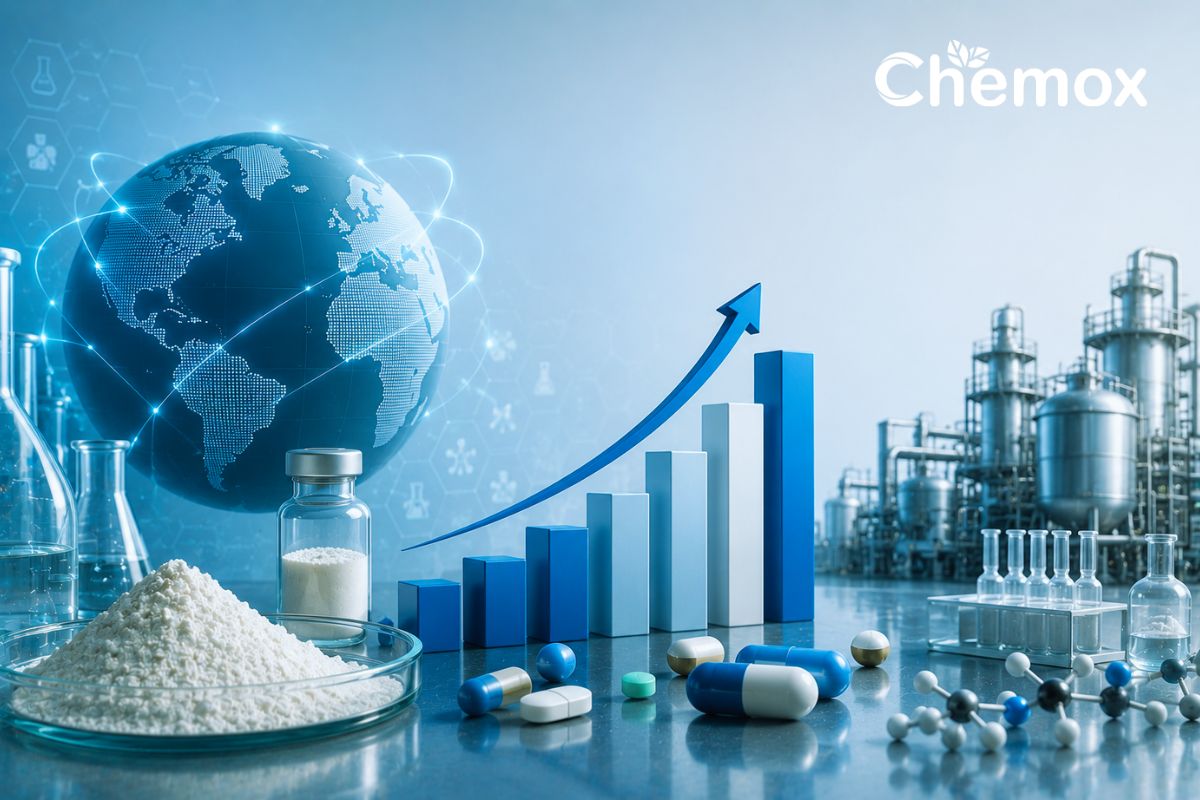
The pharmaceutical API market 2026 represents one of the most significant investment and sourcing opportunities in the entire global healthcare industry. As the backbone of every medicine produced worldwide from a paracetamol tablet to a complex monoclonal antibody the active pharmaceutical ingredient market underpins a USD 1.5 trillion global pharmaceutical industry that shows no signs of slowing.
In 2026, the numbers tell a compelling story: the global pharmaceutical API market is valued at approximately USD 261.28 billion, projected to reach USD 457.75 billion by 2034 at a CAGR of 7.26%. For pharmaceutical manufacturers, procurement teams, investors, and API suppliers worldwide, understanding the forces shaping this market the growth drivers, the therapeutic segments, the regional dynamics, and the technology trends is essential intelligence for competitive positioning in the years ahead.
This comprehensive guide covers everything you need to know about the pharmaceutical API market in 2026.
Global Pharmaceutical API Market Size at a Glance — 2026
Multiple leading research organizations have published 2026 market valuations that, while differing in methodology, consistently point to a market in the USD 245–266 billion range with strong, sustained growth ahead:
| Research Firm | 2026 Market Value | Forecast Year | Forecast Value | CAGR |
|---|---|---|---|---|
| Fortune Business Insights | USD 261.28 billion | 2034 | USD 457.75 billion | 7.26% |
| Mordor Intelligence | USD 245.67 billion | 2031 | USD 348.61 billion | 7.25% |
| Towards Healthcare | USD 234.33 billion | 2035 | USD 418.64 billion | 6.66% |
| Research & Markets | USD 266.72 billion | 2030 | USD 347.49 billion | 6.8% |
| Verified Market Research | USD 192.46 billion (2024) | 2032 | USD 336.23 billion | 7.18% |
Across all projections, the consensus is clear: the pharmaceutical API market 2026 is a multi-hundred-billion-dollar industry growing at a sustained CAGR of 6.5%–7.5% one of the most robust growth trajectories of any global industry segment. Non-communicable diseases are forecast to increase global prescription volumes by 22% between 2025 and 2030, directly amplifying baseline API requirements worldwide.
What Is Driving the Pharmaceutical API Market in 2026?
1. Rising Global Burden of Chronic Diseases
The most powerful and enduring driver of the pharmaceutical API market 2026 is the accelerating global burden of chronic non-communicable diseases cardiovascular disorders, diabetes, cancer, respiratory diseases, and neurological conditions. Aging populations across North America, Europe, and Asia are experiencing rising disease prevalence that directly translates into growing, sustained demand for the APIs that power long-term treatment regimens.
Cardiovascular APIs held a 28.26% share of the total API market in 2025 the single largest therapeutic segment by revenue. Oncology APIs, while currently smaller by share, are growing at the fastest rate of any therapeutic category. Meanwhile, diabetes affecting over 537 million adults globally with numbers projected to rise — is driving consistent, high-volume demand for anti-diabetic APIs including Metformin, Sitagliptin, and next-generation GLP-1 agonists.
2. The Generic Drug Wave and Patent Cliff
The ongoing patent cliff the expiration of patents on major branded pharmaceutical drugs is one of the most predictable and powerful structural growth drivers for generic APIs. As branded drugs lose patent protection, generic drug manufacturers globally race to file ANDAs and MAAs, creating immediate demand surges for the corresponding generic APIs.
Generic APIs are expected to register a significant CAGR over the forecast period, driven by the economics of generic drug production: lower drug prices that expand patient access, combined with higher volume sales that sustain manufacturer profitability. The generic API segment currently represents the majority of the pharmaceutical API market 2026 by volume, particularly in the cardiovascular, anti-diabetic, antibiotic, and CNS therapeutic categories.
3. Biologics and Biotech API Expansion
While synthetic APIs captured 65.78% of revenue in 2025 reflecting the dominance of small-molecule generic and branded drugs biological APIs are the fastest-growing segment of the pharmaceutical API market, expected to expand at a 9.22% CAGR through 2031. Biotech APIs encompass monoclonal antibodies, biosimilars, recombinant proteins, peptides, oligonucleotides, ADCs (antibody-drug conjugates), and emerging cell and gene therapy vectors.
The biologics sector is being propelled by the rapid expansion of immuno-oncology checkpoint inhibitors, bispecific antibodies, and CAR-T cell therapies alongside the explosive growth of GLP-1 receptor agonist biologics for obesity and diabetes management. WuXi AppTec, Lonza, and Samsung Biologics jointly invested USD 4.8 billion between 2024 and 2026 to expand biologics API capacity and introduce advanced manufacturing technologies, reflecting the scale of capital flowing into this high-value segment.
4. Outsourcing Growth and CDMO Expansion
A fundamental structural shift in the pharmaceutical API market 2026 is the accelerating transition from captive (in-house) API manufacturing to merchant (third-party) sourcing through Contract Development and Manufacturing Organizations (CDMOs). The merchant manufacturer segment held 48.27% of the API market share in 2025 and is projected to grow at a 9.82% CAGR through 2031 faster than any other manufacturer segment.
This outsourcing trend is driven by pharmaceutical companies seeking to reduce capital intensity, access specialist manufacturing capabilities for complex molecules, and build supply chain flexibility. CDMOs scaled faster than captives in 2024–2026 because continuous-flow and mini-plant technologies shortened cycle times and cut capital intensity for mid-volume APIs making outsourcing economically superior to vertical integration for all but the highest-volume molecules.
5. Supply Chain Reshoring and “China Plus One” Strategy
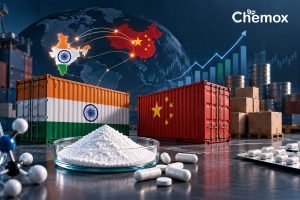
The COVID-19 pandemic exposed critical vulnerabilities in pharmaceutical supply chains concentrated in single geographies — particularly China, which controls approximately 80% of global generic API supply by volume. The result has been a sustained global movement toward supply chain diversification, with governments in India, the United States, and the European Union disbursing more than USD 4 billion in combined PLI incentives and tax-credit packages between 2024 and 2026 to shift new API capacity toward domestic manufacturing clusters.
The US Biosecure Act which restricts US pharmaceutical companies from working with certain Chinese CDMOs — has accelerated this trend, directing significant new outsourcing volumes toward Indian and European API manufacturers. This geopolitical reshaping of the API supply chain is not a temporary disruption; it is a structural reorientation that will continue to influence sourcing decisions through the 2030s.
Pharmaceutical API Market 2026 — Key Segments Explained
By Synthesis Type
Synthetic APIs dominate the pharmaceutical API market 2026 with a 65.78%–73% revenue share, encompassing all small-molecule drugs produced through chemical synthesis — from statins and antibiotics to antihistamines and antifungals. India and China are the world’s largest producers of synthetic APIs.
Biotech/Biological APIs hold 27%–35% of market share by value and are growing fastest, encompassing fermentation-derived molecules (penicillins, erythromycin), recombinant proteins, monoclonal antibodies, and gene therapy vectors.
By Therapeutic Area
| Therapeutic Segment | 2025 Market Share | CAGR (2026–2031) | Key Molecules |
|---|---|---|---|
| Cardiovascular | 28.26% | ~5.5% | Rosuvastatin, Atorvastatin, Amlodipine, Ramipril |
| Oncology | 22.4% | 10.57% | Imatinib, Paclitaxel, Sorafenib, ADCs |
| Anti-infectives | ~15% | ~5.7% | Azithromycin, Amoxicillin, Ceftriaxone |
| CNS/Neurology | ~12% | ~7% | Pregabalin, Sertraline, Levodopa |
| Metabolic/Diabetes | ~10% | ~8% | Metformin, Sitagliptin, GLP-1 APIs |
| Urology | ~5% | ~19% | Mirabegron, Tamsulosin, Sildenafil |
| Respiratory | ~4% | ~6% | Montelukast, Salbutamol, Budesonide |
Oncology is the standout growth segment — poised to outpace every other therapeutic category at a 10.57% CAGR through 2031, driven by the proliferation of targeted cancer therapies, ADC programs, and immuno-oncology pipelines. Oncology API is the largest therapeutic segment at 22.4% in North America, backed by advanced biopharmaceutical R&D and high spending on cancer treatments.
By Manufacturer Type
- Captive manufacturers (companies producing APIs for their own finished drug products) still represent a slight majority by revenue but are losing share to merchants
- Merchant manufacturers (third-party API producers supplying multiple customers) held 48.27% of 2025 market share and will likely surpass captive by 2028, growing at 9.82% CAGR
By Drug Type
- Prescription APIs dominate the market at approximately 75.9% of end-user share — driven by complex, regulated medicines requiring prescription in most markets
- OTC APIs are growing faster proportionally, led by antihistamines (Cetirizine, Fexofenadine), pain management molecules, and vitamins/supplements
Regional Analysis: Who Leads the Pharmaceutical API Market in 2026?
North America — The Revenue Leader
North America commanded 39.64%–47.22% of the global pharmaceutical API market in 2025, representing USD 75+ billion in API demand. The US alone holds approximately 90.8% of North American API market value, driven by the world’s largest pharmaceutical R&D investment base, the highest per-capita drug spending, and a robust biopharmaceutical sector demanding high-value, complex APIs including ADCs, mAbs, and gene therapy vectors.
Europe — The Quality Standards Benchmark
Europe generated USD 56.78–60.61 billion in API revenues in 2025–2026, representing approximately 23% of the global market. Increasing R&D investment by European pharmaceutical companies — combined with EU-GMP requirements that drive demand for certified API suppliers — sustain Europe’s position as a premium-quality, high-value API market. European buyers are particularly active in sourcing APIs from India, which offers EU-GMP compliant supply at competitive prices with full Written Confirmation and ASMF/CEP documentation.
Asia-Pacific — The Fastest-Growing Region
Asia-Pacific is forecast to grow at a 10.57% CAGR through 2031 — the fastest of any global region — making it the most dynamic geography in the pharmaceutical API market 2026. The region was valued at approximately USD 42 billion in 2025 and is expected to reach USD 75 billion by 2035.
India — contributing 8.8% of global API output and holding the highest number of USFDA-approved pharmaceutical facilities outside the US — is the region’s most strategically important API supplier. India’s PLI Scheme outlays, Bulk Drug Parks, and China Plus One beneficiary status are accelerating its share of both domestic consumption and global export volumes.
China — controlling ~80% of generic API supply by volume with 37.68% of Asia-Pacific’s API CDMO market value — faces growing regulatory scrutiny. China’s NMPA issued 62 warning letters in 2024–2025, driving facility upgrades but also causing brief supply disruptions that have accelerated the global diversification trend.
Middle East & Africa — The Emerging Opportunity
The Middle East and Africa API market, while the smallest region at USD 11.75 billion in 2025, is gradually evolving — propelled by improved healthcare access, expanding universal health coverage schemes, and government initiatives to boost local pharmaceutical manufacturing. The MENA API market is expected to reach USD 12.69 billion by 2032, with India serving as the primary supplier of cardiovascular, anti-diabetic, antibiotic, and urology APIs to the region.
Technology Trends Reshaping the Pharmaceutical API Market 2026
Continuous manufacturing: The transition from batch to continuous flow manufacturing is gaining momentum across both small-molecule and biologic API production. Continuous manufacturing reduces cycle times, lowers capital intensity for mid-volume APIs, and improves batch-to-batch consistency — critical for regulatory compliance in an era of tightening GMP expectations.
AI and digitalization: Artificial intelligence is being deployed across API drug discovery, process optimization, predictive quality control, and supply chain risk management. AI-powered drug discovery is shortening the timeline from target identification to clinical candidate nomination — generating demand for novel clinical-stage APIs at faster rates than traditional drug discovery approaches.
High Potency APIs (HPAPIs): Highly potent APIs — including cytotoxic oncology drugs, hormones, and ADC payloads — are growing at a 7.5%–8.79% CAGR, faster than the broader API market. HPAPI manufacturing requires dedicated, containment-equipped facilities and specialist handling expertise — creating a high-barrier, high-value manufacturing niche that leading Indian and European CDMOs are actively expanding into.
Green chemistry and ESG: Sustainable API manufacturing — including solvent recovery, enzymatic catalysis, continuous flow chemistry with reduced waste, and Zero Liquid Discharge — is transitioning from a corporate responsibility aspiration to a commercial requirement. European buyers in particular are making ESG compliance a supplier qualification criterion, creating competitive pressure on API manufacturers worldwide to demonstrate measurable sustainability progress.
India’s Critical Role in the Pharmaceutical API Market 2026
India’s contribution to the pharmaceutical API market 2026 cannot be overstated. With the India API market valued at USD 14.18 billion in 2025 growing to USD 22.18 billion by 2031 at a 7.74% CAGR — and cardiovascular APIs alone accounting for 23.20% of that market — India is not merely a participant in the global API market. It is a structural pillar of the world’s medicine supply.
India’s FDA-approved facility count (600+), WHO-GMP certified sites (1,400+), PLI-incentivized domestic API production, and growing EU-GMP compliant manufacturing base position it as the most complete and reliable API sourcing geography in the world — serving every major pharmaceutical market from the US and EU to MENA, Africa, and Southeast Asia.
Chemox Pharma: Positioned at the Heart of the Pharmaceutical API Market 2026
Chemox Pharma is a WHO-GMP certified Indian API manufacturer supplying 18+ export-ready molecules across cardiovascular, urology, antibiotic, antifungal, anti-asthmatic, and antihistamine categories — precisely the therapeutic segments driving the pharmaceutical API market 2026 growth story.

One Response