Generic Drug Market 2026: Size, Growth & India’s Dominant Role
The generic drug market 2026 is one of the most consequential stories in global healthcare a nearly half-trillion-dollar industry that keeps medicines affordable for billions of patients worldwide, sustains the economics of national healthcare systems, and creates the largest single demand driver for Active Pharmaceutical Ingredients manufactured in India. Understanding its size, its growth trajectory, and the forces shaping it is essential intelligence for every pharmaceutical manufacturer, API supplier, procurement professional, and investor operating in the global pharma supply chain.
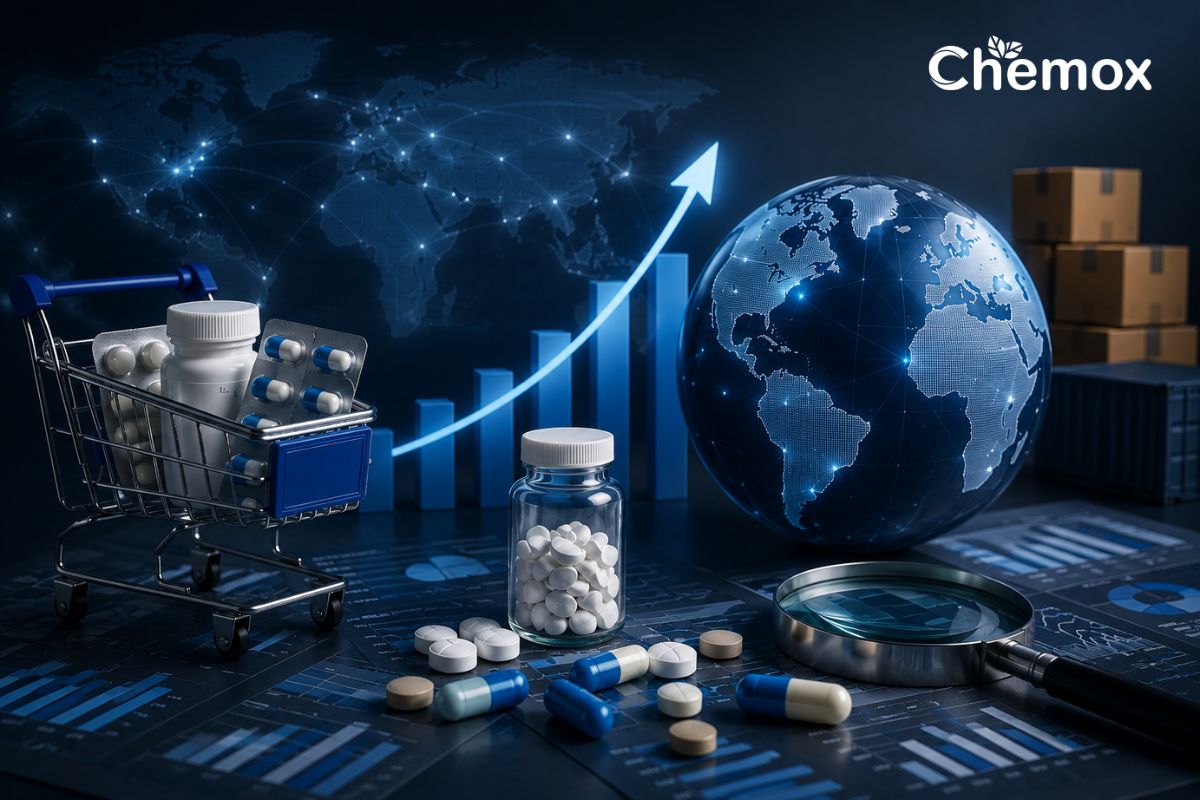
In 2026, the global generic drug market is valued at approximately USD 491.67 billion and is forecast to reach USD 762.48 billion by 2035, expanding at a CAGR of 5% over the next decade. Within this market, India has emerged as the undisputed dominant force accounting for over 60% of all Abbreviated New Drug Application (ANDA) submissions at the US FDA as of March 2026, supplying 20% of global generic medicines by volume, and manufacturing approximately 60,000 generic brands across 60 therapeutic categories.
This blog unpacks the global generic drug market 2026 in full the numbers, the drivers, the segments, the regions, and India’s irreplaceable role at the center of it all.
Global Generic Drug Market 2026: The Numbers at a Glance
Multiple leading market research organizations have published 2026 valuations that consistently point to a market in the USD 445–540 billion range, with strong, sustained growth forecast through 2035:
| Research Firm | 2026 Market Value | Forecast Year | Forecast Value | CAGR |
|---|---|---|---|---|
| Precedence Research | USD 491.67 billion | 2035 | USD 762.48 billion | 5.0% |
| Mordor Intelligence | USD 445.32 billion | 2031 | USD 571.12 billion | 5.11% |
| Towards Healthcare | USD 540.21 billion | 2035 | USD 859.84 billion | 5.3% |
| Expert Market Research | USD 455.29 billion | 2035 | USD 887.29 billion | 6.9% |
| Grand View Research | USD 453.19 billion | 2030 | USD 588.24 billion | 6.7% |
| Coherent Market Insights | USD 480 billion | 2033 | USD 720 billion | 6.3% |
Across all projections, the consensus is a market growing consistently at 5%–7% annually one of the most reliable growth trajectories in all of global healthcare. Generic medicines already account for more than 90% of all dispensed prescriptions in the United States while representing only 18% of total drug spending a ratio that demonstrates the extraordinary cost-efficiency value proposition that drives policy support, payer preference, and patient adoption globally.
5 Structural Forces Driving the Generic Drug Market 2026
1. The Patent Cliff — USD 40 Billion in Annual Revenue Opening Up
The single most powerful mechanical driver of the generic drug market 2026 is the expiration of patents on major branded pharmaceutical products. Patent cliffs scheduled between 2026 and 2028 are expected to release approximately USD 40 billion in annual branded revenue to generic substitution. High-profile patent expiries driving immediate generic market opportunities include blockbuster molecules such as Sitagliptin (Januvia), Apixaban (Eliquis), and most significantly, Semaglutide Novo Nordisk’s blockbuster GLP-1 receptor agonist for diabetes and obesity. After Novo Nordisk’s active-ingredient patent expired in India, companies including Sun Pharma, Dr. Reddy’s, Zydus, Glenmark, and Natco have already launched generic versions — with prices for generic Semaglutide potentially reduced by up to fifteenfold depending on the manufacturer, drug, and dosage form.
This patent cliff dynamic is not a one-time event. The pipeline of blockbuster drugs approaching patent expiry through the early 2030s means that the structural tailwind supporting the generic drug market 2026 and beyond is both predictable and substantial.
2. Government Policy Supporting Generic Drug Adoption
Governments and health systems worldwide are aggressively implementing policies that drive generic drug substitution motivated by the dual imperative of improving healthcare access and controlling costs.
In the United States, the Inflation Reduction Act’s drug price negotiation framework is expected to expand from 10 to 60 drugs over the forecast period, magnifying payer leverage and systematically reinforcing generic adoption. The FDA’s GDUFA III program has cut ANDA approval times to 10 months — with the FDA clearing 90% of ANDAs within that timeframe in fiscal 2024, up from 78% in 2022, after adding 200 dedicated reviewers and deploying AI-assisted review tools. In Japan, generic substitution targets have been raised to 85% by 2025, supported by pharmacy dispensing incentives. Australia broadened its Pharmaceutical Benefits Scheme generic listings by 120 molecules in 2024.
These policy interventions are not incidental — they are systematic, government-driven demand creation programs for generic medicines that directly translate into sustained API sourcing requirements.
3. Rising Chronic Disease Burden Sustaining Long-Term Demand
Chronic non-communicable diseases cardiovascular disorders, diabetes, cancer, respiratory diseases, and neurological conditions — require long-term, often lifelong medication. Cardiovascular disease leads the generic drug market in 2025, accounting for 25.34% of market share, driven by the widespread prescription of statins, ACE inhibitors, and antihypertensives at scale. The diabetes segment held a dominant therapeutic presence, and the cardiovascular disease segment is expected to grow at the fastest CAGR in the coming period, driven by rising hypertension, obesity, and metabolic syndrome prevalence worldwide.
Critically, more than 350 million people worldwide have been diagnosed with arthritis, over 10 million new cancer cases occur annually in men alone, and the global diabetes population continues to expand each condition representing a sustained, growing pool of patients requiring consistent pharmaceutical therapy. Generic medicines are the primary tool through which health systems deliver these therapies at scale.
4. Biosimilar Expansion — The Generic Market’s High-Value Frontier
The biosimilar segment is projected to grow at the fastest CAGR of 9.6% over the forecast period representing the generic drug market’s highest-value growth frontier. As patents on major biologic medicines expire, biosimilars — the generic equivalent of complex biologic drugs are entering the market and delivering cost savings in oncology, immunology, and metabolic disease therapy categories where branded biologics previously commanded premium prices.
The cancer segment of generic drugs is projected to grow at the fastest CAGR of 11.3% across the forecast period, supported by increasing reliance on drug-based oncology treatments, sustained therapy durations, and expanding generic and biosimilar penetration across high-incidence cancers. For API suppliers, the biosimilar wave represents a shift toward higher-complexity, higher-value biological APIs — a strategic expansion opportunity for manufacturers who invest in the necessary fermentation and bioprocessing capabilities.
5. E-Pharmacy and Digital Distribution Accelerating Access
Online pharmacies are projected to post an 8.89% CAGR from 2026 to 2031 — the fastest growth of any distribution channel in the generic drug market. The digitalization of pharmaceutical retail is expanding access to generic medicines in markets where physical pharmacy infrastructure is limited, reducing friction in prescription fulfillment, and enabling price comparison behavior that systematically favors generics over branded alternatives. For generic drug manufacturers, this shift in distribution architecture expands the accessible end-market for their products, particularly in underserved geographies across Asia, Africa, and Latin America.
Generic Drug Market 2026 — Key Segments
By Type
- Simple generics led the market with 68.32% revenue share in 2025 — small-molecule, oral solid dosage forms that are straightforward to manufacture and bioequivalent to their branded reference drugs
- Specialty generics and complex generics are growing faster, requiring more sophisticated manufacturing capabilities including inhalation devices, transdermal patches, and sterile injectable manufacturing
- Biosimilars represent the highest-value, fastest-growing sub-segment at 9.6% CAGR
By Route of Administration
- Oral generics dominate — tablets, capsules, and oral solutions are convenient, widely accepted, and most straightforward to manufacture at scale
- Injectables held 61.48% share in 2025 by formulation value — the highest-value route driven by oncology, hospital-administered biologics, and sterile formulations
- Inhalables are forecast to grow at 6.02% CAGR through 2031 — driven by growing respiratory disease management programs
By Therapeutic Area
| Segment | 2025 Market Share | CAGR | Key Generic Molecules |
|---|---|---|---|
| Cardiovascular | 25.34% | Fastest growing | Rosuvastatin, Atorvastatin, Amlodipine, Ramipril |
| Diabetes / Metabolic | Largest therapeutic share | ~8% | Metformin, Sitagliptin, Semaglutide |
| Oncology | Growing rapidly | 11.3% | Imatinib, Paclitaxel, Erlotinib |
| CNS / Neurology | Significant | ~7% | Pregabalin, Sertraline, Donepezil |
| Respiratory | Stable | ~6% | Montelukast, Salbutamol, Fluticasone |
| Anti-infectives | High volume | ~5.7% | Azithromycin, Amoxicillin, Ciprofloxacin |
By Distribution Channel
- Hospital pharmacies held 47.16% of 2025 market share — bulk procurement of injectables and specialty generics
- Retail pharmacies dominate OTC and chronic disease generic volume
- Online pharmacies — fastest-growing channel at 8.89% CAGR through 2031
Regional Breakdown: Who Leads the Generic Drug Market 2026?
North America — The Revenue Leader
North America dominated the global generic drug market in 2025 with a 39%–42.76% revenue share, underpinned by Medicare Part D and Medicaid purchasing power, the FDA’s accelerated ANDA approval processes, and the US government’s strong policy commitment to generic drug substitution. The US generic drug market alone is valued at USD 153.40 billion in 2026, forecast to reach USD 243.70 billion by 2035 at a 5.25% CAGR.
Europe — The Generic Policy Model
Europe’s generic market is characterized by high generic penetration rates supported by mandatory substitution policies in major markets. Germany’s generic drug market is valued at approximately USD 35.1 billion in 2026, with generics accounting for about 84% of pharmaceutical volume under third-party payers. The EU-India Free Trade Agreement — a landmark deal signed and in advanced implementation — is creating new, streamlined access for Indian generic manufacturers to the European market, with significant long-term implications for generic API sourcing and finished formulation trade flows.
Asia-Pacific — The Fastest-Growing Region
Asia-Pacific is expected to record a 7.89% CAGR through 2031 — the fastest of any region — representing the most dynamic geography in the generic drug market 2026. India’s USD 2 billion Production-Linked Incentive scheme is stimulating API self-reliance and building the raw material foundation that supports generic drug manufacturing growth. China’s volume-based procurement programs are accelerating quality-focused generic consolidation. Japan’s 85% substitution targets are creating sustained volume demand. South Korea’s Samsung Biologics is cementing the region’s biosimilar manufacturing prominence.
The Asia-Pacific region’s generic market is driven by expanding pharmaceutical manufacturing capacity, rising healthcare access, growing chronic disease prevalence, and increasing domestic demand from a rapidly expanding middle class across India, Indonesia, Vietnam, and the Philippines.
Middle East & Africa — The Emerging Opportunity
Generic drugs dominate pharmaceutical consumption across MENA and Sub-Saharan Africa — government health systems purchase almost exclusively generic medicines through tender-based procurement, driven by affordability imperatives. India is the primary supplier of generic drug APIs to both regions, with the MENA API market valued at USD 7.78 billion in 2024 and growing at 6.3% CAGR through 2032.
India’s Dominant Role in the Generic Drug Market 2026
India’s position in the generic drug market 2026 is not merely significant — it is structurally irreplaceable. The data tells an unambiguous story:
ANDA dominance: In March 2026, India accounted for over 60% of all Abbreviated New Drug Application (ANDA) submissions at the US FDA — the single most telling metric of India’s dominance in the pipeline of new generic drug approvals targeting the world’s most lucrative pharmaceutical market.
Global supply scale: India supplies approximately 20% of global generic medicines by volume and manufactures around 60,000 generic brands across 60 therapeutic categories — a breadth of product coverage that no other country comes close to matching.
Manufacturing infrastructure: India hosts over 670 US FDA-approved pharmaceutical manufacturing facilities — more than any country outside the United States — along with approximately 10,500 total manufacturing units across 3,000 pharmaceutical companies.
Domestic market growth: The India generic drug market itself is a significant growth story — valued at USD 26.31–30 billion in 2025 and growing at 6.10%–6.42% CAGR to reach USD 35.40–53.5 billion by 2030–2034. India’s pharmaceutical market overall is projected to reach USD 130 billion by 2030.
API backbone: India’s generic drug manufacturing supremacy rests on its API manufacturing foundation — with 500+ different APIs manufactured domestically, contributing 57% of APIs to the WHO prequalified list, and holding approximately 8% of the global API market. Every generic tablet, capsule, or injection manufactured in India begins with an API — making India’s API manufacturing strength the direct enabler of its generic drug market dominance.
The value gap opportunity: While India accounts for 20% of global generic API supply by volume, it holds only 8% of the global API market by value — a disparity that highlights a significant strategic opportunity for Indian manufacturers to move up the value chain into higher-potency, more complex, and biologic API categories.
What the Generic Drug Market 2026 Means for API Suppliers
For API manufacturers including India-based suppliers like Chemox Pharma the generic drug market 2026 represents the primary commercial rationale for their business. Every generic drug formulation requires one or more active pharmaceutical ingredients supplied to pharmacopoeial specifications with verified GMP compliance. As the generic drug market grows from USD 491 billion today toward USD 762 billion by 2035, the demand for compliant, high-purity APIs grows in direct proportion.
The therapeutic areas growing fastest in generics — oncology (11.3% CAGR), biosimilars (9.6%), cardiovascular (fastest therapeutic CAGR), and diabetes — map directly to the API categories in highest demand globally. For generic drug manufacturers seeking to formulate and launch products in these high-growth segments, finding a reliable, GMP-certified API supplier with the right product portfolio, the right regulatory documentation, and the right supply chain reliability is the most consequential sourcing decision they will make.
Chemox Pharma: Supporting the Generic Drug Market 2026
Chemox Pharma is a WHO-GMP certified Indian API manufacturer supplying 18+ export-ready molecules — including Rosuvastatin Calcium, Atorvastatin Calcium, Azithromycin, Mirabegron, Cetirizine Hydrochloride, Fexofenadine Hydrochloride, and more — precisely the APIs that power the cardiovascular, anti-infective, urology, and antihistamine segments of the generic drug market 2026.
Our APIs are supplied to generic pharmaceutical manufacturers across 20+ countries in Asia, MENA, Africa, and beyond — with comprehensive Certificates of Analysis, WHO-GMP certification, ICH Zone IVb stability data, and full regulatory documentation support that accelerates your generic drug registrations in every target market.