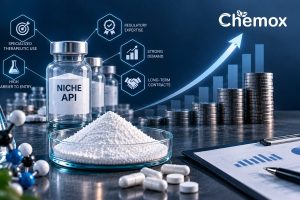
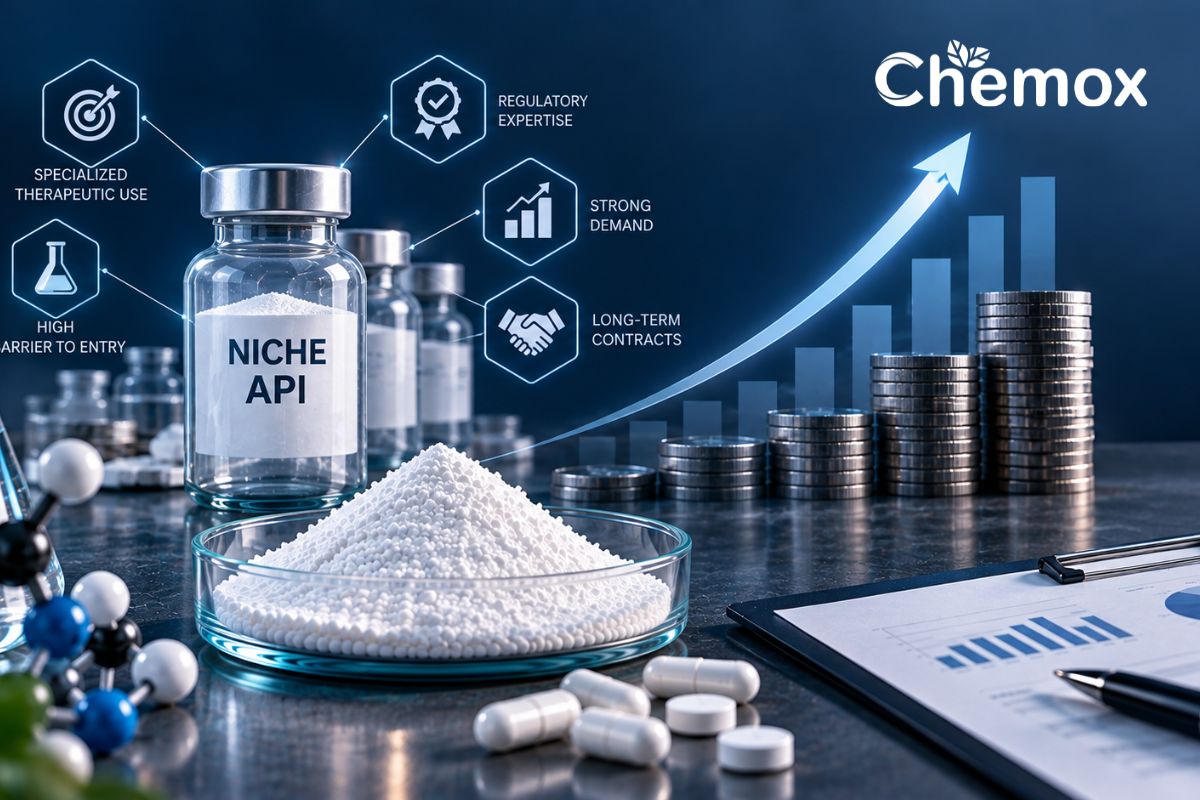
The active pharmaceutical ingredient (API) industry has long been seen as a volume game: high output, thin margins and constant pricing pressure from generic buyers. Yet a quiet shift is under way. Private equity firms, strategic acquirers and institutional investors are increasingly willing to pay more for smaller, specialized producers. The niche API manufacturer premium valuation is now a real pattern in pharma M&A, and it is most visible among companies that handle complex molecules and controlled substances.
So why does a specialist command a higher multiple than a larger commodity producer? The answer lies in defensibility, predictability and scarcity.
What Is a Niche API Manufacturer?
A niche API manufacturer focuses on a narrow set of products where technical difficulty, regulatory requirements or limited demand keep competition low. These typically include:
- Controlled-substance APIs, such as opioids, stimulants, benzodiazepines and other scheduled molecules
- Highly potent APIs (HPAPIs) that require specialized containment
- Complex synthesis molecules with multi-step, hard-to-scale chemistry
- Low-volume, high-value APIs for orphan drugs, pediatric formulations or specialty therapies
These companies do not compete on being the cheapest. They compete on being one of the few who can do the job reliably, legally and at the required quality.
1. Regulatory Barriers Create a Powerful Moat
Controlled-substance manufacturing is among the most tightly regulated activities in the pharmaceutical supply chain. Producers must hold specific licenses, comply with strict quota systems, maintain secure facilities, and meet detailed record-keeping and reporting obligations. Cross-border movement adds import and export permits on top.
For a new entrant, getting through this process can take years and demands significant capital and compliance expertise. For investors, that is exactly the appeal. An established licensed manufacturer holds an asset that cannot be replicated quickly, and that scarcity is a core driver of a niche API manufacturer premium valuation.
2. Higher and More Stable Margins
Commodity APIs often face aggressive price erosion as more suppliers enter the market. Niche and controlled-substance APIs behave differently. With fewer qualified suppliers, manufacturers have more pricing power, and customers are often reluctant to switch for small savings because requalification is costly and risky.
The result is healthier EBITDA margins and more predictable earnings, which investors reward with higher multiples.
3. Sticky, Long-Term Customer Relationships
Once an API source is written into a regulatory filing (such as a Drug Master File reference or an approved drug application), changing suppliers means new validation work, new stability data and possible regulatory submissions. Pharma customers avoid this unless they have to.
This creates:
- Long-term supply agreements
- Recurring, forecastable revenue
- Lower customer churn
Revenue visibility is one of the most valuable qualities in an acquisition target, and niche manufacturers tend to have plenty of it.
4. Supply Chain Resilience Has Become a Strategic Priority
Recent years have shown the risks of over-reliance on a limited number of geographies for critical pharmaceutical inputs. Drug makers and governments are now actively looking to diversify their sourcing and secure dependable suppliers with strong compliance records.
Manufacturers with a clean regulatory history, transparent quality systems and dependable delivery are well placed to benefit. Investors see them as strategic assets, not just contract suppliers, and price them accordingly.
5. Specialized Expertise Is Hard to Buy
Technical know-how is a major part of a niche manufacturer’s value. Handling potent compounds safely, optimizing difficult synthesis routes and managing controlled-substance logistics requires experienced chemists, engineers and compliance teams. This knowledge builds up over years and cannot simply be hired overnight.
Investors view this embedded expertise as intellectual capital that protects the business from new competition and supports future product development.
6. Attractive Growth Drivers
Several demand trends strengthen the investment case:
- Growth in specialty and orphan drugs, which rely on smaller-volume, higher-value APIs
- Rising demand for medicines treating pain, ADHD, anxiety and neurological conditions, many of which depend on controlled substances
- Expanding contract development and manufacturing (CDMO) opportunities as pharma outsources complex work
- Increasing regulatory scrutiny, which favors established and compliant manufacturers over unproven newcomers
Together these factors give niche producers a clear growth path without the volatility of commodity markets.
7. Scarcity Drives M&A Interest
Quality targets are limited. There are only so many licensed, audit-ready, well-run niche API facilities, and many large pharma and CDMO groups want to add specialized capabilities through acquisition rather than build them from scratch. This competition among buyers supports a niche API manufacturer premium valuation, particularly for companies with strong compliance track records and diversified customer bases.
What Investors Look for Before Paying a Premium
Not every niche player earns a premium. Investors typically look for:
- Clean regulatory history, including successful inspections and audits
- Valid licenses and secure quota positions
- Diversified customers and product portfolio
- Scalable, modern infrastructure
- Strong quality management systems
- A visible product pipeline and development capability
Companies that tick these boxes are best positioned to attract premium offers.
The Bottom Line
The market has realized that in API manufacturing, being specialized is often more valuable than being big. Regulatory barriers, sticky customers, healthy margins and scarce expertise combine to make niche and controlled-substance producers highly attractive. That is why the niche API manufacturer premium valuation is likely to persist as demand for specialty therapies and resilient supply chains continues to grow.
Partner With a Specialist API Manufacturer
At Chemoxpharma, we understand what quality, compliance and reliability mean in a demanding API supply chain. If you’re looking for a dependable partner for specialized API requirements, we’d be glad to talk.
Contact Chemoxpharma today to discuss your sourcing needs.