
EU Written Confirmation API Import: What Singapore’s Recognition Means for Indian Exporters
On October 26, 2026, the European Commission adopted a decision recognising Singapore’s regulatory framework for active substances as equivalent to the EU’s. Indian exporters still need a written confirmation for each site and substance, and this decision does not change that.
The Quick Answer
• What happened: The Commission adopted a decision on October 26, 2026 that Singapore’s framework for active substances, including GMP requirements and enforcement, is equivalent to the EU’s. Once it enters into force, Singapore joins the EU’s list of recognised third countries (Commission listing page).
• What that list does: Countries on it do not need to issue a written confirmation for APIs exported to the EU.
• What it means for India: India does not appear on the Commission’s list. Indian API sites continue to need a written confirmation from CDSCO for the substances they export to the EU.
• What to do: Check that each EU-bound site and substance has a valid confirmation, and track the expiry date. See our guide to API manufacturing quality and compliance in India.
What Is a Written Confirmation?
Under Article 46b of Directive 2001/83/EC, active substances for human medicines can be imported into the EU only if two things are true:
1. They were made under GMP at least equivalent to EU standards.
2. They come with a written confirmation from the competent authority of the exporting country.
According to the EMA, the confirmation is issued for each manufacturing site and each active substance. It states that:
• the plant’s GMP standards are at least equivalent to the EU’s;
• the plant is under regular, strict and transparent controls, including unannounced inspections, with effective GMP enforcement; and
• the exporting country will tell EU authorities about any non-compliance findings without delay.
The requirement took effect on July 2, 2013. The exporting country sets how long a confirmation stays valid.
Who Is Exempt: The EU’s List of Recognised Countries
The written confirmation requirement does not apply if the exporting country is on the Commission’s list under Article 111b. The Commission’s page shows these adoption dates:
Country
Adopted (as listed by the Commission)
Singapore – October 26, 2026
Taiwan – November 10, 2023
Canada – January 26, 2023
South Korea – May 15, 2019
Brazil – July 2, 2015
Israel – July 2, 2015
United States – June 21, 2013
Japan – June 5, 2013
Australia – April 25, 2013
Switzerland – November 23, 2012
The page also lists New Zealand as on hold pending clarification of the scope of an existing agreement. India does not appear in the table. We found no public entry showing an Indian request for listing.
What Changed With Singapore
According to the Commission and trade press (LexisNexis, October 28, and gmp-compliance.org, November 4):
• Singapore asked for the assessment in February 2025.
• The assessment included a review of documents from Singapore’s Health Sciences Authority and an on-site review of its regulatory system.
• The Commission adopted the decision on October 26, 2026. Once it enters into force, Singapore joins the list. We did not find the date it enters into force, so check the Official Journal.
The reports say listing should simplify export procedures while keeping oversight of quality and GMP compliance. They did not discuss any effect on India.
How Long Does Listing Take?
The Commission’s table suggests listing takes years, not months:
• Singapore: requested February 2025, adopted October 2026, about 20 months.
• Taiwan: requested December 2021, adopted November 2023, about 23 months.
• Canada: requested October 2018, adopted January 2023, more than four years.
• South Korea: requested January 2015, adopted May 2019, more than four years.
The Commission says a request “can take several months to process” for the assessment itself, but these dates show the full process is longer. For an exporter relying on a written confirmation, the practical point is that the current system is likely to stay in place for the foreseeable future. Our post on the India–UK FTA and API exports covers another route by which market access is changing.
What It Means for Indian API Exporters
What does not change
• Each EU-bound API site still needs a written confirmation from CDSCO, per substance.
• EU importers are expected to obtain a valid confirmation for each consignment, so customers will ask for yours.
• The decision does not alter GMP, inspection or documentation expectations for Indian sites. See how quality testing works in API manufacturing.
What to keep in mind
• Competitive context. Some competing sources can now ship to the EU without a written confirmation. We found no data on how much Singapore-made API this affects, so we would not treat it as a market shift.
• Paperwork timing. For Indian sites, the confirmation is a gate before shipment. A lapsed one can delay an EU order.
• The system can change. The listing mechanism shows that equivalence is possible, but it is a government-to-government process, not something an individual exporter controls. For wider context, read why the Indian API industry is a global hub in 2026.
What Happens Without a Written Confirmation?
Two mechanisms are described in EU guidance:
• Shortage waiver. Under Article 46b(4), an EU member state may waive the confirmation for a plant it has inspected and found GMP-compliant, where needed to secure the supply of medicines. The waiver cannot last longer than the validity of the GMP certificate.
• Risk-based handling of consignments. An HMA guideline from 2013 says the importer must first try to obtain a written confirmation. If that fails, it prepares a risk assessment for the national authority, covering why no confirmation was received, stock levels, the product’s use and alternatives. Consignments can be held at the EU border in the meantime. That guideline was described as an interim procedure at the time, so check the current guidance.
Neither route is something to plan around. The safer approach is to have the confirmation in place before shipping.
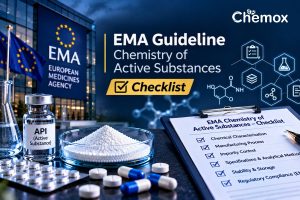
A Checklist for Indian API Exporters Shipping to the EU
1. Confirm coverage per site and substance. List every EU-bound API and check that it appears on the site’s written confirmation. The CDSCO confirmation we reviewed lists covered substances in an annexure.
2. Track the expiry date. That CDSCO confirmation shows a “valid until” date. Set a reminder well before it, since renewal depends on the authority’s schedule.
3. Align it with your inspection history. The confirmation refers to an inspection date. Keep GMP certificates and inspection records current.
4. Add new products before you quote. If you plan to supply a new API to the EU, check whether the confirmation needs updating first.
5. Tell your customers early. Share your confirmation status and expiry with EU importers, who check it.
6. Prepare for unannounced inspections. The confirmation says sites face regular, strict controls, including unannounced inspections.
7. Keep documents consistent. CoAs, specifications, site details and the confirmation should all name the same site and substance. Our Tadalafil manufacturer vs trader guide shows what to check.
8. Watch the Official Journal. Track the Singapore entry-into-force date and any future changes to the list.
Chemox Pharma’s Perspective
Chemox Pharma is a WHO-GMP certified manufacturer of APIs and intermediates, with its own facility and in-house R&D centre in Dahej, Gujarat. If you are planning an EU-bound product, our team can discuss the APIs and intermediates we offer and the documentation available for your specific product. Regulatory status and documentation vary by product and site, so please confirm the details with us directly. Read why choosing the right API pharmaceutical company matters.
Request a Quote and Documentation
If you are sourcing APIs or intermediates for an EU-bound product and want to discuss documentation, send us your product list and target market and contact Chemox Pharma for a quote.
FAQs
Q: What is a written confirmation for APIs imported into the EU?
It is a statement from the exporting country’s competent authority, issued for each manufacturing site and active substance, confirming that GMP standards are at least equivalent to the EU’s, that the site is under regular and strict controls, and that non-compliance will be reported to the EU. It has applied since July 2, 2013.
Q: Who does not need a written confirmation?
Exporters from countries on the Commission’s Article 111b list, which currently includes Switzerland, Australia, Japan, the United States, Brazil, Israel, South Korea, Canada and Taiwan, with Singapore adopted on October 26, 2026.
Q: Does the Singapore decision change the EU written confirmation API import rules for India?
No. India is not on the list, and the reports we found did not discuss any effect on India. Indian API sites still need a written confirmation from CDSCO for each EU-bound substance. See also our note on US pharma tariffs and Indian exporters.
Q: How long is a written confirmation valid?
The exporting country sets the validity. A CDSCO confirmation we reviewed states a “valid until” date, so check the date on your own document.
Q: What happens if an API consignment arrives without a written confirmation?
The importer must first try to obtain one. If it cannot, it prepares a risk assessment for the national authority, and a member state may waive the requirement for an inspected, GMP-compliant plant where needed to secure supply. Consignments can be held in the meantime.