Introduction
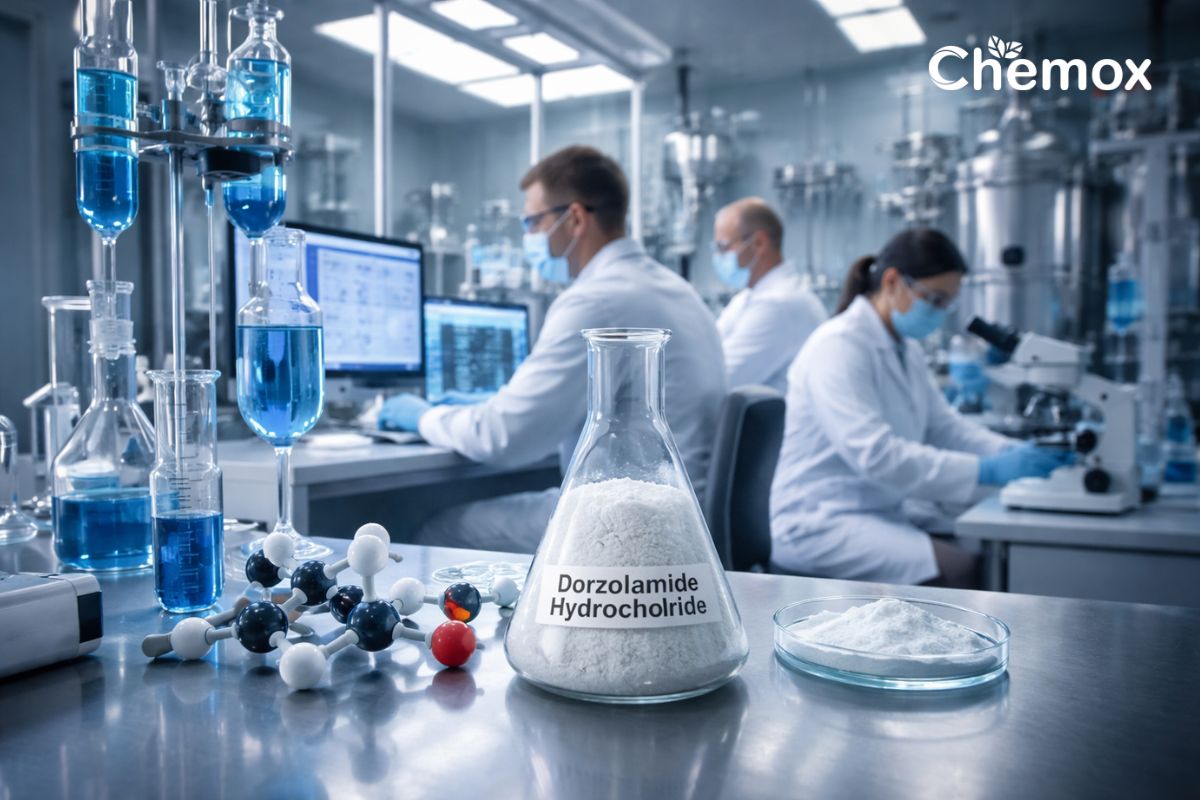
Dorzolamide Hydrochloride API Manufacturing plays a crucial role in the pharmaceutical industry, particularly in the production of ophthalmic formulations used to treat glaucoma and ocular hypertension. As demand for high-quality ophthalmic APIs continues to rise globally, manufacturers must focus on precision, purity, and regulatory compliance.
This blog provides a comprehensive, step-by-step overview of the Dorzolamide Hydrochloride API manufacturing process, helping buyers, pharma professionals, and sourcing managers understand the complexity and quality standards involved.
What is Dorzolamide Hydrochloride API?
Dorzolamide Hydrochloride is a carbonic anhydrase inhibitor used in eye drops to reduce intraocular pressure. The API must meet stringent purity and quality standards since it is used in sensitive ophthalmic applications.
Step 1: Selection of Raw Materials
The manufacturing process begins with the careful selection of high-quality raw materials and intermediates.
- All starting materials must comply with pharmacopeial standards
- Vendors are qualified through strict quality audits
- Impurities in raw materials are minimized to ensure final API purity
Key Focus: Consistency in raw material quality directly impacts yield and impurity levels in the final product.
Step 2: Chemical Synthesis
The core of Dorzolamide Hydrochloride API Manufacturing lies in its multi-step chemical synthesis process.
Key Highlights:
- Involves formation of the sulfonamide structure
- Controlled reaction conditions (temperature, pH, pressure)
- Use of specialized reagents and catalysts
Each reaction stage is optimized to:
- Maximize yield
- Reduce by-products
- Maintain chemical stability
Challenge: Even minor deviations can lead to unwanted impurities, making process control critical.
Step 3: Reaction Monitoring and Process Control
During synthesis, real-time monitoring ensures the reaction proceeds as expected.
Techniques Used:
- In-process sampling
- Chromatographic analysis (HPLC/GC)
- pH and temperature tracking
This step ensures:
- Batch-to-batch consistency
- Early detection of deviations
- Reduced risk of batch rejection
Step 4: Isolation of Intermediate Compounds
After the reaction is complete, intermediate compounds are isolated.
Methods Include:
- Filtration
- Centrifugation
- Phase separation
These intermediates are often:
- Washed to remove impurities
- Dried under controlled conditions
Importance: Proper isolation ensures minimal contamination before final conversion to the API.
Step 5: Conversion to Dorzolamide Hydrochloride Salt
The isolated compound is then converted into its hydrochloride salt form, which enhances solubility and stability.
Process:
- Reaction with hydrochloric acid under controlled conditions
- Monitoring pH levels for precise salt formation
This step is critical because:
- It defines the final chemical identity of the API
- Impacts bioavailability in ophthalmic formulations
Step 6: Purification Process
Purification is one of the most important stages in Dorzolamide Hydrochloride API Manufacturing.
Techniques Used:
- Recrystallization
- Activated carbon treatment
- Solvent purification
Goals:
- Remove residual solvents
- Eliminate impurities and by-products
- Achieve pharmacopeial purity standards
High purity is essential for ophthalmic APIs due to direct contact with sensitive eye tissues.
Step 7: Drying and Milling
Once purified, the API undergoes drying and particle size optimization.
Drying Methods:
- Vacuum drying
- Tray drying
Milling:
- Achieves uniform particle size
- Improves formulation performance
Outcome: A stable, free-flowing powder suitable for formulation.
Step 8: Quality Control and Testing
Quality control ensures that the API meets all regulatory and pharmacopeial standards.
Key Tests Include:
- Assay (potency)
- Impurity profiling
- Residual solvent analysis
- Particle size distribution
- Moisture content
Advanced techniques like HPLC (High-Performance Liquid Chromatography) are used to ensure accuracy.
Compliance Standards:
- ICH guidelines
- WHO-GMP
- USFDA (if applicable)
Step 9: Stability Studies
Stability studies determine the shelf life and storage conditions of the API.
Conducted Under:
- Accelerated conditions
- Long-term storage conditions
This helps ensure:
- Product consistency over time
- Safe transportation and storage
Step 10: Packaging and Storage
The final API is packed under controlled conditions to maintain its quality.
Packaging Materials:
- HDPE drums
- Double-lined polyethylene bags
Storage Conditions:
- Controlled temperature
- Low humidity environment
Proper packaging prevents:
- Moisture ingress
- Contamination
- Degradation
Step 11: Documentation and Regulatory Compliance
Every stage of Dorzolamide Hydrochloride API Manufacturing is documented for traceability.
Key Documents:
- Batch Manufacturing Records (BMR)
- Certificate of Analysis (COA)
- Drug Master File (DMF)
Regulatory compliance ensures:
- Smooth export approvals
- Trust among global buyers
- Audit readiness
Key Challenges in Dorzolamide API Manufacturing
- Maintaining impurity levels within strict limits
- Scaling up production without affecting quality
- Ensuring consistent yield across batches
- Meeting evolving global regulatory requirements
Why High-Quality Manufacturing Matters
Since Dorzolamide is used in ophthalmic formulations, even minor impurities can impact patient safety. This makes precision manufacturing, advanced quality control, and strict compliance non-negotiable.
Conclusion
Dorzolamide Hydrochloride API Manufacturing is a complex, multi-step process that requires deep technical expertise, advanced infrastructure, and strict adherence to global quality standards. From raw material selection to final packaging, every step plays a critical role in ensuring the safety, efficacy, and reliability of the API.
For pharmaceutical companies and sourcing professionals, partnering with a reliable API manufacturer ensures consistent quality, regulatory compliance, and long-term supply stability.