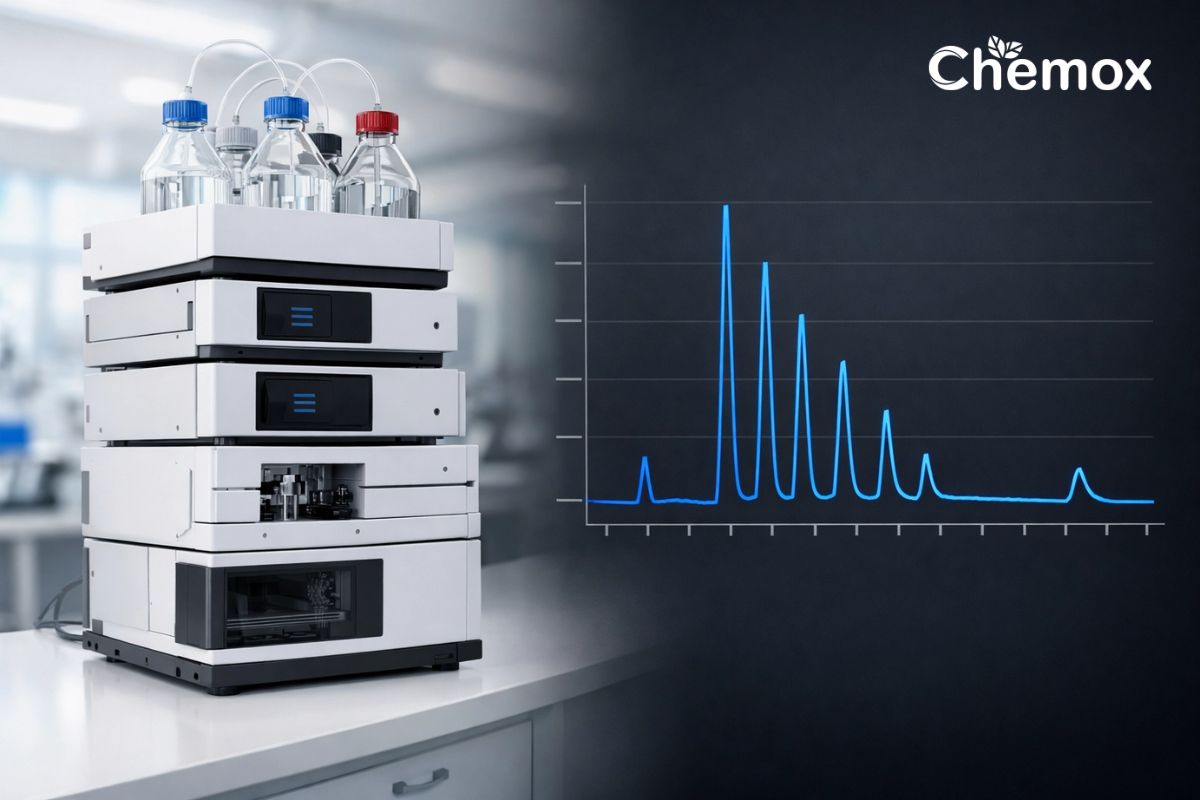
In the pharmaceutical industry, ensuring the purity, potency, and safety of Active Pharmaceutical Ingredients (APIs) is paramount. High-Performance Liquid Chromatography (HPLC) stands as the gold standard for analytical testing due to its precision, sensitivity, and versatility. Developing a robust HPLC method is not just a regulatory requirement but a critical step in the drug development lifecycle. This guide provides a comprehensive, step-by-step approach to HPLC method development for APIs, aligned with international regulatory standards.
Understanding the Importance of HPLC in API Analysis
HPLC is utilized at various stages of drug development, from early-phase R&D to commercial manufacturing and quality control. A well-developed method allows for the accurate quantification of the API and the detection of related substances, degradation products, and impurities. For Contract Development and Manufacturing Organizations (CDMOs), having a “fit-for-purpose” method is essential to meet the stringent requirements of global regulatory bodies like the FDA and EMA.
Step 1: Information Gathering and Scouting
Before touching the instrument, a thorough understanding of the API’s physicochemical properties is necessary. This initial phase, often called “scouting,” involves researching:
- Molecular Structure: Helps predict hydrophobicity and potential interactions with the stationary phase.
- pKa Values: Crucial for determining the optimal pH of the mobile phase to ensure the API remains in a consistent ionization state.
- Solubility: Dictates the choice of diluent and initial mobile phase conditions.
- UV Maximum (λmax): Identifies the most sensitive wavelength for detection using UV/Vis or PDA detectors.
- Stability Profile: Informs about potential degradation pathways and the need for stability-indicating methods.
Step 2: Selecting the HPLC Mode and Column
The choice of HPLC mode depends on the API’s characteristics. Reverse Phase HPLC (RP-HPLC) is the most common mode for small molecule APIs due to its broad applicability.
Column Selection Criteria
The stationary phase (column) is the heart of the separation. Key factors include:
- Bonded Phase: C18 (Octadecylsilane) is the industry standard, but C8, Phenyl, or Cyano phases may be used for specific selectivity needs.
- Pore Size: Typically 60Å to 120Å for small molecules.
- Particle Size: Smaller particles (e.g., 1.8µm to 3.5µm) offer higher resolution but require higher pressure (UHPLC).
- Column Dimensions: Standard lengths (50mm to 250mm) and internal diameters (2.1mm to 4.6mm) are chosen based on the desired speed and sensitivity.
Step 3: Mobile Phase Selection and Optimization
The mobile phase consists of an aqueous component (often a buffer) and an organic modifier.
- Aqueous Phase: Buffers like phosphate, acetate, or formate are used to control pH. The pH should be at least 2 units away from the API’s pKa to ensure stability and peak symmetry.
- Organic Modifier: Acetonitrile (ACN) and Methanol (MeOH) are the primary choices. ACN typically offers lower viscosity and better UV transparency at low wavelengths.
Elution Mode:
- Isocratic: Constant mobile phase composition; best for simple separations.
- Gradient: Changing composition over time; essential for complex samples with varying polarities or for unknown impurity profiling.
Step 4: Parameter Optimization
Once the column and mobile phase are selected, fine-tuning the operational parameters is necessary to achieve optimal resolution ($R_s > 1.5$) and peak shape.
|
Parameter
|
Impact on Separation
|
|
Flow Rate
|
Affects analysis time and column backpressure.
|
|
Temperature
|
Improves reproducibility and can alter selectivity; typically set between 30°C and 50°C.
|
|
Injection Volume
|
Must be balanced to avoid peak broadening while maintaining sensitivity.
|
|
Detection Wavelength
|
Set at the λmax for maximum sensitivity or a specific wavelength to minimize interference.
|
Step 5: Robustness and Forced Degradation Studies
A robust method should remain unaffected by small, deliberate variations in parameters. Testing variations in pH (±0.2 units), temperature (±5°C), and flow rate (±10%) ensures the method’s reliability in a routine lab environment.
Additionally, Forced Degradation (Stress Testing) is performed to demonstrate the method’s stability-indicating power. The API is exposed to heat, light, acid, base, and oxidative conditions to ensure that the method can separate the API from all potential degradation products .
Step 6: Method Validation as per ICH Guidelines
Final validation is conducted according to the ICH Q2(R1) guidelines to prove the method is suitable for its intended use. Key validation parameters include:
- Specificity: Ability to assess the analyte in the presence of impurities or excipients.
- Linearity: Relationship between concentration and detector response over a specified range.
- Accuracy: Closeness of the test results to the true value (recovery studies).
- Precision: Repeatability and intermediate precision (reproducibility).
- Detection Limit (LOD) and Quantitation Limit (LOQ): Lowest amounts detectable and quantifiable.
- Range: The interval between the upper and lower levels of analyte.
Conclusion
HPLC method development for APIs is a systematic process that combines chemical knowledge with experimental optimization. By following these steps and adhering to ICH guidelines, pharmaceutical scientists can develop robust, reliable, and regulatory-compliant methods that ensure the highest quality of drug products. For CDMOs in India and globally, mastering this process is a cornerstone of operational excellence and client trust.