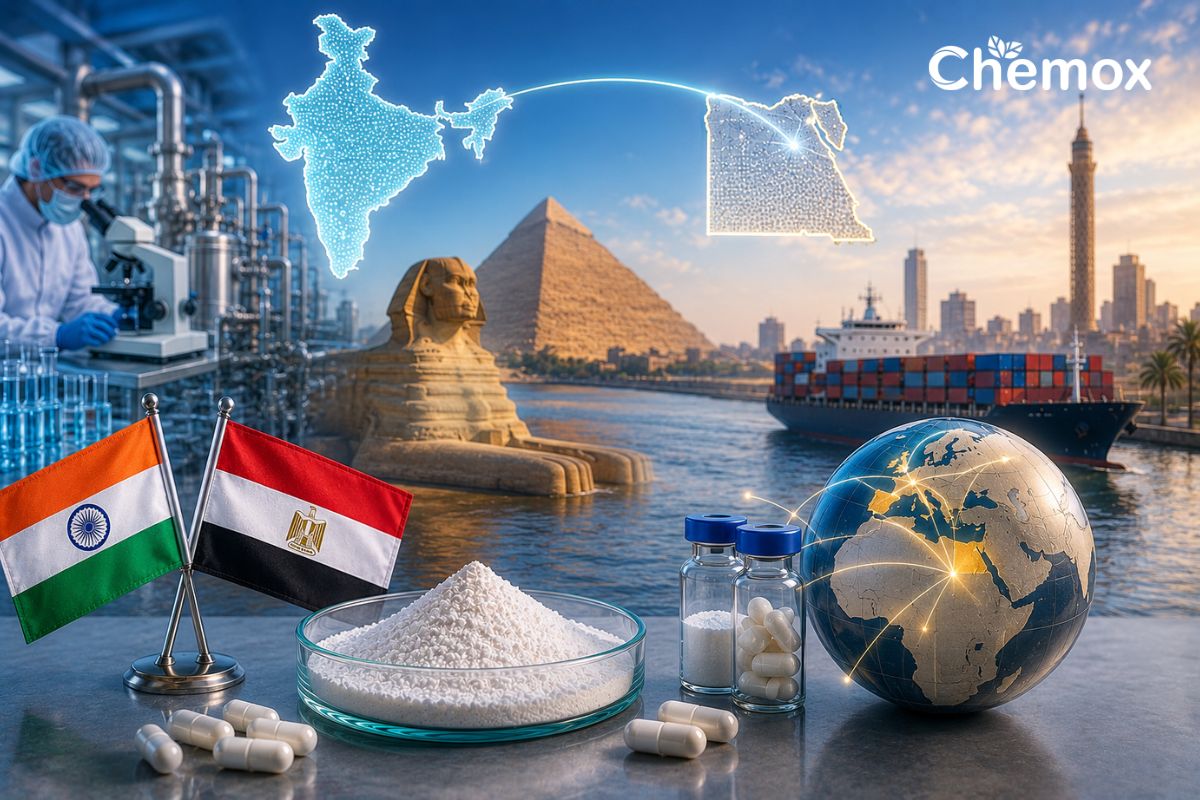
Why Egypt Is Becoming a Strategic Hub for API Import India to Egypt Pharma Industry
The global pharmaceutical trade map is being redrawn and Egypt is emerging as one of its most strategic new focal points. For Indian API manufacturers looking to expand their export footprint across Africa and the Middle East, Egypt is no longer just another destination. It is fast becoming the gateway to an entire region hungry for high-quality, affordable active pharmaceutical ingredients.
API import India to Egypt pharma relationships are deepening at an accelerating pace in 2026, driven by Egypt’s booming pharmaceutical market, a growing burden of chronic disease, ambitious government localization policies, and India’s unmatched ability to supply compliant, cost-effective APIs at scale. In this blog, we explore the forces reshaping this bilateral pharmaceutical relationship and why Indian API suppliers are best positioned to benefit.
Egypt’s Pharmaceutical Market: A $7 Billion Powerhouse in the Making
To understand why API import India to Egypt pharma flows are growing, you first need to appreciate the sheer scale of Egypt’s pharmaceutical opportunity. Egypt’s pharmaceutical market reached USD 7,072 million in 2025 and is forecast to nearly double, reaching USD 14,497.9 million by 2034 — representing a compound annual growth rate (CAGR) of 8.05% from 2026 to 2034. This makes Egypt’s pharma sector one of the fastest-growing in the entire MENA region, expanding at nearly three times the regional average.
Egypt also operates the largest pharmaceutical manufacturing base in MENA, representing nearly 30% of the regional market. Local companies already meet approximately 91% of domestic demand, with around 70% of production consisting of generic medicines. This is a critical insight for Indian API suppliers: Egypt’s manufacturers are primarily generic drug producers — and generic drug production requires a continuous, reliable, and compliant supply of Active Pharmaceutical Ingredients. This structural demand for APIs is precisely where India’s manufacturing advantage aligns perfectly with Egypt’s market needs.
The API Import Dependency That Is Driving Opportunity
Despite its strong domestic formulation capabilities, Egypt remains heavily import-dependent for the raw materials that power its pharmaceutical factories. Nearly all Active Pharmaceutical Ingredients consumed by Egyptian manufacturers are sourced externally — with 75% of total pharmaceutical imports being raw materials, including APIs, for domestic producers.
Egypt’s total pharmaceutical imports stood at USD 3.52 billion in 2024, reflecting a market that, despite significant local manufacturing activity, still relies on the global supply chain for its most critical pharmaceutical inputs. Localizing pharmaceutical raw material sourcing alone could save Egypt approximately USD 1 billion annually — but until that domestic API production capacity is built, the country will continue to depend on trusted international suppliers.
Egypt already imports USD 356 million worth of organic chemicals from India annually — a category that significantly includes pharmaceutical intermediates and API-related compounds — making India one of Egypt’s most important chemical and pharmaceutical raw material sources. This trade relationship is not new; it is deep, established, and growing.
The Chronic Disease Surge Fueling API Demand
One of the most powerful structural drivers of API import India to Egypt pharma demand growth is Egypt’s rising burden of non-communicable chronic diseases. Egypt has a population of over 110 million people, a young and growing demographic, and increasing rates of lifestyle-related illness driven by urbanization, changing diets, and sedentary behavior.
The therapeutic categories driving the highest API demand in Egypt include cardiovascular diseases — which are among the leading causes of mortality in the country — diabetes and metabolic disorders, oncology, central nervous system conditions, and infectious diseases. The government’s Universal Health Insurance System is now expanding chronic disease management programs for cardiovascular and diabetic patients, creating a sustained, policy-supported demand for the APIs that underpin these treatment regimens. Egypt’s pharmaceutical manufacturers need cardiovascular APIs like Rosuvastatin and anti-diabetic APIs like Metformin in significant and growing quantities — and Indian manufacturers are their most reliable source.
5 Key Reasons Indian API Suppliers Are Egypt’s Preferred Partners
1. India Is Already a Proven Supplier to Egypt
The India–Egypt pharmaceutical trade relationship is not aspirational — it is operational. Egypt is already listed as one of the key export destinations for Indian pharmaceutical clusters, alongside the USA, UK, South Africa, and Germany. Indian pharmaceutical companies have years of experience navigating Egypt’s regulatory framework through the Egyptian Drug Authority (EDA), building the documentation familiarity and bilateral trust that takes years to establish.
This track record gives Indian suppliers a significant head start over competitors from less established pharmaceutical exporting nations.
2. GMP Compliance That Matches Egypt’s Rising Standards
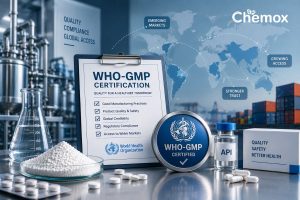
A 2023 regulation mandating Good Manufacturing Practices (GMP) compliance for all pharmaceutical manufacturers in Egypt is raising quality standards to international benchmarks across the country. Egyptian pharmaceutical companies, now subject to stricter quality requirements, are becoming more selective about their API suppliers — prioritizing partners with verifiable WHO-GMP, USFDA, or EU-GMP certifications.
India’s pharmaceutical manufacturing infrastructure — with over 600 USFDA-approved facilities and more than 1,400 WHO-GMP certified sites — is ideally positioned to meet this elevated compliance expectation. Indian API manufacturers can provide comprehensive documentation packages including Certificates of Analysis (CoA), Drug Master Files (DMFs), and ICH-compliant stability data that Egyptian manufacturers need for their own regulatory submissions to the EDA.
3. Cost-Competitive APIs for a Price-Sensitive Market
Egypt’s pharmaceutical market is characterized by strong price sensitivity. Public procurement — the dominant volume driver — is tender-based, highly price-elastic, and focused on essential medicines and generics at the lowest compliant cost. Private market demand, while somewhat less price-sensitive, is still heavily influenced by the availability of affordable generic options across the retail pharmacy and private hospital segments.
India’s structural cost advantages in API manufacturing — lower operational costs, a large pool of skilled pharmaceutical scientists, a mature domestic chemical supply chain, and government support through the PLI Scheme — allow Indian manufacturers to offer high-purity APIs at prices that are highly competitive in Egypt’s tender-driven procurement environment. This combination of quality and cost-competitiveness is difficult for any other global API supplier to match.
4. Therapeutic Portfolio Alignment
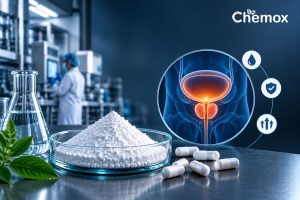
India’s API export portfolio aligns almost perfectly with Egypt’s highest-demand therapeutic categories. Indian manufacturers are world leaders in supplying cardiovascular APIs — including Rosuvastatin, Atorvastatin, Amlodipine, and Ramipril — anti-diabetic APIs including Metformin and Sitagliptin, urology APIs such as Mirabegron and Tamsulosin, and a broad range of oncology and CNS APIs.
Egyptian pharmaceutical companies formulating generic medicines across these therapeutic categories can source their entire API requirement from a single, multi-certified Indian partner — simplifying supplier qualification, reducing logistics complexity, and improving supply chain resilience.
5. Egypt as a Regional Re-Export Hub
A critical strategic dimension of the Egypt opportunity for Indian API suppliers extends beyond domestic Egyptian consumption. Egypt’s pharmaceutical industry already exports to over 60 countries and is actively positioning itself — aligned with Egypt Vision 2030 — as a regional pharmaceutical production and distribution hub for the broader African continent and Middle Eastern markets.
The Egyptian Drug Authority (EDA) is actively working to position Egypt as a regional pharmaceutical hub, and Egyptian companies that formulate medicines using imported Indian APIs then export those finished dosage forms across Africa and the Arab world. This makes Egypt a multiplier market for Indian API exports — APIs sourced from India do not just serve Egypt’s 110 million population; they ultimately reach patients across a much wider regional geography.
Egypt Vision 2030 and the Localization Strategy: What It Means for Indian API Suppliers
Egypt’s government is actively pursuing pharmaceutical localization — reducing dependence on imported finished medicines by building domestic formulation capacity. In 2025, Egyptian pharma companies invested EGP 4 billion (approximately USD 80 million) to add 20 new production lines. This investment in local manufacturing capacity is not a threat to Indian API suppliers — it is an amplifier of API demand.
Every new domestic production line for cardiovascular tablets, diabetic medications, or oncology drugs requires a continuous supply of the corresponding API. As Egypt builds more formulation capacity, it will need more APIs — and India is best positioned to supply them. The government’s localization strategy for higher-value segments including oncology, immunodeficiency treatments, and hospital injectables will further diversify and deepen Egypt’s API import requirements in the years ahead.
How Chemox Pharma Supports Egypt’s Pharmaceutical Industry
Chemox Pharma is a WHO-GMP certified Indian API manufacturer with a growing presence across MENA markets, including Egypt. Our export-ready API portfolio — spanning cardiovascular, urology, anti-diabetic, and other key therapeutic categories — is specifically designed to meet the quality, compliance, and documentation requirements of Egyptian pharmaceutical manufacturers.
We are proud to be exhibiting at Pharmaconex Egypt 2026 — Africa’s largest pharmaceutical exhibition — from 1 to 3 September 2026 at the Egypt International Exhibition Center, Cairo. Visit us at Stand H3.K61 to meet our team, review our GMP certifications, and discuss how Chemox Pharma can support your API sourcing needs across Egypt and the broader MENA region.
Conclusion
The deepening of API import India to Egypt pharma relationships in 2026 is not a coincidence — it is the inevitable result of two complementary strengths converging at exactly the right moment. Egypt’s booming pharmaceutical market, its structural dependence on imported APIs, its chronic disease-driven demand surge, and its ambition to become the MENA region’s pharmaceutical hub — all of these factors point to a growing and sustained requirement for the kind of high-quality, GMP-certified, cost-competitive APIs that Indian manufacturers are uniquely equipped to supply.
For Indian API exporters, Egypt represents one of the most strategically significant market opportunities of the next decade. And for Egyptian pharmaceutical manufacturers, India remains the most reliable, compliant, and cost-effective API partner in the global supply chain.