Antibiotic API Manufacturer India: The $12.9B Market & Why India Leads Through 2036
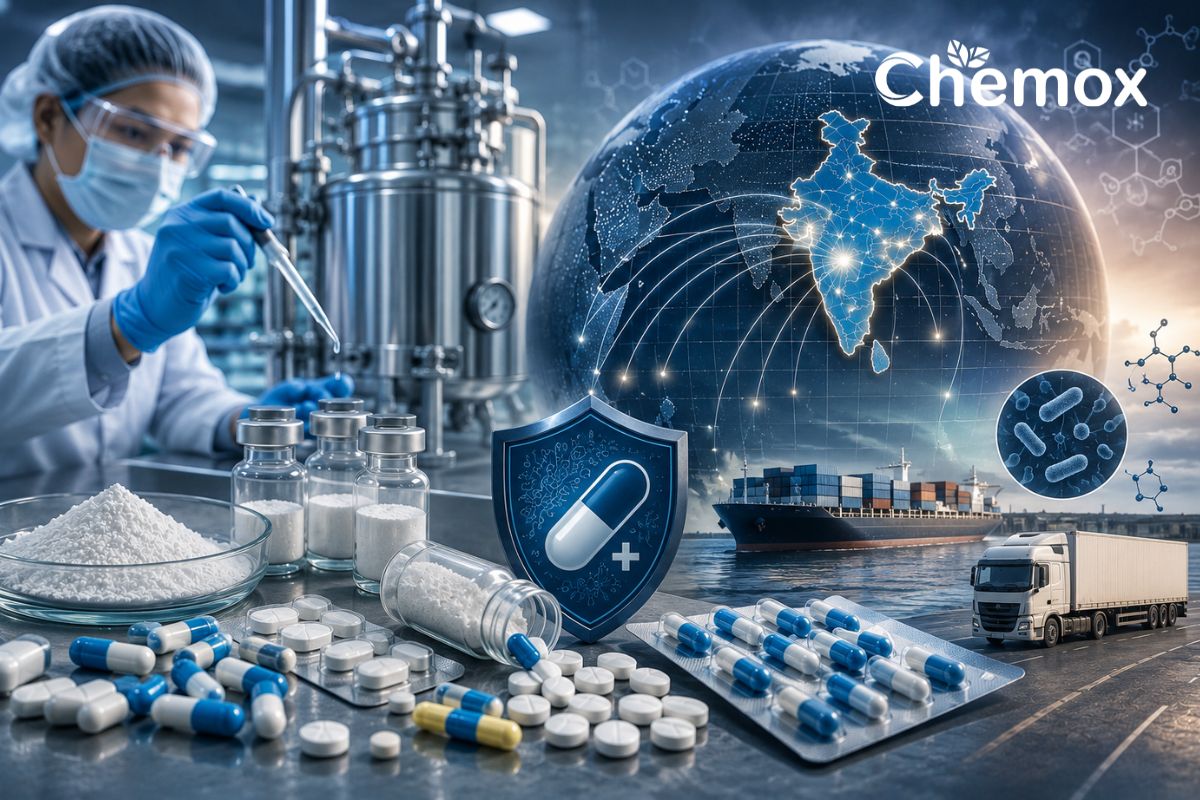
When a patient in Cairo receives a course of Azithromycin, or a hospital in Nairobi dispenses Amoxicillin, or a pharmacy in Lagos stocks Cephalexin the active ingredient powering that medicine almost certainly originated in India. This is not coincidence. It is the result of decades of deliberate investment, regulatory excellence, and manufacturing scale that has made every leading antibiotic API manufacturer India operates a cornerstone of the global pharmaceutical supply chain.
The global antibiotic API market tells this story in numbers. Valued at USD 9.5 billion in 2026, the market is projected to reach USD 12.9 billion by 2036, expanding at a CAGR of 3.1%. That USD 3.4 billion incremental opportunity over the next decade will be disproportionately captured by Indian manufacturers who are already projected to lead all country markets with a 5.7% CAGR through 2036, the fastest of any nation in the world.
This blog explores why India has earned and is reinforcing its position as the world’s most reliable antibiotic API manufacturer and what global pharmaceutical buyers need to understand about this market between now and 2036.
The Global Antibiotic API Market: A Foundation of Essential Medicine
Antibiotics are not discretionary medicines. They are foundational to modern healthcare — used in treating everything from community-acquired pneumonia and urinary tract infections to hospital-acquired infections and post-surgical prophylaxis. This non-discretionary nature makes the antibiotic API market structurally different from many other pharmaceutical segments: demand does not contract during economic downturns, and supply chain reliability is a matter of public health, not just commercial preference.
The three pillars supporting the antibiotic API market through 2036 are:
Essential medicine demand: Approximately 68% of the antibiotic API market consists of essential medicines — those listed on the WHO Model List of Essential Medicines and procured through government health systems, UN agencies, and international health organizations. This structural demand creates a recurring, predictable purchasing cycle that pharmaceutical manufacturers can plan around.
Outsourcing expansion: Rising outsourcing across regulated pharmaceutical production is adding fresh volume for specialist API suppliers. As branded drug companies and large generic manufacturers increasingly divest their API production assets to focus on formulation and commercialization, the demand for third-party antibiotic API suppliers continues to grow. Pharmaceutical companies are expected to hold the top end-user share at 75.9% in 2026, placing the largest bulk API orders to meet their finished dosage form requirements.
Fermentation manufacturing dominance: Fermentation-based APIs are expected to account for 61% of manufacturing route demand in 2026, as penicillin and cephalosporin production continue to rely on biological fermentation processes. Manufacturers with strong fermentation infrastructure — a category in which Indian companies are making historic investments — benefit from large-scale production economics, process consistency, and established regulatory approvals.
Why Every Antibiotic API Manufacturer India Operates Is Positioned to Lead
1. The PLI Scheme: India’s Game-Changing Policy Investment
The single most important structural development in India’s antibiotic API manufacturing landscape in 2026 is the maturation of the Production Linked Incentive (PLI) Scheme for Bulk Drugs. As of March 2025, the scheme has spurred the domestic production of 38 critical APIs that were previously almost entirely imported — including vital antibiotic molecules such as Penicillin G and Clavulanic Acid.
The policy impact became dramatically visible in February 2026, when Prime Minister Narendra Modi inaugurated Aurobindo Pharma’s flagship Penicillin-G facility at Kakinada, Andhra Pradesh — one of the world’s largest Penicillin-G production facilities — developed entirely under the PLI scheme. This facility directly addresses India’s strategic objective of reducing dependence on imported Chinese intermediates for fermentation-based antibiotic APIs. The Indian government has also established a Minimum Import Price (MIP) framework for key antibiotic raw materials — effective January 2026 setting floor prices for Penicillin G-potassium at INR 2,216 per kilogram, Amoxicillin trihydrate at INR 2,733 per kilogram, and 6-APA at INR 3,405 per kilogram to protect domestic manufacturers from below-cost import dumping.
This policy architecture combining PLI incentives, Bulk Drug Parks, and MIP protection — is creating a structurally stronger, more self-reliant Indian antibiotic API manufacturing ecosystem that global buyers can depend on for long-term, uninterrupted supply.
2. The “China Plus One” Strategy Is Sending Business Directly to Indian Antibiotic API Manufacturers
The global pharmaceutical industry’s strategic shift away from single-source dependence on China — accelerated by post-COVID supply chain vulnerabilities and the US Biosecure Act — is creating an immediate, structural windfall for Indian antibiotic API manufacturers. U.S. and European buyers are actively moving sourcing away from China, resulting in a 50% jump in request-for-quotation volumes at leading Indian contract manufacturers during 2024.
For antibiotic APIs specifically — where China has historically dominated global fermentation capacity for penicillin-class intermediates — Indian manufacturers with vertically integrated or backward-integrated supply chains are receiving unprecedented buyer attention. Companies that have invested in domestic fermentation infrastructure under the PLI scheme are now positioned to offer a genuinely “China-free” antibiotic API supply chain — a proposition that global buyers in regulated markets are willing to pay a premium for, particularly in the post-Biosecure Act regulatory environment.
3. India’s Regulatory Compliance Infrastructure Is Unmatched
For global pharmaceutical buyers sourcing antibiotic APIs for regulated markets — the US, EU, UK, or Australia — regulatory compliance is the non-negotiable starting point of any supplier qualification. India’s antibiotic API manufacturers hold certifications across the full spectrum of international regulatory frameworks:
- USFDA cGMP (21 CFR Part 211 and ICH Q7) — essential for US ANDA submissions
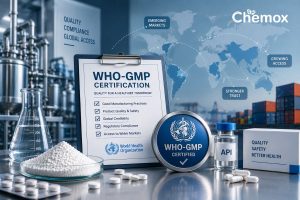
- WHO-GMP — required for UN procurement, Global Fund purchasing, and MENA/Africa market access
- EU-GMP Part II — mandatory for European market registration, with Written Confirmation issued by CDSCO
- ISO 14001 — environmental compliance certification, increasingly required by European buyers
India holds over 600 USFDA-approved pharmaceutical manufacturing facilities — more than any country outside the United States. This regulatory infrastructure depth means that a global buyer can find a compliant, audit-ready Indian antibiotic API manufacturer for virtually any target market requirement.
4. India’s Key Antibiotic API Molecules and Manufacturing Strengths
India’s antibiotic API manufacturing strength is spread across all major antibiotic classes. Understanding the specific molecules where India excels helps global buyers identify the right sourcing partner:
Penicillin Class (Amoxicillin, Ampicillin, 6-APA): Historically India’s most import-dependent antibiotic category — relying on Chinese fermentation for 6-APA intermediates. This is changing rapidly. With the inauguration of world-scale domestic Penicillin-G fermentation capacity under the PLI scheme, India is building genuine backward integration for the entire penicillin class for the first time.
Macrolides (Azithromycin, Clarithromycin, Erythromycin): India is the primary global exporter of Azithromycin API, with a competitive advantage driven by cost-efficient manufacturing and a skilled chemical workforce. India exports Azithromycin API to Latin America, Southeast Asia, Africa, and parts of Europe. Demand for Azithromycin surged dramatically during COVID-19 and has remained elevated as physicians continue prescribing it for community-acquired respiratory infections.
Cephalosporins (Cephalexin, Cefuroxime, Ceftriaxone): India is a leading global manufacturer of oral and injectable cephalosporin APIs, with manufacturing clusters in Hyderabad, Ahmedabad, and Pune. Cephalosporins are second only to penicillins in antibiotic API market volume and are among India’s highest-volume API export categories to both regulated and semi-regulated markets.
Fluoroquinolones (Ciprofloxacin, Levofloxacin, Norfloxacin): India dominates global production of fluoroquinolone APIs — a category where purely synthetic chemistry (rather than fermentation) gives Indian process chemistry teams a significant advantage in terms of purity, consistency, and cost-competitiveness.
5. Fermentation Infrastructure Investment: India’s Next Competitive Leap
The fermentation manufacturing route — expected to account for 61% of antibiotic API production in 2026 — has historically been a relative weakness for India compared to China, which has invested heavily in large-scale fermentation capacity over decades. This gap is now closing at an accelerating pace.
The PLI scheme has specifically incentivized investment in fermentation-based API manufacturing in India, and multiple large-scale fermentation facilities — for Penicillin G, Erythromycin, and Vitamin B12, among others — are either operational or under construction across Gujarat, Andhra Pradesh, and Himachal Pradesh. India’s three Mega Bulk Drug Parks, developed with central government grants of up to INR 1,000 crore per park, provide shared fermentation infrastructure — including solvent recovery plants, common effluent treatment, and utility supply — that makes fermentation-based antibiotic API production economically viable for manufacturers who cannot justify standalone facility investment.
Antibiotic API Market Segment Overview: Where India Leads
| Antibiotic Class | Key Molecules | India’s Position | Manufacturing Route |
|---|---|---|---|
| Penicillins | Amoxicillin, Ampicillin, 6-APA | Building domestic capacity | Fermentation |
| Macrolides | Azithromycin, Clarithromycin | Global export leader | Semi-synthetic |
| Cephalosporins | Cephalexin, Ceftriaxone | Leading global supplier | Semi-synthetic + Fermentation |
| Fluoroquinolones | Ciprofloxacin, Levofloxacin | Dominant global producer | Synthetic |
| Carbapenems | Meropenem, Imipenem | Growing capacity | Synthetic |
The Antibiotic Resistance Dimension: Creating New API Demand
Beyond baseline market growth, antimicrobial resistance (AMR) is creating an additional, structurally important demand driver for antibiotic API manufacturers. The WHO has identified AMR as one of the top ten global public health threats, with drug-resistant bacterial infections already causing significant mortality worldwide. The growing burden of antibiotic-resistant bacteria is an additional catalyst for new API development — including next-generation cephalosporins, carbapenems, and novel beta-lactam inhibitor combinations that require sophisticated API manufacturing capabilities.
For Indian antibiotic API manufacturers, AMR creates a dual opportunity: sustained demand for established molecules as essential medicines, combined with a new premium-market opportunity in complex, high-value next-generation antibiotic APIs that require the advanced process chemistry capabilities that leading Indian manufacturers have invested in developing.
What to Look for in an Antibiotic API Manufacturer from India
For global pharmaceutical buyers evaluating Indian antibiotic API suppliers, the qualification criteria that matter most are:
- GMP certification matching your target market — WHO-GMP for MENA/Africa/emerging markets; USFDA for US; EU-GMP + Written Confirmation for Europe
- Manufacturing route transparency — fully documented synthesis or fermentation route with traceable KSM sourcing
- Impurity profile compliance — ICH Q3A-compliant, with specific testing for antibiotic-class impurities such as related substances and degradation products
- Stability data — ICH Q1A compliant, with Zone IVb data for MENA and Africa markets
- Batch consistency — at least three consecutive commercial-scale batch records reviewed during qualification
- Supply chain resilience — multiple KSM suppliers qualified, safety stock policy, and Business Continuity Plan in place
Chemox Pharma: Your Trusted Antibiotic API Manufacturer from India
Chemox Pharma is a WHO-GMP certified Indian API manufacturer with Azithromycin as a key molecule in our antibiotic portfolio — alongside 18+ other export-ready APIs across cardiovascular, urology, antifungal, anti-asthmatic, and antihistamine categories.
Our antibiotic APIs are manufactured to international pharmacopoeial specifications, supplied with comprehensive Certificates of Analysis, WHO-GMP certification, and full regulatory documentation support for MENA, Africa, and beyond.
We are exhibiting at Pharmaconex Egypt 2026 — Africa’s largest pharmaceutical exhibition — from 1–3 September 2026 at the Egypt International Exhibition Center, Cairo. Visit Chemox Pharma at Stand H3.K61 to discuss your antibiotic API sourcing requirements with our technical team.
Explore our full API portfolio → Contact us today for samples, Certificates of Analysis, and bulk supply quotations.
Conclusion
The antibiotic API manufacturer India story in 2026 is one of accelerating strength — driven by the PLI scheme, historic fermentation investments, the global China Plus One sourcing shift, and a regulatory compliance infrastructure that no other country can match at scale. With a projected 5.7% CAGR through 2036 — the fastest of any nation — India is not merely the world’s current antibiotic API supplier of choice. It is cementing its position as the world’s most reliable long-term partner for antibiotic API supply.






2 Responses
Rate plz
Rate for?