India Accelerates API Investments to Reduce Dependence on China
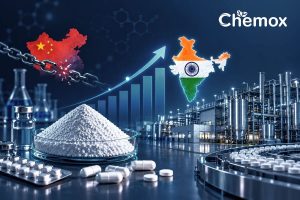
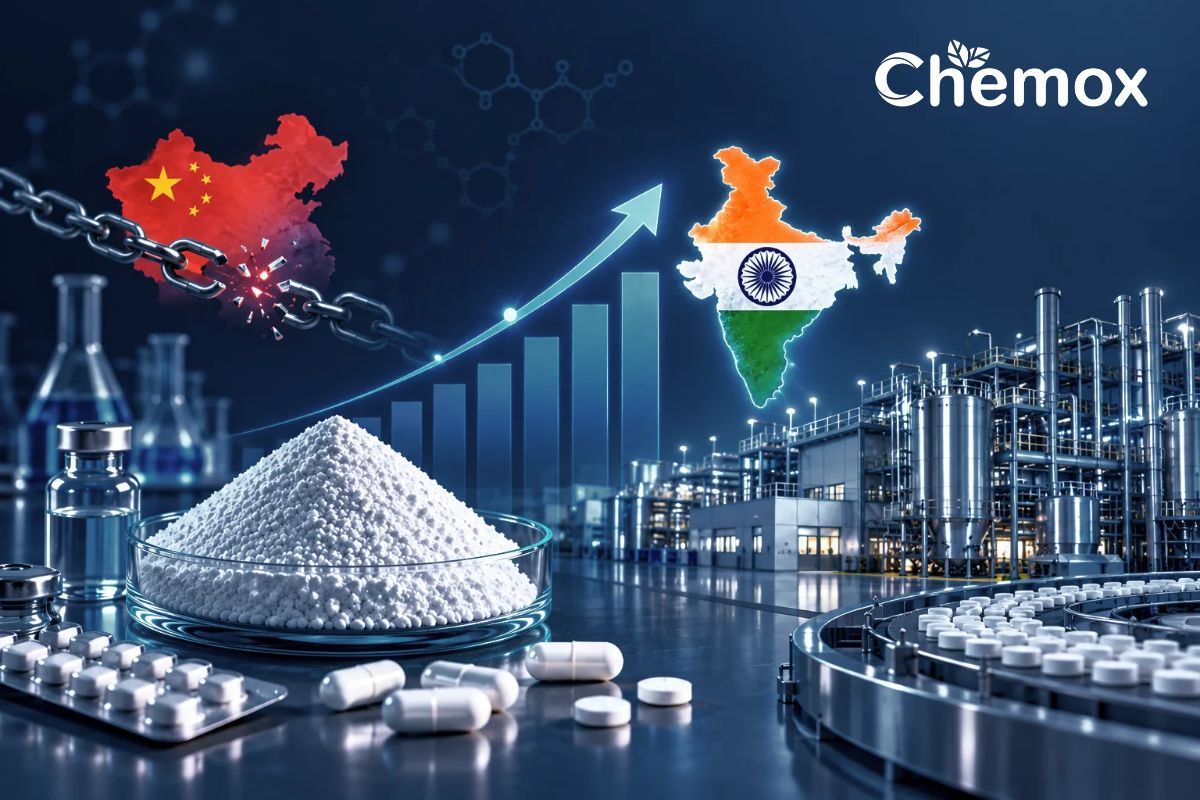
India makes a large share of the world’s generic medicines, yet it still imports many of the building blocks. Over the past year the government, state governments and companies have put more money and attention into API manufacturing in India, from production-linked incentives to bulk drug parks and new plants. This guide sets out what has been announced, what the numbers show, and where dependence on China remains high. It also covers what API buyers should ask suppliers as the picture changes.
This is a plain-English summary of government statements and press reports, dated where possible. Figures come from the cited sources and have not been audited. It is not investment or legal advice.
The Quick Answer
- Investment is real and growing. Dozens of new API and intermediate projects have been approved under the PLI scheme for bulk drugs, and Gujarat approved a special incentive scheme for its bulk drug park on October 29, 2026.
- Dependence is still high. The government told Parliament in March 2026 that more than 70% of several critical drug ingredients are imported from China, and for some intermediates the figure is 90% to 100%.
- Progress is uneven. Some products now have domestic plants, while others, such as penicillin and erythromycin inputs, showed higher China dependence in 2025 than in 2024.
- For buyers: More Indian capacity is coming, but the upstream starting materials are what decide how secure a supply really is.
Why the Push: The Dependence Numbers
Several official and semi-official sources describe the same problem from different angles. They measure different baskets of products, so do not treat them as one number:
| Source | Date | What it says |
|---|---|---|
| Rajya Sabha written reply (Minister of State Anupriya Patel), as reported | March 10, 2026 | More than 70% of several critical drug ingredients come from China. Many essential medicines and intermediates exceed 90%, and rifampicin and methyldopa intermediates are at 100% |
| Same reply | March 10, 2026 | 6-APA imports of $407.64 million in FY2025, about 96% from China. China’s share for penicillin and its salts rose to about 93% from 77%, and for erythromycin to nearly 98% from about 93% |
| NITI Aayog, Trade Watch Quarterly (8th edition) | June 23–24, 2026 | About 65% of critical APIs, key starting materials (KSMs) and intermediates come from China, especially fermentation-based products |
| USP analysis, as reported by BioSpace | April 13, 2026 | About 41% of KSMs used in US-approved APIs come only from China, and about 16% only from India |
The common thread is that finished APIs are only part of the story. The starting materials and intermediates upstream are where concentration is highest.
What India Has Done So Far
The PLI scheme for bulk drugs
The scheme identified 41 critical APIs, of which 33 drew industry participation. According to the March 2026 Rajya Sabha reply, as of December 2025:
- 48 new manufacturing projects were approved and 38 were commissioned.
- Domestic capacity of about 56,800 metric tonnes a year was created across 28 critical products.
- Cumulative sales were about ₹2,720 crore, with imports avoided of about ₹2,192 crore.
An earlier reply (December 22, 2025) put cumulative sales at ₹2,315 crore as of September 2025, including ₹508 crore in exports, and avoided imports at ₹1,807 crore. The difference is the passage of time, not a conflict.
A PIB release of September 25, 2026 highlighted five greenfield projects that have commissioned plants:
| Company | Product | Site | Reported capacity or result |
|---|---|---|---|
| Lyfius Pharma (Aurobindo subsidiary) | Penicillin G | Kakinada SEZ | 15,000 tonnes a year, restoring domestic production after about three decades |
| Kinvan | Potassium clavulanate | Nalagarh | 400 tonnes a year, described as India’s first fermentation-based facility for it |
| Andhra Organics | Sulfadiazine, telmisartan, olmesartan | Srikakulam | Sulfadiazine imports down about 73% against the FY2019-20 baseline |
| Meghmani LLP | Para amino phenol (PAP) | Dahej | 13,500 tonnes a year |
| Centrient Pharmaceuticals | Atorvastatin API | Nawanshahr | 206 tonnes a year, over 80% domestic value addition |
| Chemox Pharma (not in the PIB list) | APIs and intermediates | Dahej | WHO-GMP certified manufacturer with its own facility at Dahej and in-house R&D centre |
The corrigendum to the PLI guidelines dated May 4, 2026 also changed how incentives are paid. Where claims rest on unaudited statements, 80% is disbursed upfront and the remaining 20% follows audited accounts. Analysts had pointed to slow subsidy payments as a drag on the scheme, and this change looks aimed at that, though the corrigendum does not say so.
Bulk drug parks
Three bulk drug parks are sanctioned, in Andhra Pradesh, Gujarat and Himachal Pradesh, and the central scheme runs until March 2027. On October 29, 2026, the Gujarat government approved a special incentive scheme for units in the Jambusar park in Bharuch district, a 2,015-acre site. Reported features include:
- A 10% capital subsidy on eligible fixed capital investment.
- Reimbursement of utility and related costs for up to 10 years.
- Full reimbursement of stamp duty and registration fees on the initial land allotment.
- Interest subsidies for eligible MSME units.
- Shared facilities, including a common effluent treatment plant, steam, solvent recovery and multimodal logistics.
The stated aim is to reduce reliance on imports of critical APIs, KSMs and drug intermediates. Park build-out is still in progress. As of the last official updates, Gujarat’s common roads and drainage were about 75% complete and effluent and utility work about 16% (October 2025), and a Himachal minister cited forest-clearance delays of six to eight months in June 2026.
Company investments
Companies are also expanding on their own account:
- IOL Chemicals announced a ₹495 crore expansion (September 11, 2026), including ibuprofen API capacity rising from 12,000 to 18,000 tonnes a year, with commercial production expected by December 2027.
- Aarti Drugs said on its Q2 FY27 call (November 3, 2026) that its Sayakha methylamines plant supplies much of its metformin intermediate needs, with captive use in its anti-diabetic portfolio at about 85%. It plans to lift metformin capacity at Sarigam from 1,400 to 1,700 tonnes a month.
- Export data point the same way. Pharmexcil figures reported on October 29, 2026 show bulk drug and intermediate exports up 12.07% in the first half of FY27, against 3.81% for formulations.
What Has Not Changed
Be careful with headlines that suggest the gap is closing quickly:
- Dependence rose for some products. Penicillin and erythromycin inputs became more concentrated in China between 2024 and 2025.
- China’s cost advantage persists. One report cites Chinese APIs as 35% to 40% cheaper, backed by industrial policy. We could not verify that range independently, so treat it as an estimate.
- Utilisation is a question. One analysis said only about 12% of the PLI budget had been disbursed by September 2025, though it also contained inconsistent savings figures, so we would not rely on it.
- Timelines are long. Analysts expect the full effect on imports to take several years, and building fermentation and intermediate capacity is slow.
- Park infrastructure is incomplete. Plots must be allotted and plants built before parks affect supply.
API Manufacturing in India: What It Means for Buyers
What is improving
- More domestic sources for products that had few or none, such as penicillin G and potassium clavulanate.
- More integrated manufacturers who make their own intermediates, which can steady supply.
- Government support that makes new capacity easier to finance.
What to keep checking
- Where the key starting materials and intermediates for your API come from, even if the final step is in India.
- Whether a supplier’s site, not just its company name, holds the GMP evidence you need.
- Whether a new plant has a track record of consistent batches yet.
A Practical Checklist for API Buyers
- Map your molecules by dependence : Mark which of your APIs rely on starting materials from a single country.
- Ask for the KSM origin : Request where each key starting material and intermediate comes from, and which steps happen at the supplier’s own site. See our guide to key starting material traceability.
- Check the site, not the brand : Ask for the GMP certificate and audit history for the exact manufacturing site.
- Ask about backward integration : A manufacturer that makes its own intermediates can explain its supply risk more clearly.
- Qualify a second source early : Qualification can take many months, so start before a disruption.
- Compare total cost, not only price : Include documentation, lead time, reliability and risk, not just the quote.
- Watch new plants carefully : Ask for batch data and CoAs from commercial-scale runs, not pilot batches.
- Keep markets diversified : See our post on where Indian exporters are heading beyond the US.
Chemox Pharma’s Perspective
Chemox Pharma is a WHO-GMP certified manufacturer of APIs and intermediates, with its own facility and in-house R&D centre in Dahej, Gujarat. We follow the policy shifts in API manufacturing in India closely, because they affect how our customers plan supply. If you are reviewing your sourcing, our team can discuss the APIs and intermediates we offer, which manufacturing steps happen at our facility, and the documentation available for your specific product. Availability and documentation vary by product, so please confirm details with us directly.
Request a Quote and Documentation
If you are sourcing APIs or intermediates and want to discuss supply security and documentation, send us your product list and target markets and contact Chemox Pharma for a quote.
FAQs
Q: Is India still dependent on China for APIs?
Yes. The government told Parliament in March 2026 that more than 70% of several critical drug ingredients are imported from China, with some intermediates at 90% to 100%. NITI Aayog put the figure at about 65% for critical APIs, key starting materials and intermediates in June 2026. The two figures measure different product sets.
Q: What is the PLI scheme for bulk drugs?
It is a government incentive scheme for domestic manufacturing of critical APIs, key starting materials and drug intermediates. As of December 2025, 48 projects were approved and 38 commissioned, with about 56,800 tonnes a year of capacity reported across 28 products.
Q: What are bulk drug parks?
They are government-backed industrial parks with shared facilities for API manufacturers. Three are sanctioned, in Andhra Pradesh, Gujarat and Himachal Pradesh. Gujarat approved an incentive scheme for its Jambusar park on October 29, 2026.
Q: Is API manufacturing in India growing?
Bulk drug and intermediate exports grew 12.07% in the first half of FY27, according to Pharmexcil data reported on October 29, 2026, and several companies have announced capacity expansions. Growth in capacity does not by itself remove dependence on imported starting materials.
Q: What should buyers ask an Indian API supplier about China dependence?
Ask where key starting materials and intermediates come from, which steps are done at the supplier’s own site, what GMP evidence exists for that site, and how changes in materials or suppliers are notified.