EU Critical Medicines Act: What It Means for Indian API Exporters
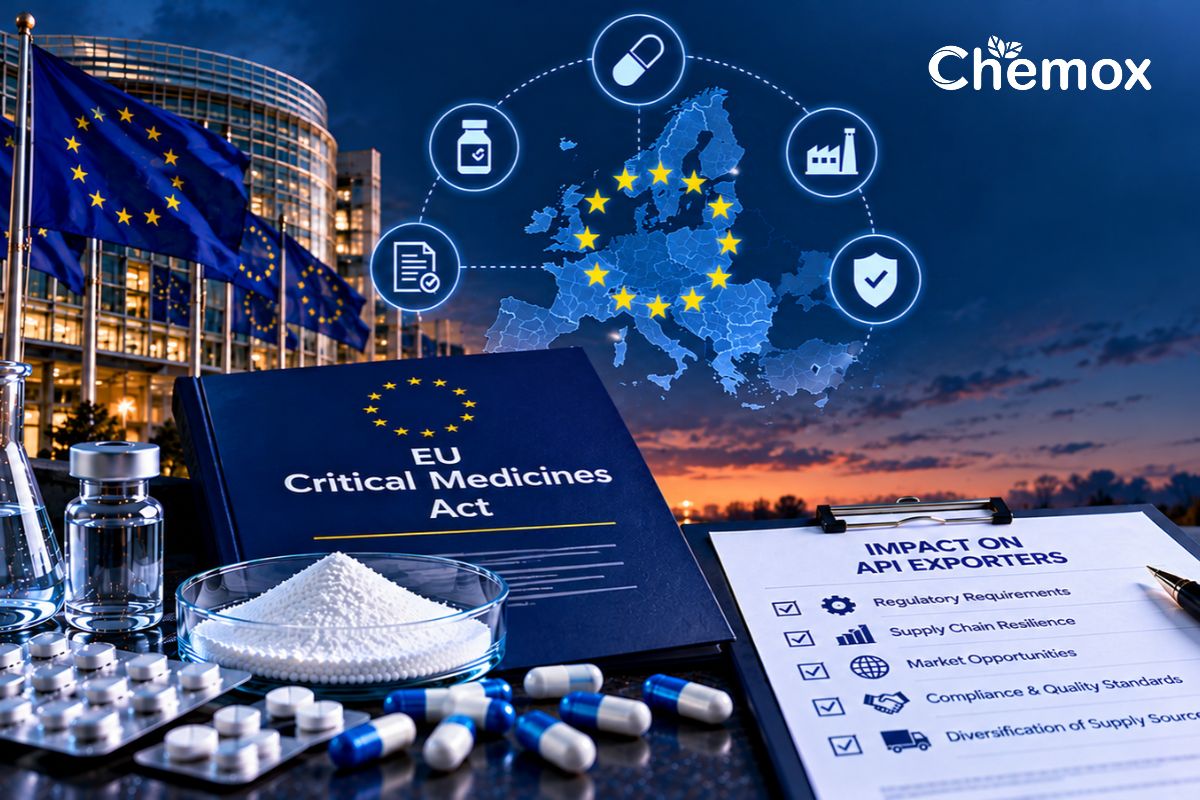
Europe is one of the most important destinations for Indian pharmaceutical exports, and the European Union is now rewriting some of the rules of its medicine supply chain. On May 12, 2026, the European Parliament and the Council of the EU reached a provisional agreement on the Critical Medicines Act. For anyone thinking about Critical Medicines Act API exporters issues, the key point is that the Act is built around reducing dependence on non-EU manufacturing, so it deserves attention even though much of the detail is still to be confirmed.
This is a plain-English summary of published EU and law-firm material on a provisional agreement. The final text has not yet been adopted, so details may change. It is not legal advice.
The Quick Answer
- What it is: An EU regulation aimed at securing the supply of critical medicines, such as antibiotics, insulin and painkillers, and at strengthening EU manufacturing of those medicines and their active ingredients.
- Where it bites: Mainly in public procurement of critical medicines. Contracting authorities must apply resilience requirements and can favour EU manufacturing.
- What is not yet settled: The final text still needs formal approval, and several details (including the definition of critical medicines, API-specific provisions and the application date) were not covered in the sources we reviewed.
- Who is not directly affected: Private commercial supply is not the Act’s main target, though tender outcomes can change what finished-dose buyers ask of their API suppliers.
What the Critical Medicines Act Is
The Commission proposed the Act to reduce recurring shortages and cut reliance on manufacturing outside the EU. It complements the EU’s wider pharmaceutical package, which deals with regulation. Because the Act is a regulation, it will apply directly in member states once adopted. A law firm describes it as focused on the industrial side of medicines supply.
The legislative path so far:
| Step | Date |
|---|---|
| European Parliament endorses its position (503 votes in favour, as reported) | March 2026 |
| Provisional agreement between Council and Parliament | May 12, 2026 |
| Council publishes the text of the agreement | Updated June 30, 2026 |
| Formal approval by Council and Parliament after legal-linguistic revision | Still to come |
| Publication in the Official Journal | Likely toward the end of 2026, according to one law firm; application date to be confirmed |
What the Provisional Agreement Says
According to the Council’s press release and a law-firm summary, the agreement includes:
- Resilience requirements in procurement : Contracting authorities must apply resilience-related requirements when buying critical medicines, with the aim of diversifying supply sources.
- “EU preference.” : For medicines that depend heavily on non-EU suppliers, authorities can favour EU manufacturing through flexible options, for example rewarding suppliers in proportion to the share of the medicine and its active ingredients made in the EU.
- Strategic projects : Criteria are confirmed for designating EU manufacturing projects for critical medicines and active substances. Companies receiving national or EU financial support must meet requirements that include prioritising supply to the EU market.
- Joint procurement : The number of member states needed to ask the Commission to procure on their behalf falls from nine to five.
- Contingency stocks : Information-sharing on stockpiles stays voluntary, with measures for sharing stock requirements and a voluntary mechanism to reallocate medicines between countries.
- Orphan medicines : These are brought within strategic projects and collaborative procurement.
One rapporteur is quoted as saying that companies producing medicines in Europe will be favoured in procurement procedures.
What Is Not Yet Clear
Be careful about repeating figures you may see in earlier coverage:
- No confirmed percentage threshold. The European Parliament’s earlier position was reported to favour suppliers making at least 50% of their API or final product in Europe. Summaries of the provisional agreement describe a flexible approach that rewards the EU-made share, and we did not find a confirmed fixed threshold. The final text will decide.
- The definition of “critical medicines” and the detailed API provisions were not covered in the sources we reviewed.
- The application date is still to be confirmed.
- No specific rule on India. The material we reviewed does not target India or any individual non-EU country. It refers to dependence on non-EU suppliers generally. For context, a 2021 Commission study cited in coverage found that 80% of imported pharmaceutical ingredients came from five countries, with China alone accounting for 45%, and India among the five.
Who Is and Isn’t Directly Affected
Most directly affected:
- Companies supplying critical medicines to public tenders, such as hospital and national procurement.
- Finished-dose manufacturers whose APIs come from a single non-EU source.
- Companies seeking EU financial support through strategic projects.
Less directly affected:
- Private commercial supply that does not go through public tenders.
- Products that are not on the list of critical medicines.
Even so, a finished-dose manufacturer bidding in a tender may start asking its API suppliers for more evidence of supply resilience, such as diversified sourcing, manufacturing site details and backward integration.
What It Could Mean for Indian API Exporters
Possible headwinds
- EU preference could advantage products with a higher EU-made share in public tenders for critical medicines.
- Procurement rules that reward EU manufacturing may reduce opportunities for some non-EU suppliers in those tenders.
Possible opportunities
- Resilience requirements are meant to diversify supply, so reliable suppliers outside a single concentrated source may be attractive to buyers who want a second source.
- Buyers will want documented evidence of supply security, which suppliers with transparent manufacturing and documentation can provide.
How these effects balance out will depend on the final text and on how each member state applies it. We would treat this as a planning issue, not a reason to abandon the EU market.
How This Fits With Other EU Developments
- India–EU FTA. The agreement was concluded in January 2026. One analyst expected it to take effect in early 2027, and reports say tariff cuts will be phased. How it will interact with EU preference rules is not yet clear.
- Shortage prevention plans. The EMA has issued updated guidance on shortage prevention plans that marketing authorisation holders must have in place by mid-2027. Because these plans assess supply chain vulnerabilities, buyers may ask API suppliers for information. This is our inference, not something the guidance states.
A Practical Checklist for Indian API Exporters
- Check whether your finished-dose customers sell critical medicines into public tenders. Antibiotics, insulin and painkillers were named as areas of focus.
- Map your supply chain. Know where your starting materials and intermediates come from, and be ready to explain it. See our guide to key starting material traceability.
- Prepare resilience evidence. Facility details, capacity, GMP certificates and continuity planning are the kind of documents buyers may request.
- Offer a clear documentation package. DMF support, CoAs and grade documentation (EP for Europe) should be ready.
- Watch the final text. Track formal adoption, the Official Journal publication and the application date.
- Talk to your EU customers early. Ask how they expect tender requirements to change.
- Keep multiple markets. See our guide to where Indian exporters are heading beyond the US.
Chemox Pharma’s Perspective
Chemox Pharma is a WHO-GMP certified API and intermediates manufacturer with its own facility and in-house R&D centre in Dahej, Gujarat. We are following the Critical Medicines Act closely, particularly for buyers in EU markets. If you want to discuss supply continuity, documentation or which steps of manufacturing happen at our facility, our team can share what we can provide. We will update this page when the final text is published.
Request a Quote and Documentation
If you are sourcing APIs or intermediates for EU-bound products and want to discuss supply resilience and documentation, contact Chemox Pharma for a quote and documentation review.
FAQs
Q: What is the EU Critical Medicines Act?
It is an EU regulation to secure the supply of critical medicines and strengthen EU manufacturing of those medicines and their active ingredients. The Parliament and Council reached a provisional agreement on May 12, 2026, and it still needs formal adoption.
Q: Does the Act ban Indian APIs from Europe?
No. The material we reviewed describes procurement rules that apply resilience requirements and allow EU preference in public tenders for critical medicines. It does not describe an import ban or a rule targeting India.
Q: What is EU preference?
It is an approach that lets contracting authorities favour EU manufacturing for medicines that depend heavily on non-EU suppliers, for example by rewarding suppliers in proportion to the EU-made share of the medicine and its active ingredients. The summaries describe it as flexible.
Q: Is there a 50% EU manufacturing threshold?
An earlier European Parliament position was reported to favour suppliers making at least 50% of their API or final product in Europe. We did not find a confirmed fixed threshold in the provisional agreement summaries, so check the final text.
Q: When will the Critical Medicines Act apply?
The agreement still needs formal approval. One law firm expects publication in the Official Journal toward the end of 2026, with the application date to be confirmed.