China’s Proposed Biopharma Technology Export Controls: What They Do and Don’t Mean for API Buyers
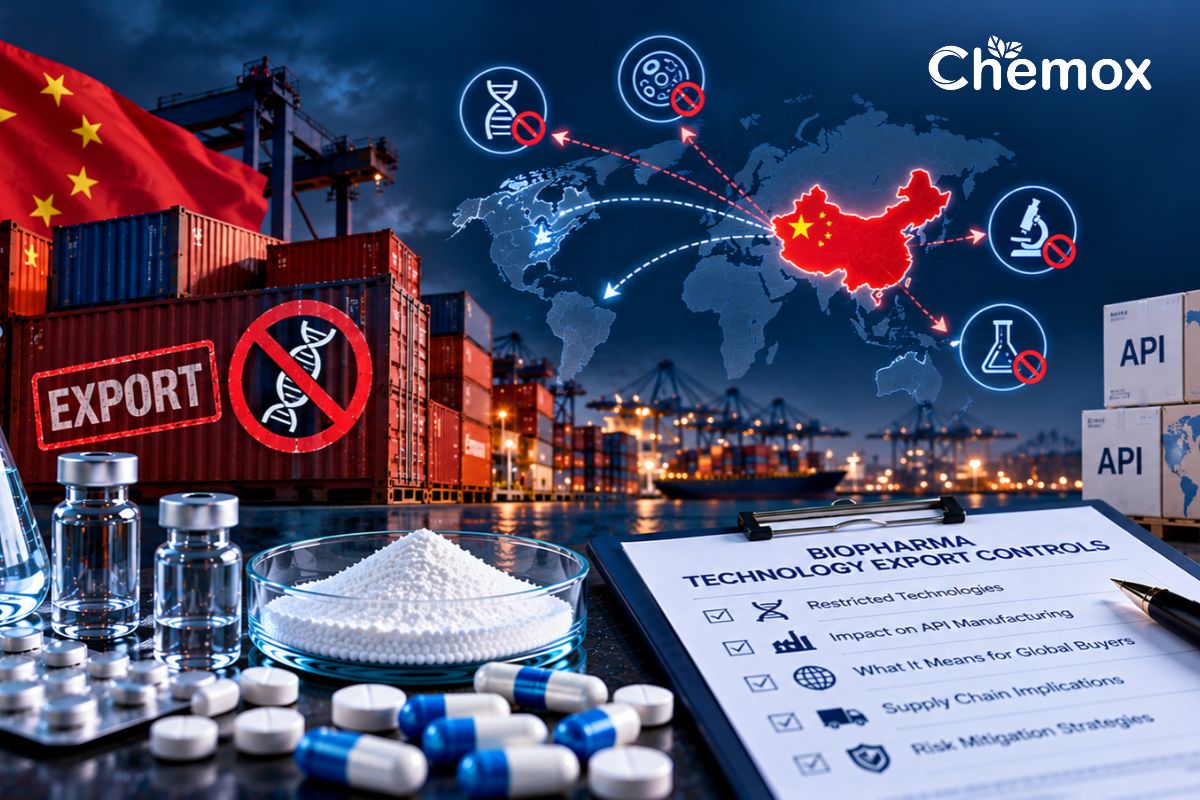
On October 16, 2026, two Chinese ministries issued a proposal to tighten the export of certain biotechnology know-how. Headlines moved quickly, and many procurement and regulatory teams asked the same question: does this affect the APIs and intermediates we buy? This guide sets out what the proposal covers, what the published summaries leave out, and why the China biopharma export controls API question has a more limited answer than the headlines suggest.
This is a plain-English summary of published law-firm and trade analyses of a draft proposal. It is not legal advice. The text is not final, so check the official announcement and take advice for your situation.
The Quick Answer
- What it is: A proposal to add biotechnology items to China’s catalogue of technologies that are prohibited or restricted from export. It concerns the transfer of technology, not shipments of finished drugs or ingredients.
- What it targets: Cell and gene therapy platforms, small nucleic acid (siRNA) drug platforms, certain novel-target discovery technologies, and pathogenic microorganism technologies.
- Does it mention APIs? In the summaries we reviewed, no. They do not mention active pharmaceutical ingredients, small-molecule drugs or chemical synthesis processes.
- Is it final? No. Public comments are open until November 15, 2026.
What Was Proposed
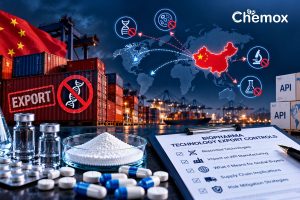
According to law-firm summaries, the Ministry of Commerce (MOFCOM) and the Ministry of Science and Technology issued Announcement No. 48 on October 16, 2026. It proposes amendments to the Catalogue of Technologies Prohibited or Restricted from Export. The draft covers artificial intelligence, biotechnology and photovoltaics, and the biopharma additions include:
| Category | Proposed treatment |
|---|---|
| Proprietary cell and gene therapy platforms | Transfer of platform ownership abroad prohibited |
| Proprietary siRNA (small nucleic acid) drug platforms | Transfer of platform ownership abroad prohibited |
| Technologies for discovering and validating wholly novel targets | Restricted (a licence is required) |
| Pathogen genetic-modification technologies | Prohibited |
“Novel” here means a target that has not been publicly disclosed anywhere in the world. The summaries describe the aim as preventing ownership of strategic research platforms from moving abroad, rather than stopping ordinary drug licensing.
A Registration Requirement Applies Now
Separately from the proposed prohibitions, the announcement is reported to require exporters of listed technologies to register with MOFCOM before export, with immediate effect. Registration is not an approval. It is reported to apply to overseas transfers of technology ownership, authorisations to use technology abroad, and some changes of control. One analysis notes that this registration step also reaches licensing arrangements, even where the proposed prohibition itself does not.
What the Summaries Say Is Not Covered
- Outsourced research and manufacturing services. Officials are reported to have said that outsourced R&D or manufacturing services fall outside the proposed restrictions.
- Licensing without ownership transfer. The prohibitions apply to transfers of ownership of platforms. Licences that do not transfer ownership are described as outside them.
- Products. The proposal concerns technology, not exports of finished drugs, APIs or intermediates.
So What Does It Mean for API and Intermediate Buyers?
For most buyers of small-molecule APIs and intermediates, there is no direct sign that this proposal applies. The covered categories (cell and gene therapy, siRNA, novel-target discovery, pathogens) are far from the chemical synthesis behind products such as tadalafil, statins or sartan intermediates.
That said, three points deserve attention:
- Absence of mention is not a legal exclusion. The published summaries do not mention APIs or chemical synthesis, but the full text and any final catalogue will define the scope. Check the official announcement, or ask counsel, if your sourcing is close to the covered areas.
- Check your portfolio. If you buy or develop oligonucleotides, siRNA, cell or gene therapy products, or work with Chinese research partners on novel targets, the proposal is relevant to you in a way it is not for small-molecule buyers.
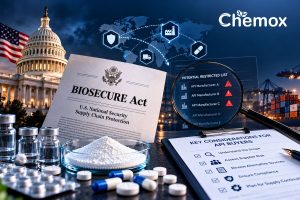
- Policy risk is rising generally. Between this proposal, US tariff plans and procurement rules such as the BIOSECURE Act, sourcing decisions are increasingly shaped by trade policy. That is a reason to understand your supply chain, not a reason to react to one draft.
What to Do Now
- Note the November 15 consultation deadline and watch for the final catalogue.
- Classify your products. Confirm which of your products, if any, are in cell and gene therapy, siRNA or novel-target discovery.
- Map your supply chain below the supplier. Know who makes your API and where your key starting materials and intermediates come from. See our guide to key starting material traceability.
- Keep a qualified second source. A documented alternative is more useful than a long vendor list. See our guide to API supply chain fragility.
- Review contracts with Chinese partners if you license technology or co-develop products there, particularly for biologic or nucleic acid platforms.
- Avoid overreacting to headlines. Wait for the final text before changing a qualified supplier.
Chemox Pharma’s Perspective
Chemox Pharma is a WHO-GMP certified manufacturer of small-molecule APIs and intermediates, with its own facility and in-house R&D centre in Dahej, Gujarat. On our reading of the published summaries, the proposal addresses biotechnology platforms and does not mention small-molecule APIs or intermediates. We will keep following the final text and update this page. If you want to talk through your supply chain questions, our team can share which steps are carried out at our facility and what documentation we can provide.
Request a Quote and Supply Documentation
If you are sourcing APIs or intermediates and want to discuss supply continuity and documentation, contact Chemox Pharma for a quote and documentation review.
FAQs
Q: What are China’s proposed biopharma export controls?
They are proposed amendments to China’s catalogue of technologies prohibited or restricted from export, issued as Announcement No. 48 on October 16, 2026. They would cover cell and gene therapy platforms, siRNA platforms, novel-target discovery technologies and pathogenic microorganism technologies.
Q: Do the proposed controls cover APIs?
The summaries we reviewed do not mention APIs, small-molecule drugs or chemical synthesis processes. The proposal concerns biotechnology platforms and technology transfer. Because it is a draft, confirm the final text before drawing conclusions.
Q: Will the controls stop China exporting drugs or ingredients?
The proposal is about the export of technology, in particular transfers of platform ownership, not shipments of finished drugs or ingredients.
Q: Do the controls affect contract manufacturing or licensing?
Officials are reported to have said that outsourced research and manufacturing services are outside the proposed restrictions, and that licences without ownership transfer are outside the prohibitions. A registration requirement is reported to apply to some licensing arrangements, so check your own contracts.
Q: When will the proposal be final?
It is not final. Public comments are open until November 15, 2026. Registration requirements are reported to apply immediately.