Nitrosamine Impurity Control in Sartan Intermediate Manufacturing: What Buyers Should Verify
When nitrosamine contamination was discovered in valsartan API in 2018, the pharmaceutical industry learned a hard lesson: the risk didn’t originate in the finished API testing lab — it originated several steps earlier, at the exact synthesis stage where the tetrazole ring is formed. That stage is where intermediates like TTBB come from. For anyone sourcing sartan-chain intermediates for Losartan, Valsartan, Irbesartan, Candesartan, or Olmesartan Medoxomil manufacturing, understanding this nitrosamine impurity sartan API risk at the intermediate level — not just the finished-product level is essential due diligence, not optional reading.
This guide covers where nitrosamine risk actually originates in sartan synthesis, why it’s an intermediate-stage issue as much as an API-stage one, and what to verify before sourcing TTBB or related intermediates.
Why This Started With Valsartan — and Why It Affects the Whole Sartan Class
In 2018, N-nitrosodimethylamine (NDMA) was discovered in valsartan API manufactured by Zhejiang Huahai Pharmaceuticals, triggering worldwide recalls. Regulators quickly recognized this wasn’t unique to one manufacturer’s valsartan — it was a structural risk shared across the entire sartan class. The EMA expanded its review to candesartan, irbesartan, losartan, and olmesartan specifically because all these compounds share a tetrazole ring structure, and different synthesis routes to that ring could each potentially generate nitrosamine impurities.
Where the Risk Actually Originates: The Tetrazole Ring Formation Step
This is the detail that matters most for intermediate buyers. Sartan synthesis typically forms the tetrazole ring using a cycloaddition reaction involving sodium azide, and sodium nitrite is commonly used afterward to destroy residual, unreacted azide since azide itself is toxic and potentially explosive if left in the process stream. If secondary or tertiary amine-containing solvents or reagents are present when that nitrite reacts under acidic conditions, N-nitrosamine impurities (NDMA, NDEA, NDIPA, and related compounds) can form.
This reaction sequence azide cycloaddition followed by nitrite quenching is exactly the chemistry involved in producing tetrazole-bearing intermediates like TTBB. In other words, nitrosamine risk isn’t introduced somewhere downstream in finished API processing; it’s a risk that exists at the intermediate manufacturing stage itself, before the intermediate is ever sold to a sartan API producer.
Why This Matters More for Intermediate Buyers Than It Might First Appear
If nitrosamine-forming conditions occur during TTBB synthesis, that risk is effectively built into the intermediate before it reaches your facility. Testing only at the finished API stage, after the intermediate has already been incorporated into your synthesis route, is a reactive approach — by the time a problem is caught there, you’re dealing with a much more expensive and disruptive issue than if the intermediate itself had been verified upfront.
This is why regulatory bodies have pushed toward proactive, near-global consensus by 2026: any potential nitrosamine risk across a synthesis route must be assessed, tested, and controlled — with acceptable intake limits set by regulators typically in the range of tens to hundreds of nanograms per day, and interim limits for sartan APIs having been tightened over time from 1 ppm down to 30 ppb.
What to Verify Before Sourcing TTBB or Sartan Intermediates
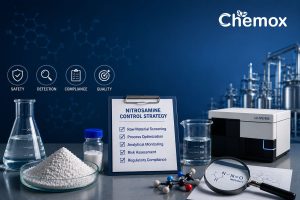
- Ask specifically about the tetrazole ring formation process — what reagents and solvents are used during azide cycloaddition and nitrite quenching, and whether secondary or tertiary amine-containing materials are present at that step.
- Request nitrosamine testing data for the intermediate itself, not just an assurance that the finished API will be tested later. Analytical methods for N-nitrosamine detection (typically LC-MS/MS based) should be available on request.
- Confirm process consistency. The original 2018 crisis was triggered by a synthesis process change at the manufacturer in question — buyers should ask whether their supplier’s process has remained validated and unchanged, and how process changes are risk-assessed if they do occur.
- Review documentation aligned with current regulatory expectations, including risk assessment records consistent with ICH M7 guidance on genotoxic impurities, which nitrosamines fall under.
- Don’t assume “GMP certified” alone covers this. Nitrosamine risk control is a specific, targeted process control point — a general GMP claim doesn’t confirm it’s been addressed at the tetrazole-formation stage specifically.
Sartan Intermediate Manufacturing at Chemox Pharma
Chemox Pharma manufactures sartan-chain intermediates including TTBB, DMDO-CL, and OLMI-1 for Olmesartan Medoxomil synthesis — at our WHO-GMP certified facility in Dahej, Gujarat. Given how directly the tetrazole-formation step relates to nitrosamine risk industry-wide, our team is available to discuss our process controls and documentation directly with buyers evaluating this specifically as part of their supplier qualification.
Questions to Ask Before You Order
- What reagents and solvents are used during your tetrazole ring formation step?
- Can you provide nitrosamine testing data specific to this intermediate batch?
- Has your synthesis process changed recently, and if so, what risk assessment was performed?
- What documentation can you provide aligned with current nitrosamine control guidance?
Request a Quote and Documentation
If you’re sourcing TTBB or other sartan-chain intermediates and want to discuss nitrosamine risk control as part of your supplier qualification, get in touch with Chemox Pharma for a quote and documentation review.
FAQs
Q: Where does nitrosamine risk actually originate in sartan manufacturing?
It originates at the tetrazole ring formation step — the same synthesis stage used to produce intermediates like TTBB — where sodium azide cycloaddition followed by sodium nitrite quenching can generate nitrosamine impurities if amine-containing materials are present.
Q: Does nitrosamine risk apply only to Valsartan, or to other sartans too?
It applies across the whole sartan class — Losartan, Valsartan, Irbesartan, Candesartan, and Olmesartan Medoxomil — since they all share the tetrazole ring structure and synthesis chemistry associated with the risk.
Q: Should I test for nitrosamines at the intermediate stage or only in the finished API?
Testing at the intermediate stage is the more proactive approach, since the risk is introduced during tetrazole ring formation — waiting until finished-API testing means catching a problem after it’s already built into your synthesis route.
Q: Does Chemox Pharma manufacture TTBB and related sartan intermediates?
Yes. Chemox Pharma manufactures TTBB, DMDO-CL, and OLMI-1 for Olmesartan Medoxomil synthesis at its WHO-GMP certified facility in Dahej, Gujarat, and can discuss process documentation directly with buyers.