Atorvastatin vs Rosuvastatin API: Comparing the Two Leading Statins for Formulators
Atorvastatin and Rosuvastatin are both HMG-CoA reductase inhibitors, both among the most widely prescribed cholesterol-lowering medications globally, and both represent enormous generic manufacturing volume. But they aren’t interchangeable API choices — their potency profiles, metabolic pathways, and even sourcing considerations differ enough that the choice between them should shape your formulation and supply strategy, not just come down to whichever is cheaper that quarter.
This guide compares Atorvastatin API vs Rosuvastatin API from a formulation and sourcing perspective, so you can decide which fits your product roadmap.
Shared Mechanism, Different Potency Profile
Both molecules work by inhibiting HMG-CoA reductase, the enzyme responsible for cholesterol synthesis in the liver, reducing LDL cholesterol production as a result — the mechanism behind their shared role as first-line lipid-lowering therapies.
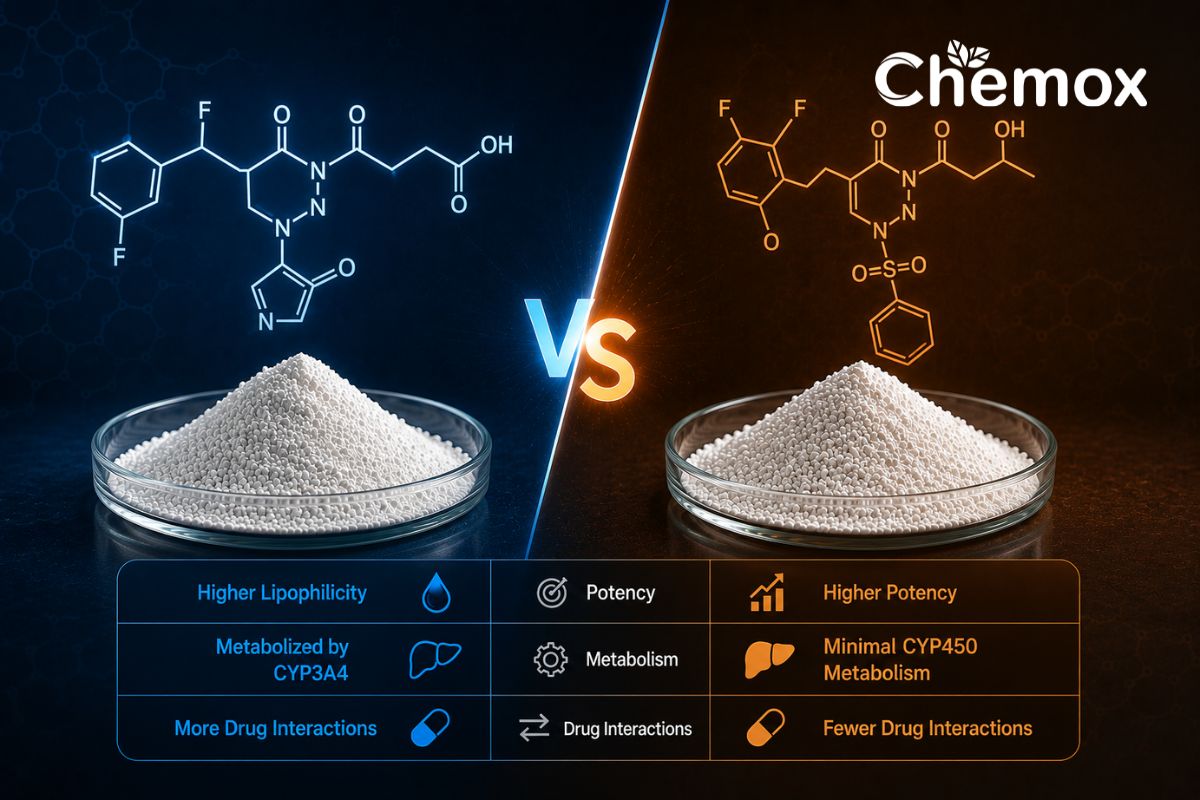
Where they diverge is potency. Rosuvastatin is generally regarded as more potent on a milligram-for-milligram basis than Atorvastatin, meaning comparable LDL-lowering effects are typically achieved at lower doses. Atorvastatin’s dosing range commonly spans 10mg to 80mg, while Rosuvastatin’s typically spans 5mg to 40mg — a meaningful difference for formulators thinking about tablet strength ranges and combination product design.
Metabolic Pathway Differences
This is one of the more practically important differences for formulators building combination products. Atorvastatin is metabolized primarily through the CYP3A4 enzyme pathway, which creates potential for interactions with other CYP3A4-metabolized drugs in a combination formulation. Rosuvastatin undergoes minimal CYP450 metabolism, which can make it a more favorable choice when formulating alongside other actives where drug-interaction risk is a design consideration.
Solubility and Formulation Considerations
Atorvastatin Calcium is a lipophilic compound, which has historically presented formulation challenges around dissolution and bioavailability — driving considerable innovation in amorphous and co-crystal forms to improve solubility. Rosuvastatin Calcium is comparatively more hydrophilic, generally simplifying some aspects of formulation, though it introduces its own considerations around stability, particularly oxidative degradation, that formulators need to control for in tablet design and packaging.
Market Position and Manufacturing Trends
Atorvastatin remains the higher-volume molecule globally and continues to be among the most prescribed statins worldwide, with generic Atorvastatin APIs now representing the large majority of total market volume following patent expiration. Rosuvastatin has seen strong relative growth in several markets, partly attributed to its more favorable interaction profile and potency advantages.
Both molecules are seeing similar manufacturing trends industry-wide: increasing adoption of high-purity API grades, growing use of biocatalytic and continuous-flow manufacturing processes to improve yield and purity, and rising buyer expectations around green chemistry production methods.
Sourcing Considerations: What to Check Before You Order
- Purity and impurity profile — both molecules are increasingly specified at higher purity grades; confirm your supplier’s current assay and impurity documentation for the specific molecule.
- Polymorphic form control — particularly relevant for Atorvastatin given its solubility challenges; confirm the crystalline form matches your formulation’s bioavailability requirements.
- DMF and regulatory documentation — availability can differ by molecule and by supplier, so confirm this specifically rather than assuming parity across your API sourcing.
- Stability and packaging — especially relevant for Rosuvastatin given its oxidative sensitivity; confirm the supplier’s recommended storage and packaging conditions.
Atorvastatin vs Rosuvastatin API : Chemox Pharma
Chemox Pharma manufactures both Atorvastatin API and Rosuvastatin API at our WHO-GMP certified facility in Dahej, Gujarat, with a 25kg MOQ for both molecules. One sourcing distinction worth noting: DMF support is currently available for Atorvastatin API, which is useful for buyers who need to reference our documentation in a regulatory submission. If your formulation depends on DMF access, factor this into which molecule you prioritize sourcing from us first, or reach out to discuss your specific documentation needs for Rosuvastatin.
Questions to Ask Before You Choose Between the Two
- Does my target market or combination formulation favor one molecule’s metabolic pathway over the other?
- What potency and dosing range does my product strategy require?
- Do I need DMF documentation, and does my supplier currently support that for the specific molecule I’m sourcing?
- What polymorphic form and stability data can the supplier provide for my chosen molecule?
Request a Quote for Atorvastatin or Rosuvastatin API
If you’re evaluating Atorvastatin API or Rosuvastatin API for your next formulation, get in touch with Chemox Pharma for a quote and sample evaluation.
FAQs
Q: Is Rosuvastatin more potent than Atorvastatin? Rosuvastatin is generally considered more potent on a milligram-for-milligram basis, with comparable LDL-lowering effects typically achieved at lower doses than Atorvastatin.
Q: Which statin has fewer drug interaction concerns for combination formulations? Rosuvastatin undergoes minimal CYP450 metabolism, which can make it a more favorable choice than Atorvastatin (metabolized via CYP3A4) when formulating alongside other CYP3A4-interacting actives.
Q: Does Chemox Pharma offer DMF support for both Atorvastatin and Rosuvastatin API? DMF support is currently available for Atorvastatin API. Contact our team directly to discuss documentation requirements for Rosuvastatin.
Q: What’s the MOQ for Atorvastatin and Rosuvastatin API from Chemox Pharma? Both Atorvastatin and Rosuvastatin API have a 25kg MOQ.