USFDA vs WHO-GMP vs EU-GMP: What Global Buyers Must Know About Indian API GMP Certification Export
When sourcing Active Pharmaceutical Ingredients from India, global buyers whether procurement managers, regulatory affairs teams, or formulation scientists face one critical decision before any purchase order is raised: Which GMP certification does this supplier hold, and does it match my target market?
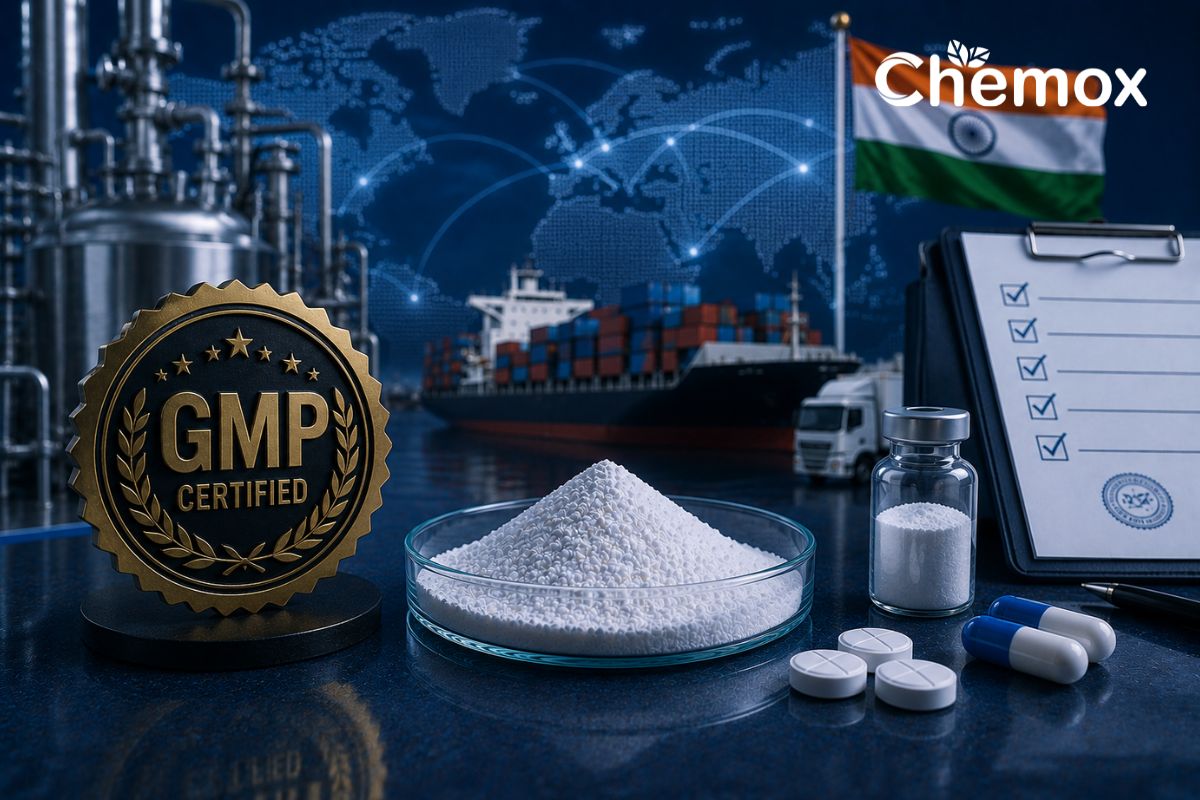
Understanding Indian API GMP certification export standards is not a box-ticking exercise. It directly determines whether your finished drug product will pass regulatory scrutiny in the United States, Europe, or emerging markets or get flagged at the border. India holds over 600 USFDA-approved pharmaceutical facilities outside the US, and more than 1,400 WHO-GMP certified sites the highest concentration of internationally certified API manufacturing infrastructure in the world. Yet not all certifications are equal, and not all markets accept the same credentials.
This guide breaks down the three most important GMP frameworks USFDA, WHO-GMP, and EU-GMP — and explains exactly what each means for global buyers sourcing APIs from India.
What Is GMP Certification and Why Does It Matter for API Sourcing?
Good Manufacturing Practice (GMP) is a regulatory framework enforced by national and international health authorities to ensure that pharmaceutical products including APIs are consistently manufactured and controlled to quality standards appropriate for their intended use. In the context of API sourcing, GMP certification is your assurance that the manufacturer follows validated, documented, and auditable production processes that protect product purity, potency, and safety.
For global buyers, sourcing APIs from a non-GMP-certified manufacturer introduces serious risks: rejected drug master file submissions, failed import inspections, product recalls, and regulatory action against your finished product registration. In highly regulated markets like the US and EU, GMP certification is not optional it is the legal minimum for market access.
USFDA GMP Certification: The Gold Standard for US Market Access
What it is: USFDA cGMP (Current Good Manufacturing Practice) is enforced under 21 CFR Parts 210 and 211, along with ICH Q7 specifically for API manufacturing. Unlike guidance documents, cGMP is law in the United States — non-compliance is a criminal violation, not merely an administrative shortcoming.
What it requires: USFDA-audited API facilities in India must demonstrate iron-clad data integrity across all electronic records (21 CFR Part 11), validated manufacturing and cleaning processes, a fully functioning Corrective and Preventive Action (CAPA) system, and complete lifecycle process validation: from process design through process qualification to continued process verification. USFDA audits are known for their depth, rigor, and their particular focus on data integrity backdated records, deleted raw data files, or shared login credentials are immediate triggers for warning letters and import alerts.
What buyers get: A USFDA-approved Indian API manufacturer can file a US Drug Master File (DMF) directly with the FDA, enabling their buyer to reference the DMF in an Abbreviated New Drug Application (ANDA) for US generic drug registration. This is the single most direct pathway to the world’s largest pharmaceutical market.
Market reach: United States primarily. Also recognized by Health Canada and TGA (Australia) in many cases.
Indian API GMP certification export advantage: India holds over 600 USFDA-approved pharmaceutical manufacturing units more than any other country outside the United States. From January to October 2023 alone, Indian companies gained 67% of all USFDA market authorizations, a testament to the scale and depth of India’s US-compliant manufacturing infrastructure.
WHO-GMP Certification: The Global Passport for Emerging Markets
What it is: WHO-GMP refers to compliance with the Good Manufacturing Practice guidelines published by the World Health Organization. In India, WHO-GMP certification is issued by CDSCO (Central Drugs Standard Control Organisation) following a manufacturing site inspection. India’s Schedule M regulations for pharmaceutical manufacturing are harmonized with WHO-GMP, making Indian APIs with this certification widely recognized across global markets.
What it requires: WHO-GMP sets a broad, internationally adaptable framework covering facility design, equipment qualification, personnel training, documentation systems, quality control laboratories, and batch release procedures. It is intentionally less prescriptive than USFDA cGMP, allowing regulators in adopting countries to implement it in a manner appropriate to their local context. WHO also operates the Prequalification Programme (PQP), which qualifies APIs for use in medicines procured by UN agencies, the Global Fund, and other international health organizations.
What buyers get: A WHO-GMP certificate from an Indian manufacturer signals broad international credibility particularly for buyers operating in Africa, Southeast Asia, Latin America, the Middle East, and other semi-regulated markets. It is a baseline requirement for participating in government tenders and international health procurement programs. Over 1,400 Indian pharmaceutical facilities currently hold WHO-GMP certification, making it the most widely held international compliance credential in the Indian pharma industry.
Market reach: Africa, Southeast Asia, Latin America, Middle East, CIS countries, and any market that accepts WHO-GMP as its import standard.
Important caveat for buyers: WHO-GMP is intentionally broad. A WHO-GMP certified Indian API supplier may not automatically meet the more prescriptive requirements of USFDA or EU-GMP. If you plan to eventually expand your product into regulated Western markets, verify upfront whether your supplier is also pursuing USFDA or EU-GMP compliance retrofitting compliance later is significantly more expensive.
EU-GMP Certification: The Rigorous Standard for European Market Entry
What it is: EU-GMP compliance for APIs is governed by EU GMP Part II, which is aligned with ICH Q7. It is enforced by the European Medicines Agency (EMA) and individual National Competent Authorities (NCAs) of EU member states. EU-GMP is widely considered one of the most technically detailed and process-centric regulatory frameworks in the world.
What it requires: EU-GMP goes beyond USFDA in several important ways. A key distinction is the Qualified Person (QP) requirement: before any API-derived drug product is released to the EU market, a QP typically a highly trained pharmacist or scientist must personally certify that the batch meets all applicable regulatory standards. This individual accountability structure does not exist in the same form under USFDA regulations.
For Indian API exporters, EU market entry requires a Written Confirmation (WC) issued by CDSCO, attesting that the API was manufactured under GMP standards equivalent to those of the EU. Additionally, manufacturers may pursue a Certificate of Suitability (CEP) issued by EDQM (European Directorate for the Quality of Medicines), which demonstrates that the API’s quality is controlled by methods described in the European Pharmacopoeia — significantly simplifying the buyer’s regulatory submission process across all EU member states.
EU-GMP guidelines also require comprehensive risk management systems, validated methods for controlling impurities and preventing cross-contamination, and full batch traceability from raw material receipt through finished API dispatch.
What buyers get: Full access to European pharmaceutical markets with streamlined registration pathways. A CEP-holding Indian manufacturer is particularly valuable — the CEP can be referenced directly in a Marketing Authorization Application (MAA) across all EU member states, eliminating the need for separate quality dossiers per country.
Market reach: All EU member states, UK (post-Brexit, via MHRA), Switzerland, and markets that accept EU-GMP as their import standard.
Side-by-Side Comparison: USFDA vs WHO-GMP vs EU-GMP
| Feature | USFDA cGMP | WHO-GMP | EU-GMP |
|---|---|---|---|
| Legal Status | Mandatory law (21 CFR) | Guidance adopted into local law | Mandatory regulation (EU directive) |
| Key Document for Buyers | US Drug Master File (DMF) | WHO-GMP Certificate | CEP / ASMF + Written Confirmation |
| Market Access | USA, Canada, Australia | Africa, SE Asia, Latin America, Middle East | EU, UK, Switzerland |
| Inspection Body | US FDA | CDSCO / WHO | EMA / National Competent Authorities |
| Rigor Level | Very High | Moderate | Very High |
| QP Requirement | No | No | Yes |
| Data Integrity Focus | Extremely High (21 CFR Part 11) | Moderate | High |
| Indian Certified Sites | 600+ | 1,400+ | Growing rapidly |
How to Verify Indian API GMP Certification Before You Buy
Before placing any API purchase order with an Indian manufacturer, global buyers should independently verify certification status using these official databases:
- USFDA: FDA Drug Establishment Current Registration Site (DECRS) — check for active registrations and any import alert history
- WHO-GMP: CDSCO’s published list of WHO-GMP certified sites on the official CDSCO portal
- EU-GMP: EudraGMDP database maintained by EMA — lists current GMP certificates and manufacturing authorizations
- CEP Status: EDQM’s public database of granted Certificates of Suitability
Never rely solely on a manufacturer’s self-declaration. Always cross-verify against the official regulatory database for the target market. A reputable supplier will proactively share their current GMP certificates, Certificate of Analysis (CoA), and DMF reference numbers without hesitation.
Which Certification Should You Prioritize When Sourcing APIs from India?
The answer depends entirely on your target market:
- Selling in the USA? USFDA-approved facility + active US DMF is non-negotiable.
- Selling in Europe? EU-GMP compliance + CEP or ASMF is the optimal path.
- Selling in Africa, SE Asia, or Middle East? WHO-GMP certification is your primary requirement.
- Global supply strategy? Partner with an Indian API manufacturer who holds multi-regulatory certifications — USFDA + WHO-GMP + EU-GMP — to maximize your market reach from a single, trusted supplier.
Multi-certified Indian API manufacturers represent the highest tier of global compliance. They invest significantly in maintaining simultaneous compliance across all three frameworks, which translates directly into fewer regulatory surprises, faster market registrations, and greater supply chain security for their global buyer partners.
Conclusion
Indian API GMP certification export is not a single standard — it is a spectrum of internationally recognized frameworks that unlock different markets and reflect different levels of manufacturing rigor. Understanding the distinctions between USFDA, WHO-GMP, and EU-GMP certifications is the single most important due diligence step any global pharmaceutical buyer can take when sourcing APIs from India.
India’s unmatched infrastructure of 600+ USFDA-approved, 1,400+ WHO-GMP certified, and a rapidly growing number of EU-GMP compliant API manufacturing sites means that regardless of your target market, a fully certified, high-quality Indian API partner exists — if you know what to look for.
At Chemox Pharma, we hold WHO-GMP certification and operate to USFDA-aligned quality standards across all our API product lines — including Rosuvastatin, Mirabegron, and 16 other export-ready molecules. Contact us to request our GMP certificates, Certificates of Analysis, or to discuss your API sourcing requirements.






2 Responses
I want to discuss about ROS Raw material for factory in KSA