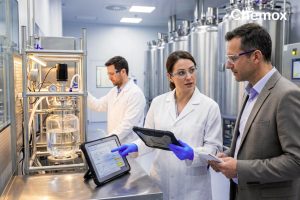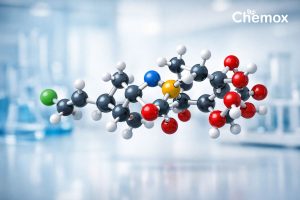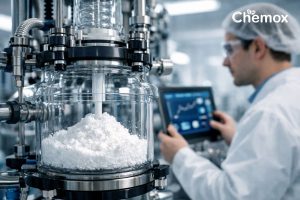

The pharmaceutical industry is currently navigating a period of unprecedented transformation. As we move through 2026, the pressure to bring life-saving medications to market faster and more cost-effectively has never been greater. Developing a new drug is a marathon, often spanning over a decade and costing billions of dollars. However, a critical yet often overlooked component in this race is the strategic use of advanced intermediates. These chemical building blocks are the unsung heroes of modern medicine, serving as the bridge between basic raw materials and the final Active Pharmaceutical Ingredients (APIs) that treat patients globally.
Advanced intermediates are chemical compounds that have undergone several stages of synthesis and are closer to the final molecular structure of the API. Unlike basic starting materials, these intermediates possess the complex functional groups and stereochemistry required for modern, high-potency drugs. By utilizing these pre-synthesized components, pharmaceutical companies can significantly shorten their internal manufacturing processes, reducing the number of chemical transformations required in the final stages of production. This strategic approach is not just about convenience; it is a fundamental shift in how the global pharmaceutical intermediates India sector supports the broader healthcare ecosystem.
Understanding the Strategic Value of Advanced Intermediates
To appreciate the role of advanced intermediates, one must first understand the complexity of modern drug synthesis. A typical API may require 10 to 20 distinct chemical steps to produce from scratch. Each step introduces risks, including potential yield loss, impurity formation, and regulatory hurdles. Advanced intermediates allow manufacturers to “skip” the initial, often more hazardous or resource-intensive steps. This outsourcing of complexity to specialized manufacturers enables drug developers to focus their internal resources on the final, most critical stages of synthesis and formulation.
The value proposition of these intermediates extends beyond mere time savings. They offer a level of consistency and quality that is difficult to achieve when managing a 20-step synthesis in-house. Specialized manufacturers of pharmaceutical intermediates India have honed their processes over decades, investing in state-of-the-art facilities for complex reactions like hydrogenation, nitration, and Grignard synthesis. This specialization ensures that the intermediates delivered to the API manufacturer are of the highest purity, which in turn simplifies the final purification steps and ensures a more robust regulatory filing.
|
Feature
|
Basic Intermediates
|
Advanced Intermediates
|
|
Chemical Complexity
|
Low (Simple structures)
|
High (Close to final API)
|
|
Synthesis Steps
|
1-3 steps from raw materials
|
5+ steps, complex transformations
|
|
Regulatory Impact
|
Minimal (Starting materials)
|
Significant (Often part of DMF)
|
|
Value Add
|
Commodity pricing
|
Strategic partnership value
|
|
Time Savings
|
Low
|
High (Reduces internal steps)
|
Accelerating the Drug Development Lifecycle
The impact of advanced intermediates is most visible during the R&D and clinical trial phases. In the early stages of drug discovery, researchers need to synthesize hundreds of variations of a molecule to identify the most effective candidate. Having access to a comprehensive API intermediates list allows these researchers to quickly assemble complex molecules without having to build every fragment from the ground up. This “modular” approach to chemistry can shave months, if not years, off the discovery phase.
As a drug candidate moves into Phase I and Phase II clinical trials, the need for speed becomes even more acute. Clinical trials are the most expensive part of drug development, and any delay in producing the necessary quantities of the drug can cost millions in lost time and patent life. Advanced intermediates provide the scalability required to move from lab-scale synthesis to pilot-plant production rapidly. By partnering with a manufacturer that offers custom synthesis intermediates, drug developers can ensure they have a reliable supply of high-quality material that can scale alongside their clinical progress.
Furthermore, the use of advanced intermediates reduces the capital expenditure (CAPEX) required for new drug launches. Instead of building massive, multi-purpose chemical plants capable of handling every step of a complex synthesis, pharmaceutical companies can utilize a leaner manufacturing footprint. They can rely on a network of trusted partners in the pharmaceutical intermediates India hub to provide the complex building blocks, while they focus on the high-value final assembly and finishing.
The Power of Custom Synthesis Intermediates
While many intermediates are available as catalog items, the most innovative drugs often require unique chemical structures that have never been synthesized before. This is where custom synthesis intermediates play a pivotal role. Custom synthesis is the process of creating a specific chemical compound exclusively for a single client, often under strict confidentiality and intellectual property (IP) protections.
For a pharmaceutical company, a custom synthesis partner is more than just a supplier; they are an extension of the R&D team. These partners bring deep expertise in synthetic organic chemistry, helping to optimize reaction pathways, improve yields, and identify more sustainable manufacturing methods. In 2026, the trend toward “Green Chemistry” is driving many companies to seek custom synthesis partners who can develop more environmentally friendly routes to complex intermediates, reducing waste and energy consumption.
The flexibility offered by custom synthesis is also crucial for handling high-potency APIs (HPAPIs). These compounds require specialized containment facilities and rigorous safety protocols. By outsourcing the synthesis of advanced intermediates for HPAPIs to a specialized CDMO (Contract Development and Manufacturing Organization), drug developers can mitigate the risks associated with handling hazardous materials while ensuring the highest standards of worker safety and environmental protection.
Why India is the Global Hub for Pharmaceutical Intermediates
India has long been recognized as the “Pharmacy of the World,” but its role in the intermediates sector is particularly dominant. The country’s strength lies in its unique combination of technical expertise, large-scale manufacturing infrastructure, and a favorable regulatory environment. Regions like Dahej in Gujarat have become global epicenters for chemical manufacturing, hosting state-of-the-art facilities that adhere to the latest WHO-GMP standards.
The pharmaceutical intermediates India sector has evolved from producing simple generics to handling some of the most complex chemistry in the world. This evolution is driven by a highly skilled workforce of chemists and engineers who are adept at process optimization and scale-up. Moreover, the Indian government’s support through initiatives like the Production Linked Incentive (PLI) scheme has further bolstered the domestic production of Key Starting Materials (KSMs) and intermediates, reducing global reliance on single-source supply chains and enhancing the resilience of the pharmaceutical industry.
For global pharmaceutical companies, partnering with an Indian manufacturer offers a significant cost advantage without compromising on quality. The ability to access a vast API intermediates list from a single region simplifies logistics and procurement, while the rigorous quality control measures implemented by top-tier Indian firms ensure compliance with international standards like the USFDA, EDQM, and PMDA.
Case Study: Common API Intermediates and Their Impact
To illustrate the importance of these compounds, let us look at some of the most widely used drugs today. For instance, the synthesis of Rosuvastatin, a leading cholesterol-lowering medication, relies on several advanced intermediates that must be produced with extreme precision to ensure the correct chiral purity. Similarly, the production of Fluconazole, a critical antifungal agent, involves complex intermediates that determine the final drug’s efficacy and safety profile.
|
API Name
|
Key Intermediate Example
|
Role in Synthesis
|
|
Rosuvastatin
|
Z-6 Intermediate
|
Critical for forming the heptenoic acid side chain.
|
|
Fluconazole
|
1-(2,4-Difluorophenyl)-2-(1H-1,2,4-triazol-1-yl)ethanone
|
The core building block for the triazole structure.
|
|
Tigecycline
|
9-Aminominocycline
|
An advanced intermediate that enables the final glycylcyclination.
|
|
Atorvastatin
|
ATS-8 (Acetonide)
|
Essential for the synthesis of the statin side chain.
|
These examples highlight how a robust API intermediates list is essential for maintaining the global supply of essential medicines. Without a steady flow of these advanced building blocks, the production of these life-saving drugs would grind to a halt, leading to shortages and increased costs for patients.
Future Trends: 2026 and Beyond
As we look toward the future, several trends are set to further elevate the role of advanced intermediates. The integration of Artificial Intelligence (AI) and machine learning in retrosynthetic analysis is allowing chemists to identify even more efficient pathways to complex molecules. This digital transformation is enabling faster process development and more accurate yield predictions, further accelerating the drug development timeline.
Sustainability is also becoming a non-negotiable requirement. The next generation of advanced intermediates will be produced using biocatalysis, flow chemistry, and renewable solvents. These innovations not only reduce the environmental footprint of pharmaceutical manufacturing but also often lead to higher purity and lower costs in the long run.
Finally, the rise of personalized medicine and orphan drugs is driving demand for smaller batches of highly complex custom synthesis intermediates. This shift requires manufacturers to be more agile and flexible, moving away from massive “one-size-fits-all” production lines toward modular, specialized manufacturing units that can quickly pivot to meet the needs of niche patient populations.
Conclusion: A Strategic Partnership for Success
In the high-stakes world of pharmaceutical development, speed, quality, and cost are the three pillars of success. Advanced intermediates are the catalyst that allows companies to excel in all three areas. By strategically utilizing these complex building blocks, drug developers can navigate the challenges of modern chemistry, reduce their time-to-market, and ultimately deliver better health outcomes to patients around the world.