WHO-GMP Certified Facility

Iguratimod

CPPL / Product / Iguratimod

Iguratimod

Iguratimod

CAS No.: 123663-49-0
Category: Disease-Modifying Antirheumatic Drug (DMARD)
Synonyms: T-614, IGU
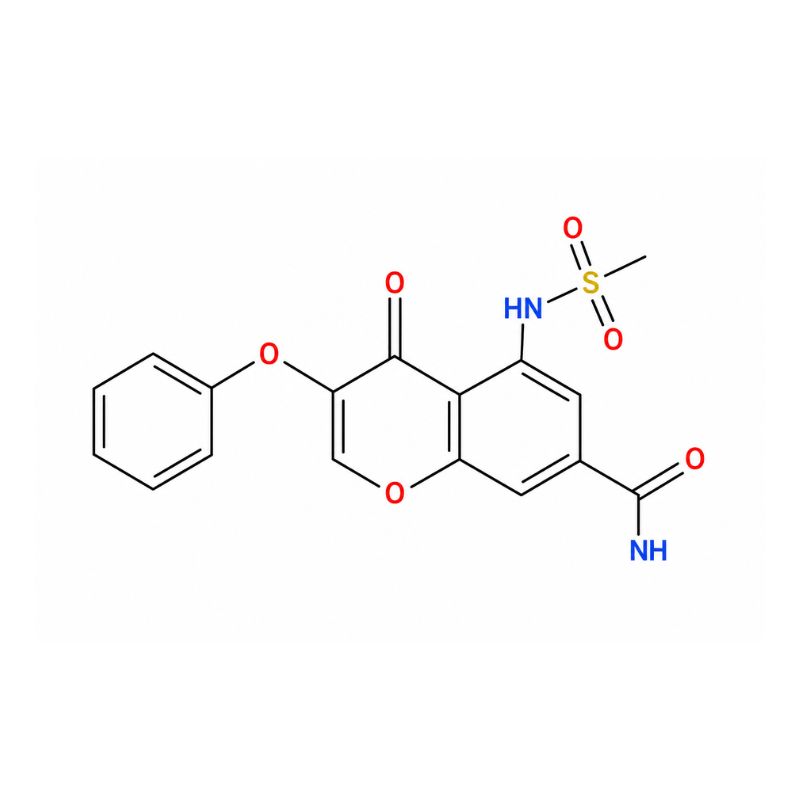
Molecular Formula: C₁₇H₁₄N₂O₆S
Molecular Weight: 374.37 g/mol

Description:

Iguratimod is a synthetic small-molecule conventional disease-modifying antirheumatic drug (csDMARD) with immunomodulatory and anti-inflammatory properties. It has been developed primarily for the treatment of rheumatoid arthritis (RA) and is used clinically in Japan and China.

Iguratimod acts on several inflammatory and immune pathways involved in rheumatoid arthritis. It can suppress the production of pro-inflammatory cytokines, reduce immunoglobulin and autoantibody production by B cells, and modulate NF-κB signaling. Research also indicates effects on osteoclast activity and bone formation, contributing to its potential joint-protective effects.

Chemical name: N-[7-(methanesulfonamido)-4-oxo-6-phenoxychromen-3-yl]formamide.

Applications

Iguratimod is primarily associated with rheumatology and autoimmune disease research, particularly rheumatoid arthritis.

Key Applications

  • Rheumatoid Arthritis: Used as a csDMARD for controlling disease activity and inflammation.
  • Anti-inflammatory Research: Investigated for suppression of inflammatory cytokines including TNF-α, IL-1β, IL-6 and IL-8.
  • Immunomodulation: Studied for its effects on T-cell and B-cell responses.
  • B-cell Research: Investigated for inhibition of immunoglobulin and autoantibody production.
  • Joint Protection Research: Studied for effects on osteoclast activation, bone resorption and osteoblast differentiation.
  • Synovial Inflammation Research: Investigated for effects on inflammatory signaling and fibroblast-like synoviocytes.
  • Autoimmune Disease Research: Has also been investigated in conditions including systemic lupus erythematosus and Sjögren’s syndrome, although its established clinical use is primarily in rheumatoid arthritis.

Product Specifications

Iguratimod is a pharmacologically active immunomodulatory compound and should be handled according to the applicable SDS, occupational safety procedures and regulatory requirements.

Handling

  • Avoid inhalation of dust or powder.
  • Avoid contact with eyes, skin and clothing.
  • Use suitable gloves and protective eyewear.
  • Handle in an adequately ventilated area.
  • Use local exhaust ventilation where dust generation is possible.
  • Wash hands thoroughly after handling.
  • Do not eat, drink or smoke while handling the material.
  • Keep the container tightly closed when not in use.

Pharmaceutical Handling

For pharmaceutical/API applications, material should be handled under appropriate GMP, quality-control and containment procedures.

Iguratimod has clinically relevant safety considerations, including reported liver enzyme elevations and thrombocytopenia, so pharmaceutical use requires appropriate medical supervision and monitoring.

Mechanism of Actions

Iguratimod has a multifactorial immunomodulatory and anti-inflammatory mechanism rather than acting through a single target.

1. NF-κB Pathway Inhibition

Iguratimod inhibits activation of the NF-κB signaling pathway, including inhibition of NF-κB p65 phosphorylation and nuclear translocation. NF-κB regulates the expression of numerous inflammatory mediators.

2. Suppression of Pro-inflammatory Cytokines

Iguratimod reduces production of inflammatory cytokines such as:

  • TNF-α
  • IL-1β
  • IL-6
  • IL-8
  • IL-17

This contributes to suppression of inflammatory activity in rheumatoid arthritis.

3. Modulation of B-cell Function

Iguratimod suppresses the differentiation of B cells into antibody-secreting cells and reduces production of immunoglobulins and autoantibodies. This is particularly relevant because B-cell-derived antibodies contribute to autoimmune inflammation in RA.

4. Effects on T-cell Responses

Iguratimod modulates T-cell-mediated immune responses and can influence inflammatory pathways associated with Th1/Th17 activity.

5. Bone and Cartilage Effects

Research suggests Iguratimod can inhibit osteoclast-mediated bone resorption and promote osteoblast differentiation. It has also been reported to suppress production of matrix metalloproteinases such as MMP-1 and MMP-3, which are involved in cartilage degradation.

Simplified mechanism:

Iguratimod → NF-κB/cytokine pathway modulation → ↓ inflammatory cytokines + ↓ immunoglobulin/autoantibody production → reduced immune-mediated inflammation → potential reduction in joint damage

FAQs

1. What is Iguratimod?

Iguratimod is a synthetic small-molecule conventional disease-modifying antirheumatic drug (csDMARD) with anti-inflammatory and immunomodulatory activity.

2. What is the CAS number of Iguratimod?

The CAS number of Iguratimod is 123663-49-0.

3. What is the molecular formula of Iguratimod?

Its molecular formula is C₁₇H₁₄N₂O₆S.

4. What is the molecular weight of Iguratimod?

The molecular weight is 374.37 g/mol.

5. What is Iguratimod used for?

Iguratimod is primarily used as a DMARD for rheumatoid arthritis and is also investigated for its immunomodulatory and anti-inflammatory effects in other autoimmune and rheumatic diseases.

6. How does Iguratimod work?

Iguratimod acts through multiple pathways, including suppression of NF-κB signaling, reduction of inflammatory cytokine production and inhibition of B-cell immunoglobulin production.

7. What are the main cytokines affected by Iguratimod?

Research has reported inhibition of several inflammatory cytokines, including TNF-α, IL-1β, IL-6, IL-8 and IL-17.

8. Does Iguratimod affect B cells?

Yes. Iguratimod can inhibit B-cell differentiation into antibody-secreting cells and reduce production of immunoglobulins and autoantibodies.

9. Is Iguratimod the same as T-614?

Yes. T-614 is a development code/synonym for Iguratimod.

10. What is the chemical name of Iguratimod?

Its IUPAC name is N-[7-(methanesulfonamido)-4-oxo-6-phenoxychromen-3-yl]formamide

Related Products