What a Recent FDA Contamination Warning Letter Teaches Buyers About API Supplier Vetting
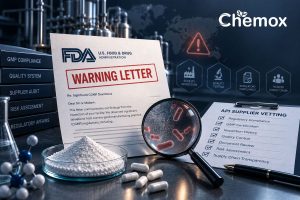
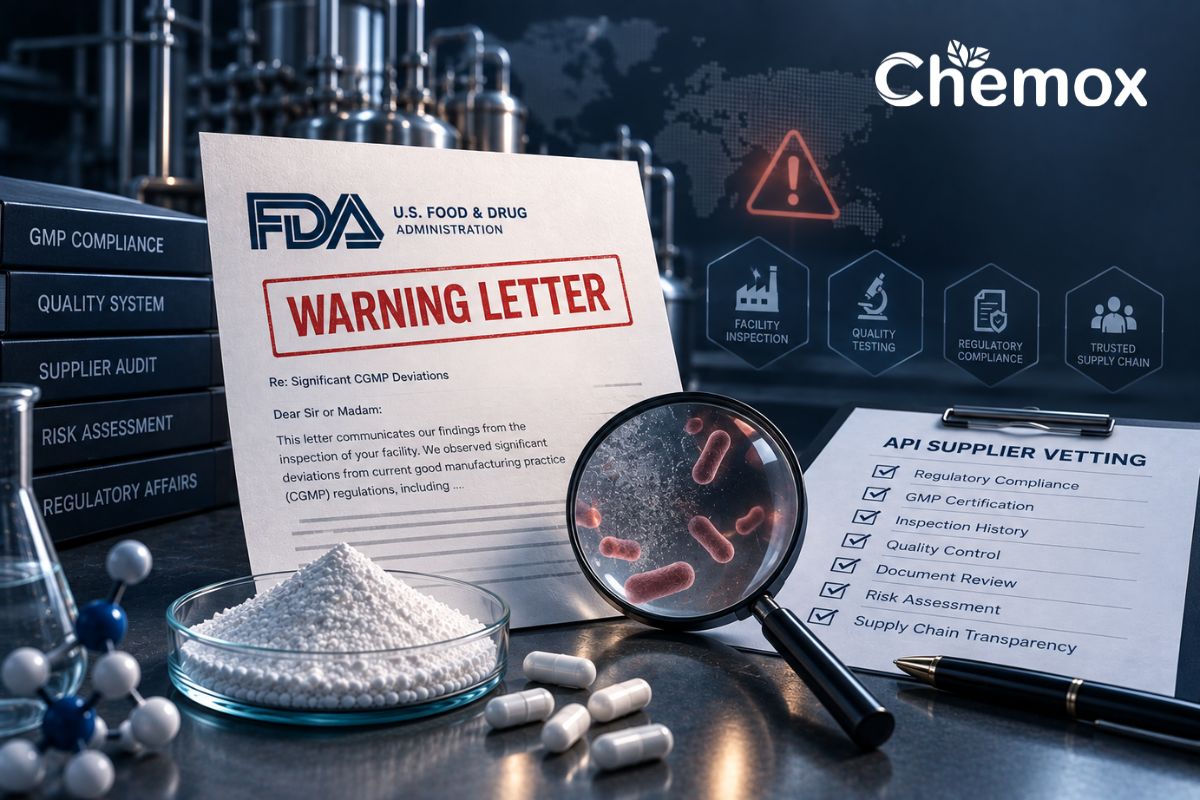
In September 2026, the FDA issued a warning letter to an Indian active pharmaceutical ingredient manufacturer citing lax contamination controls a reminder that GMP compliance failures aren’t rare, isolated events, but a real and ongoing risk across the API supply chain. For buyers, this kind of news shouldn’t just be background industry noise. It’s a useful, concrete case for re-examining what you actually verify before committing to a supplier, rather than assuming a general “GMP certified” claim covers the specific risk that led to this citation.
This piece looks at what an FDA warning letter over API contamination actually signals, and what buyers should be asking their own suppliers as a result.
Why Contamination Control Failures Keep Happening
Contamination control in API manufacturing covers a wide range of process elements: environmental monitoring in production areas, cleaning validation between batches or product changeovers, equipment dedication or shared-line management, and particulate and microbial control throughout the manufacturing environment. A failure in any one of these areas can allow cross-contamination between products, introduce foreign particulate matter, or compromise a batch’s microbial specification issues that may not show up until testing catches them, or worse, after a finished product has already reached the market.
Regulators have been raising the bar on contamination control specifically in recent years, with growing emphasis on documented Contamination Control Strategies (CCS) as a proactive framework rather than a reactive one — meaning manufacturers are increasingly expected to demonstrate they’ve systematically assessed and controlled contamination risk across their entire facility, not just responded to problems after they occur.
What This Means for Buyers, Not Just Manufacturers
A contamination control failure at your API supplier isn’t only their compliance problem — it becomes yours the moment that material enters your formulation. Depending on severity, this can mean:
- Your finished product inheriting a quality issue that surfaces during your own testing, or worse, after distribution.
- Regulatory scrutiny of your own facility if a quality issue is traced back to an incoming raw material.
- Sudden supply disruption if your API source is placed under an import alert or has its facility status affected following an FDA action.
- Reputational and financial cost that’s disproportionate to the API’s original purchase price.
This is exactly why supplier vetting shouldn’t stop at confirming a certificate exists — it should extend to understanding how that certification is actually maintained day to day.
What Buyers Should Verify Given This Kind of Risk
- Ask specifically about environmental monitoring programs — not just whether one exists, but how frequently monitoring occurs and what action levels trigger a response.
- Understand equipment and line dedication. If a facility produces multiple different APIs, ask how cross-contamination is prevented between product changeovers, and whether cleaning validation is documented for each transition.
- Check public regulatory inspection history before committing to a new supplier. FDA warning letters and inspection outcomes are publicly searchable, and reviewing this history takes far less time than dealing with a supply disruption later.
- Ask whether the facility maintains a documented Contamination Control Strategy, reflecting the more proactive, systematic approach regulators increasingly expect.
- Request recent third-party audit reports where available, which can surface issues that haven’t yet resulted in a regulatory citation but indicate developing risk.
- Don’t treat certification as a one-time check. A facility’s compliance status can change between your last audit and your next order — periodic re-verification matters, especially for long-term supply relationships.
Contamination Control at Chemox Pharma
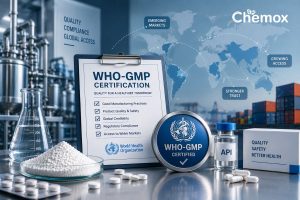
Chemox Pharma manufactures at our WHO-GMP certified facility in Dahej, Gujarat, and our team is glad to walk buyers through our environmental monitoring and contamination control practices directly as part of your supplier qualification process. Given how much attention this specific risk area is getting industry-wide, we’d rather buyers ask detailed questions upfront than assume a general certification claim answers everything.
Questions to Ask Your Current or Prospective API Supplier
- What does your environmental monitoring program actually look like, and how often is it performed?
- If you manufacture multiple products, how do you prevent cross-contamination between them?
- Can I review your recent regulatory inspection history?
- Do you maintain a documented Contamination Control Strategy?
Request a Quote and Facility Discussion
If you’re evaluating API suppliers and want to discuss contamination control practices as part of your vetting process, get in touch with Chemox Pharma for a quote and facility overview.
FAQs
Q: What does “lax contamination controls” typically mean in an FDA warning letter?
It generally refers to deficiencies in environmental monitoring, cleaning validation, or contamination prevention systems within a manufacturing facility — issues that can allow cross-contamination or compromise a product’s purity specification.
Q: How can I check an API supplier’s regulatory inspection history before ordering?
FDA warning letters and inspection outcomes are publicly searchable, and reviewing this history as part of your supplier qualification process is a straightforward, valuable due diligence step.
Q: Is a GMP certificate enough to confirm a supplier’s contamination controls are adequate?
Not on its own. A certificate confirms a facility met requirements at the time of its last inspection — ongoing verification and specific questions about environmental monitoring and contamination prevention give a more current, complete picture.
Q: Does Chemox Pharma discuss contamination control practices directly with buyers?
Yes. Our team is available to walk buyers through our environmental monitoring and contamination control practices at our WHO-GMP certified Dahej facility as part of the supplier qualification process.