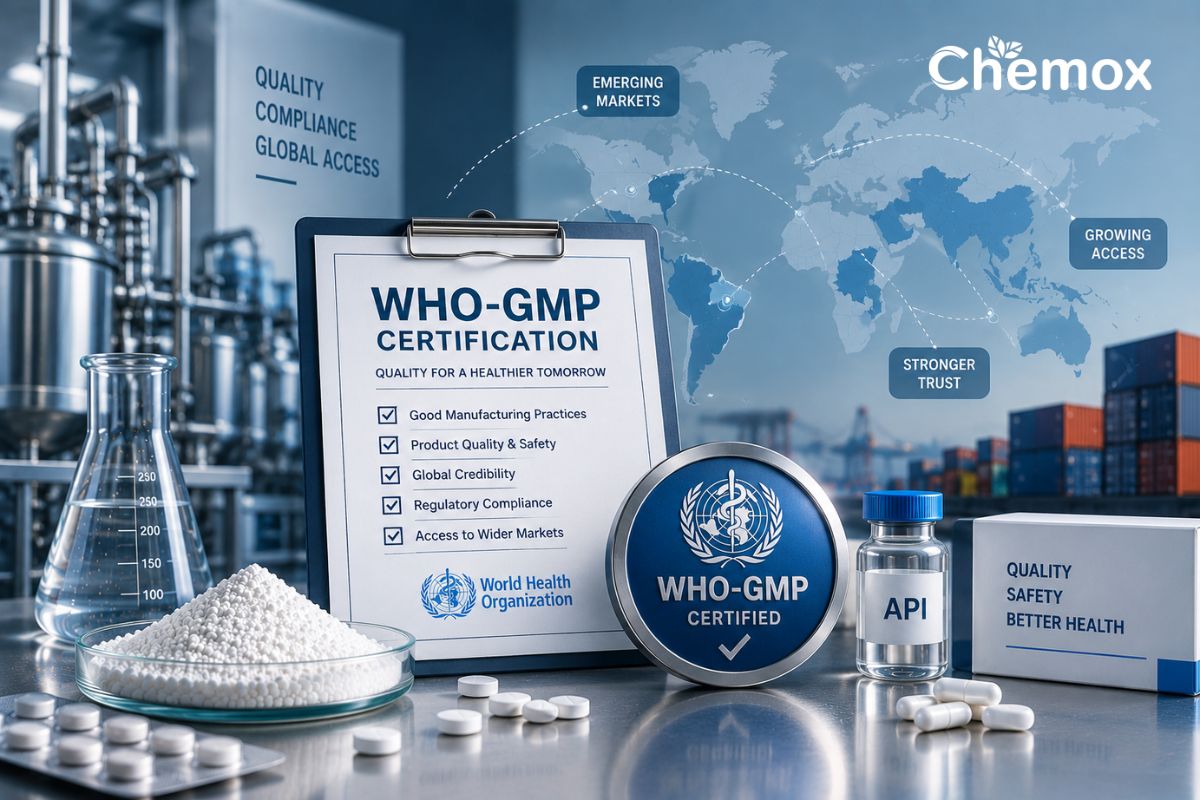
Why WHO-GMP Certification Matters Most in Semi-Regulated Markets
Not all “GMP certified” claims carry the same regulatory weight and which certification actually matters most depends heavily on where your finished product is headed. For buyers and formulators operating in semi-regulated markets, WHO-GMP certification isn’t just one credential among several equally valid options. In many of these markets, it’s the specific standard your own national regulator is actually relying on to approve your product’s registration in the first place.
This guide explains what WHO-GMP Certification semi-regulated markets are, why WHO-GMP plays such an outsized role there compared to highly regulated markets, and what that means practically for your supplier verification process.
Understanding the Three Regulatory Tiers
Highly Regulated Markets
Countries like the United States, the European Union member states, Japan, the UK, and Canada maintain their own robust, independent inspection capacity. These regulators typically require their own direct or mutually-recognized GMP inspection of a manufacturing facility a US FDA inspection, an EU-GMP certificate from an EU competent authority or mutual recognition partner, or equivalent and generally don’t accept WHO-GMP certification alone as sufficient for market approval.
Semi-Regulated Markets
Many countries across Latin America, the Middle East and North Africa, and Southeast Asia fall into this category. These markets have their own functioning regulatory authority, but with more limited resources and capacity to independently inspect every foreign manufacturing facility supplying their market. As a practical necessity, many of these regulators lean heavily on internationally recognized certifications WHO-GMP chief among them as the accepted baseline evidence for approving imported API and finished products.
Less-Regulated or Emerging Markets
In markets with weaker regulatory enforcement infrastructure, formal certification requirements may be less consistently applied. Even here, buyers who care about product quality and long-term market credibility should still insist on WHO-GMP certified sourcing voluntarily, since it remains one of the most reliable proxies for consistent manufacturing quality regardless of what local enforcement actually requires.
Why Semi-Regulated Markets Specifically Rely on WHO-GMP
The World Health Organization’s GMP guidelines are used to underpin national regulatory frameworks in more than 100 countries a scale of adoption that reflects a practical reality: building and maintaining independent overseas facility inspection capacity is expensive and resource-intensive. Rather than duplicating that inspection effort for every foreign API source, many semi-regulated market regulators accept WHO-GMP certification as credible, internationally vetted evidence of manufacturing quality, allowing them to focus their own limited inspection resources elsewhere.
This means that for a buyer formulating in one of these markets, your supplier’s WHO-GMP certificate isn’t just a quality reassurance it’s frequently the specific document your own national regulator will reference directly when reviewing your product’s registration dossier.
What This Means Practically for Buyers
- Verify WHO-GMP certification first, not last. In a semi-regulated market, this single document often carries more direct regulatory weight than any other certification your supplier might mention.
- Confirm the certificate covers the specific facility and product you’re sourcing, not just the company name generally.
- Check certificate validity and renewal status. A WHO-GMP certificate that’s expired or under renewal doesn’t carry the same weight with your regulator as a current one.
- Understand this isn’t universal. If you’re also targeting a highly regulated market alongside your semi-regulated markets, confirm what additional certification (FDA, EU-GMP) that market specifically requires — WHO-GMP alone likely won’t be sufficient there.
WHO-GMP Certification at Chemox Pharma
Chemox Pharma manufactures at our WHO-GMP certified facility in Dahej, Gujarat — a certification that directly supports formulators and importers across the semi-regulated markets we export to, where this specific credential often determines how smoothly a registration dossier moves through review. Our team can provide current certification documentation directly to support your specific market’s registration process.
Questions to Ask Your Supplier
- Is your WHO-GMP certificate current, and does it cover the exact facility producing my order?
- Can you confirm which markets have historically accepted this certification for my product’s registration?
- If I’m also targeting a highly regulated market, what additional certification would that require beyond WHO-GMP?
Request a Quote and Certification Documentation
If you’re formulating for a semi-regulated market and need WHO-GMP certified API backed by current documentation, get in touch with Chemox Pharma for a quote and certificate review.
FAQs
Q: What makes a market “semi-regulated” rather than highly regulated?
Semi-regulated markets have their own functioning drug regulatory authority but more limited independent capacity to inspect every foreign manufacturing facility, leading them to rely more heavily on internationally recognized certifications like WHO-GMP as accepted evidence of quality.
Q: Is WHO-GMP certification enough for markets like the US or EU?
Generally, no. Highly regulated markets like the US and EU typically require their own direct inspection or a mutually recognized equivalent certification, and don’t usually accept WHO-GMP alone as sufficient for market approval.
Q: Why do so many countries rely on WHO-GMP specifically?
WHO’s GMP guidelines are used to underpin national regulatory frameworks in over 100 countries, reflecting their broad international recognition as a credible, consistently applied quality standard.
Q: Does Chemox Pharma hold current WHO-GMP certification?
Yes. Chemox Pharma manufactures at its WHO-GMP certified facility in Dahej, Gujarat, and can provide current certification documentation to support registration in semi-regulated markets.