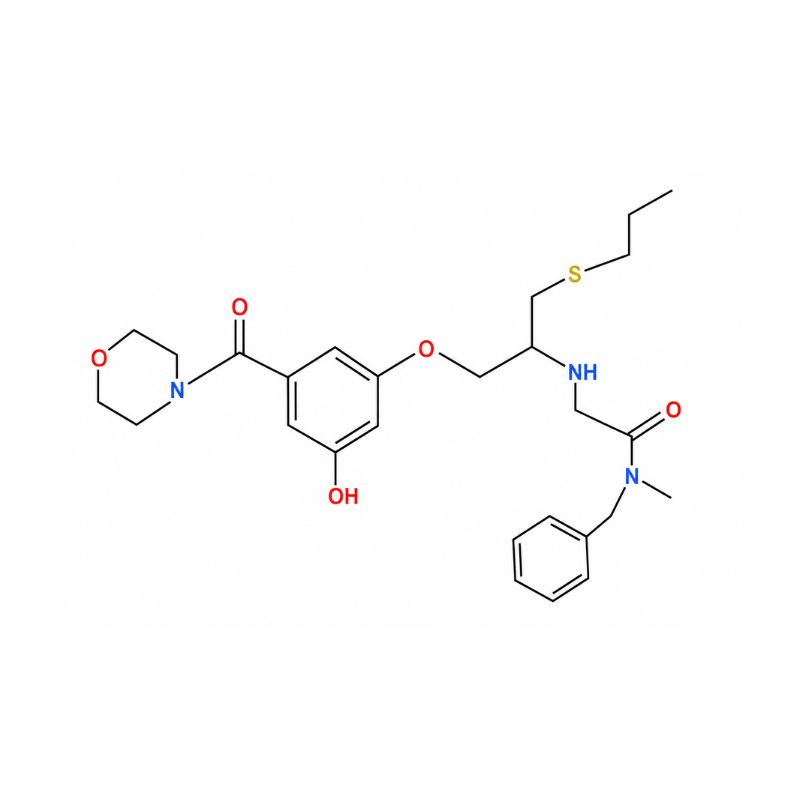
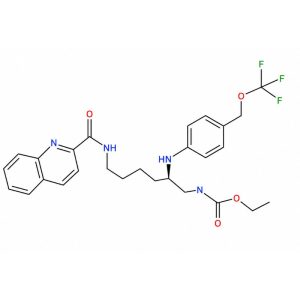
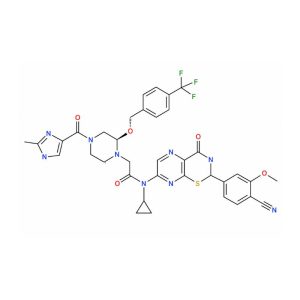
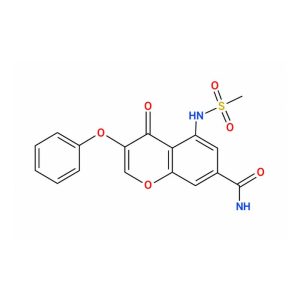
Acotiamide produces its gastroprokinetic effects through cholinergic mechanisms in the gastrointestinal tract.
1. Acetylcholinesterase Inhibition
Acotiamide selectively and reversibly inhibits acetylcholinesterase (AChE), reducing the breakdown of acetylcholine. This increases the availability of acetylcholine at cholinergic nerve terminals and enhances gastrointestinal motor activity.
2. Muscarinic M1/M2 Modulation
Acotiamide also acts on presynaptic M1 and M2 muscarinic receptors, helping enhance acetylcholine release from enteric cholinergic neurons.
3. Enhanced Gastric Motility
The resulting increase in cholinergic signaling can enhance gastric contractility and facilitate gastric emptying, supporting its prokinetic activity.
Simplified pathway:
Acotiamide → AChE inhibition + presynaptic M1/M2 modulation → increased acetylcholine availability/release → enhanced gastric motor activity → improved gastric emptying
1. What is Acotiamide?
Acotiamide is a gastrointestinal prokinetic agent that enhances GI motility through cholinergic mechanisms, including selective and reversible inhibition of acetylcholinesterase.
2. What is the CAS number of Acotiamide?
The CAS number of Acotiamide free base is 185106-16-5.
3. What is the molecular formula of Acotiamide?
The molecular formula is C₂₁H₃₀N₄O₅S.
4. What is the molecular weight of Acotiamide?
The molecular weight of Acotiamide is approximately 450.55 g/mol.
5. What is Acotiamide used for?
Acotiamide is primarily associated with gastrointestinal motility and functional dyspepsia research, including studies involving delayed gastric emptying and impaired gastric motor function.
6. How does Acotiamide work?
It primarily enhances cholinergic activity by inhibiting acetylcholinesterase and modulating presynaptic muscarinic M1/M2 receptors, increasing acetylcholine availability and promoting gastrointestinal motor activity.
7. Is Acotiamide the same as Acotiamide Hydrochloride?
No. Acotiamide free base (CAS 185106-16-5) and Acotiamide hydrochloride/hydrate are different chemical forms. Acotiamide hydrochloride trihydrate is listed separately with CAS 773092-05-0 and a molecular weight of approximately 541.1 g/mol.
8. How should Acotiamide be stored?
For research-grade material, long-term powder storage is commonly specified at −20°C, protected from moisture and light. Always prioritize the storage conditions stated on the specific product’s COA/SDS.
9. Is Acotiamide soluble in water?
Acotiamide free base has very limited water solubility; published supplier data report it as insoluble or practically insoluble in water, while solubility can be substantially higher in certain organic solvents.
10. Is Acotiamide suitable for pharmaceutical manufacturing?
Acotiamide is a pharmacologically active compound used in pharmaceutical development. Whether a particular material is suitable for pharmaceutical manufacturing depends on its grade, manufacturing controls, regulatory status, analytical specifications, GMP documentation and batch-specific quality documentation.
11. What documentation can be provided with Acotiamide?
Depending on the grade and supplier, documentation may include a Certificate of Analysis (COA), Safety Data Sheet (SDS), specification sheet, analytical data and other quality/regulatory documents.